News Headline
TRAI ends aggregation of content from different broadcaster groups

Updated – 08:05pm
MUMBAI: Aggregation of television content from various broadcasters will soon be history and content aggregators will be able to act only as agents of broadcasters.
These are the provisions in the amended regulations notified by the Telecom Regulatory Authority of India (TRAI) today.

The TRAI has barred content aggregators from signing Reference Interconnect Offers (RIOs) with Distribution Platform Operators and said broadcasters themselves will now need to publish the Reference Interconnect Offers (RIOs) and also enter into interconnection agreements with Distribution Platform Operators (DPOs).
TRAI has now clearly defined the roles of the broadcaster, the channel aggregator and the DPOs which include the multi-system operators.
Broadcasters have six months to sign RIOs with DPOs themselves and current content aggregators like Media Pro, IndiaCast UTV Media Distribution and One Alliance will only be able to function as agents of broadcasters.
TRAI has allowed a broadcaster to appoint an agent for signing the RIOs, but clearly stating that the agent can only act in the name of and on behalf of the broadcaster.
The regulator in the notification clearly mentions that the appointed agent cannot alter the bouquets as offered in the RIO of the broadcaster and if one agent acts as an authorised agent of multiple broadcasters, individual broadcasters need to ensure that such agents do not bundle channels or bouquets with other broadcasters, TRAI said.
TRAI has, however, provided relief to broadcaster groups by allowing more than one company belonging to the same group to bundle their channels into packages.
Broadcasters will have to file amended RIOs and interconnection agreements with the regulator.
According to TRAI, currently around 239 pay channels (including HD and advertisement-free channels) are offered by 55 pay broadcasters. These channels are distributed by 30 broadcasters/aggregators/ agents of broadcasters.
“The distribution business of 58.6 per cent of the total pay TV market available today is controlled by the top three aggregators,” the TRAI said, referring to Media Pro, IndiaCast and One Alliance.
TRAI feels that the bouquets offered by aggregators comprise popular channels of multiple broadcasters they represent. Thus, leaving DPOs with no option, but to subscribe to these bouquets and then push these channels to the consumers to recover costs.
Analysis of bouquets offered by Aggregators
 |
“This shows that aggregators are offering bouquets comprising as many as 20 channels of six broadcasters. Another bouquet, comprising 13 channels, has channels drawn from 9 broadcasters,” says TRAI through its published report.
Explaining further the TRAI paper says, “Media Pro has mostly entered into agreements with MSOs for around 65 channels out of the 76 pay channels it distributes. These MSOs include both smaller independent MSOs as well as MSOs operating at national level. Similarly, IndiaCast and MSM Discovery have mostly entered into agreements for around 30 (out of 36 channels being distributed by it) and 20 channels (out of 28 channels being distributed by it) respectively. This substantiates the allegation of the DPOs that the large aggregators are virtually compelling them to enter into agreements to subscribe to almost all of their channels.”
The regulator has also found that majority of the channels distributed by the aggregators belong to broadcaster groups who own or control the aggregator. “90.7 per cent- Media Pro, 58 per cent IndiaCast and 57 per cent- MSMD.”
According to the regulator, the rates being charged from non-vertically integrated DPOs are, in some cases, higher by 62 per cent as compared to the vertically integrated DPOs.
“The situation becomes even worse in the case of relatively smaller non- vertically integrated DPOs in which case the rates charged are higher by about 85 per cent as compared to the vertically integrated DPOs.”
TRAI feels that the amendment will not only ensure a better spread of popular channels in different bouquets available to the DPOs but would also reduce the number of less popular channels pushed on to such bouquets.
“Even in case a DPO fails to arrive at an agreement with a particular broadcaster the opportunity of finalising agreements with other popular broadcasters is not lost. Thus, DPOs would be placed in a much better position to carry out their businesses,” TRAI said.
“The interconnect regulations aim at making available the content to DPOs in a transparent and non-discriminatory manner. For this, it is important that the offerings of the broadcasters are available in the public domain. This is why broadcasters have been mandated to publish an RIO prescribing the technical and commercial terms for making available their TV channels to the DPOs,” it says.




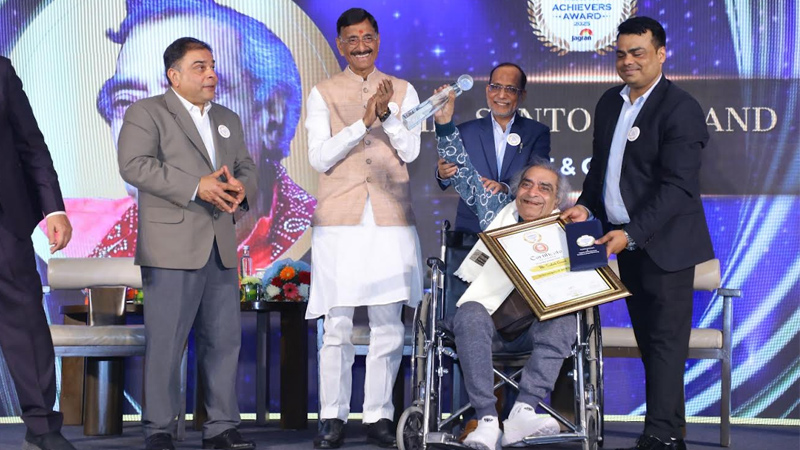
NEW DELHI: Hamdard Laboratories gathered a cross-section of India’s achievers in New Delhi on Friday, handing out the Hakeem Abdul Hameed Excellence Awards to figures who have left their mark across healthcare, education, sport, public service and the arts.
The ceremony, attended by minister of state for defence Sanjay Seth and senior officials from the ministry of Ayush, celebrated individuals whose work blends professional success with a sense of public purpose. It was as much a roll call of achievement as it was a reminder that influence is not measured only in profits or podiums, but in people reached and lives improved.
Among the headline awardees was Alakh Pandey, founder and chief executive of PhysicsWallah, recognised for turning affordable digital learning into a mass movement. On the sporting front, Arjuna Awardee and kabaddi player Sakshi Puniya was honoured for her contribution to the game and for pushing women’s participation onto bigger stages.
The cultural spotlight fell on veteran lyricist and poet Santosh Anand, whose songs have echoed across generations of Hindi cinema. At 97, Anand accepted the honour with characteristic humility, reflecting on a life shaped by perseverance and hope.
Healthcare honours spanned both modern and traditional systems. Manoj N. Nesari was recognised for strengthening Ayurveda’s place in national and global health frameworks. Padma shri Mohammed Abdul Waheed was honoured for his research-backed work in Unani medicine, while padma shri Mohsin Wali received recognition for his long-standing contribution to patient-centred care.
Education and social development also featured prominently. Padma shri Zahir Ishaq Kazi was honoured for decades of work in education, while former Meghalaya superintendent of Police T. C. Chacko was recognised for public service. Goonj founder Anshu Gupta received an award for his dignity-centred rural development initiatives, and the Hunar Shakti Foundation was honoured for empowering women and young girls through skill development.
The Lifetime Achievement Award went to former IAS officer Shailaja Chandra for her long career in public healthcare and governance, particularly in the traditional systems under Ayush.
Speaking at the event, Hamdard chairman Abdul Majeed said the awards were a tribute to those who combine excellence with empathy. “These awardees reflect Hakeem Sahib’s belief that healthcare, education and public service must ultimately serve humanity,” he said.
Minister Seth struck a forward-looking note, saying India’s young population gives the country a unique opportunity to become a global destination for learning, health and wellness by 2047.
The ceremony also featured the trailer launch of Unani Ki Kahaani, an upcoming documentary starring actor Jim Sarbh, set to premiere on Discovery on 11 February.
Instituted in memory of Unani scholar and educationist Hakeem Abdul Hameed, the awards have grown into a national platform that celebrates those building a more inclusive and resilient India. For one evening at least, the spotlight was not just on success, but on service with substance.






