News Broadcasting
Trai brings broadcasting under review lens


NEW DELHI: Regional entertainment channels are dominant in Chennai with a viewership of 62 per cent, while Hindi general entertainment has the highest viewership in Delhi, Mumbai and Kolkata, according to Telecom Regulatory Authority of India (Trai).
The share of cable programmes is the second largest in terms of viewership percentage in all the four metros of Delhi, Mumbai, Bangalore and Kolkata, says Trai.
These are some of the figures that have been collated by the sector regulator during July-September 2005 quarter as part of quarterly performance review of telecom services that it undertakes.

Pointing out that TV and radio broadcasting has been included for the first time in the review process, the regulator today said in a statement it plans to set up a system of data collection from service providers, government agencies and also third party sources like Tam for general dissemination.
However, Trai has clarified such information would be given out in a manner that would not only educate stakeholders, consumers and research agencies, but also ensure confidentiality of commercially sensitive information.
Though the data collated by Trai for the July-September quarter might not be totally exclusive, it does highlight some trends. For example, viewing pattern in Chennai is heavily loaded in favour of free-to-air (FTA) channels, whereas pay channels have higher viewership in other metros.
“The scope of coverage could be expanded depending upon the need and response of the service providers, Trai said. The report, available on the regulators site, contains three sections under cable TV, DTH and radio services.
Information provided ranges from the general (UP and Maharashtra show huge gap between all-TV reach and cable; Hindi speaking states have more than 10 per cent B&W TV sets) to specific facts like sports viewership is around six per cent in Mumbai, Kolkata and Delhi, while in Chennai, a CAS-notified metro, it has negligible presence.
According to Trai, internet subscriber base has crossed the Broadband Policy 2004 target of six million three months before the target date by reaching 6.1 million during the quarter ending September 2005 in comparison to 5.9 million at the end of quarter ending June 2005.
Out of 6.1 million, share of government-controlled operators was 3.5 million. The growth of this segment during the year was about 15 per cent.
The number of broadband subscribers (with a download speed of 256 Kbps or more) increased from 396,000 to slightly over 600,000 during the July-September quarter, registering a growth of about 54 per cent.
But this growth, Trai has pointed out, is not enough to meet the policy target of three million subscribers by 2005.
Meanwhile, the gross subscriber base of fixed and mobile services together reached 113.07 million at the end of September 2005 from 104.22 million in June 2005, showing an increase of around 8.49 per cent during the quarter.
The tele-density at the end of quarter under review has reached 10.36 as compared to 9.61 at the end of QE June 2005.
The effective per minute charge for a mobile local call has reduced from Rs 1.90 (Rs 45 = $1) in September 2004 to Rs. 1.20 in September 2005, thus registering a decline of 37 per cent over the year.







News Broadcasting
News18 India launches Command Centre war explainer with Arya
New show shifts from debates to decoding global conflicts and impacts
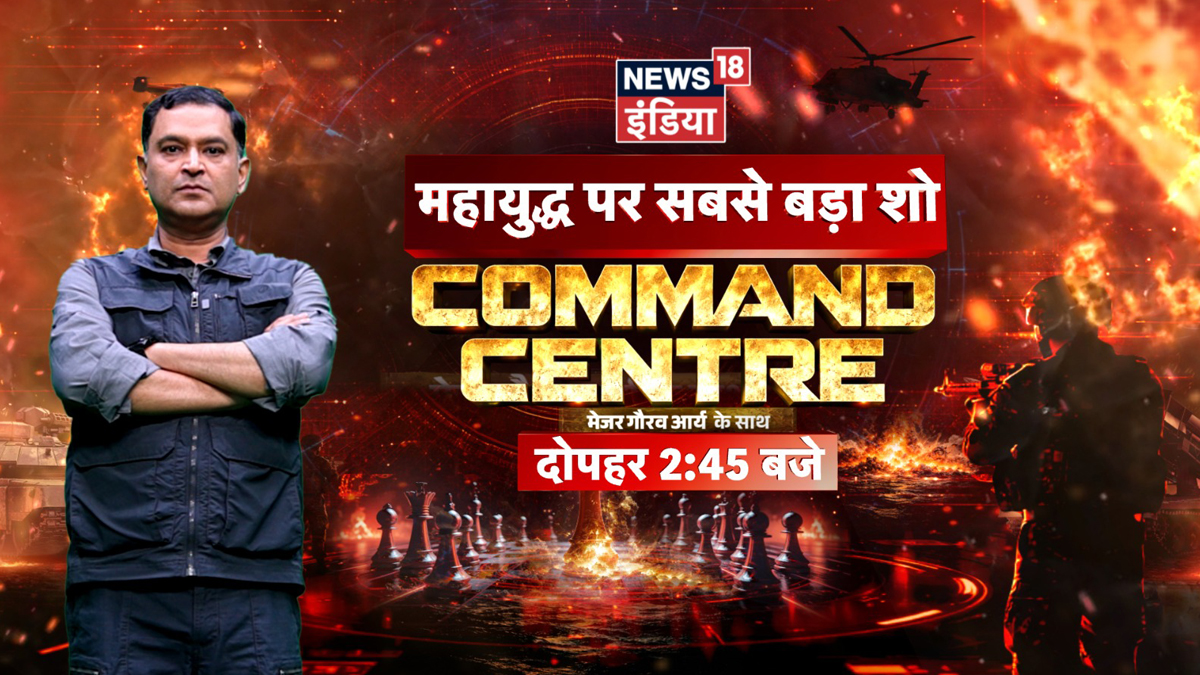
MUMBAI: News18 India has rolled out a new war-focused programme, Command Centre, featuring Gaurav Arya, as it looks to offer viewers a sharper, more grounded take on global conflicts amid rising tensions in West Asia.
Positioned as an “insider war room”, the show moves away from conventional panel debates and instead focuses on explaining military developments, decoding strategy and connecting global events to their everyday impact, from fuel prices to economic shifts.
The format leans heavily on visuals and data. The studio has been designed like a command hub, complete with large LED war maps, real-time graphics and an alert system to track developments as they unfold.
At the centre of it all is Arya, who brings his military background to simplify complex war strategies for viewers. His signature line, “Seedhi baat samjhiye”, anchors the show’s promise of clarity over noise.
News18 India managing editor Jyoti Kamal said, “Command Centre, featuring Major Gaurav Arya is designed to deliver accurate insights and a clear perspective on how evolving conflicts impact everyday life, from household budgets to national security. With expert voices analysing every development in real time, the show goes beyond headlines to decode what’s happening now, what it means, and what could come next.”
Echoing the intent, Gaurav Arya added, “In times of war, confusion is the biggest threat. With News18 India’s Command Centre, we are bringing viewers inside the war room, decoding strategies, tracking every escalation, and explaining, in the simplest terms, what it means for India and for every household. Seedhi baat samjhiye, this is where you understand not just what is happening, but what happens next.”
The weekday show will air in the afternoon slot and will also feature Gaurav Shukla, adding to its editorial depth.
With its mix of analysis, visuals and a clear focus on impact, the show reflects a broader shift in news consumption. Viewers are no longer just watching events unfold, they are looking to understand what those events mean for them.







