News Headline
TRAI asks MSOs to devise rational channel rates for phase III


MUMBAI: Close to 61 multi system operators (MSOs) have approached the broadcaster for signing of interconnect agreements. The statistics were revealed at the eighth task force meeting by the Telecom Regulatory Authority of India (TRAI) advisor Sunil Kumar Singhal.
Of these, according to the report received by Singhal, while the broadcasters have given their replies to the MSOs, the memorandum of understanding (MoU) is yet to be signed. The TRAI through its meetings with the MSOs and broadcasters, has identified four core issues relating to interconnect agreements. These are:

1. While the MSOs are expressing interest for getting signals from broadcasters, they are being asked for more information, which is taking time. “Now with the intervention of TRAI, broadcasters have formalized their formats and have placed them on their websites so that all MSOs can submit requests at one go and the agreement signed,” informed Singhal.
2. The distributors of several broadcasters in a state are also MSOs and that has led to conflict of interest with the MSOs. “We have been able to address this by seeking the details of the core team of the broadcasters to be approached for getting the signals and the broadcasters have provided such details also on their websites,” he said.
3. The third point was related to pending dispute between MSOs in DAS areas which are both old as well as new. “These disputes need to be resolved mutually as TRAI would not intervene in such disputes,” he opined.
4. There are differences between MSOs and broadcasters on the rate of channels. “The larger MSOs are in negotiations with broadcasters to finalise the prices and it is indicated that they will be in a position to finalise them by mid June,” he said.
Meanwhile, TRAI has asked the MSOs to devise means to have rational rates for phase III areas, as the rates for phase I and II cannot be workable in the remaining phases.
The TRAI advisor also informed the task force meeting that there was confusion between both MSOs and broadcasters which related to the modus operandi for entering into agreements during the transition period. The TRAI advisor said that the MSOs and broadcasters were business entities who should know how to communicate with each other in order to expedite and facilitate their business interests. The TRAI has asked the stakeholders to not repeat the mistakes of phase I and II by deploying pre-activated STBs.
The representative of the MSOs, during the meeting said that whatever be the rate declared by broadcasters, TRAI should come out with a non-discriminative clause which should not push packages but allow the channels to be on a-la-carte basis. “We have been insisting on a-la-carte and not bundling of channels and any delay in the implementation of DAS will result in losses to both MSOs and broadcasters,” informed the TRAI advisor.
According to a MSO representative, the packaging of channels should be monitored by TRAI. “The LCOs should be trained to spread DAS amongst the consumers as they are close to the consumers and can speedup this process,” opined the MSO representative.
Information and Broadcasting Ministry (I&B) additional secretary JS Mathur, who was also chairing the meeting said that the publicity campaign for the cutoff date for phase III should start now.
According to Siti Cable Network’s Anil Malhotra, while the target rate of seeding set top boxes (STBs) requires to be around 2 to 3 lakh per day, the present rate of seeding is about 20-30 thousand boxes which is way short and logistic support has to be planned out in order to step-up the pace of seeding.
During the meeting, a representative from BIS raised the issue of hacking of STBs and said that a request has been received from some broadcasters to strengthen the BIS Standard of STBs.







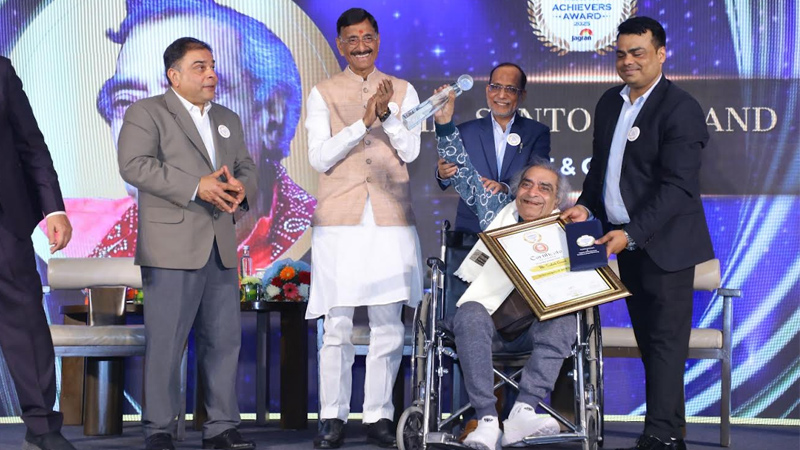
NEW DELHI: Hamdard Laboratories gathered a cross-section of India’s achievers in New Delhi on Friday, handing out the Hakeem Abdul Hameed Excellence Awards to figures who have left their mark across healthcare, education, sport, public service and the arts.
The ceremony, attended by minister of state for defence Sanjay Seth and senior officials from the ministry of Ayush, celebrated individuals whose work blends professional success with a sense of public purpose. It was as much a roll call of achievement as it was a reminder that influence is not measured only in profits or podiums, but in people reached and lives improved.
Among the headline awardees was Alakh Pandey, founder and chief executive of PhysicsWallah, recognised for turning affordable digital learning into a mass movement. On the sporting front, Arjuna Awardee and kabaddi player Sakshi Puniya was honoured for her contribution to the game and for pushing women’s participation onto bigger stages.
The cultural spotlight fell on veteran lyricist and poet Santosh Anand, whose songs have echoed across generations of Hindi cinema. At 97, Anand accepted the honour with characteristic humility, reflecting on a life shaped by perseverance and hope.
Healthcare honours spanned both modern and traditional systems. Manoj N. Nesari was recognised for strengthening Ayurveda’s place in national and global health frameworks. Padma shri Mohammed Abdul Waheed was honoured for his research-backed work in Unani medicine, while padma shri Mohsin Wali received recognition for his long-standing contribution to patient-centred care.
Education and social development also featured prominently. Padma shri Zahir Ishaq Kazi was honoured for decades of work in education, while former Meghalaya superintendent of Police T. C. Chacko was recognised for public service. Goonj founder Anshu Gupta received an award for his dignity-centred rural development initiatives, and the Hunar Shakti Foundation was honoured for empowering women and young girls through skill development.
The Lifetime Achievement Award went to former IAS officer Shailaja Chandra for her long career in public healthcare and governance, particularly in the traditional systems under Ayush.
Speaking at the event, Hamdard chairman Abdul Majeed said the awards were a tribute to those who combine excellence with empathy. “These awardees reflect Hakeem Sahib’s belief that healthcare, education and public service must ultimately serve humanity,” he said.
Minister Seth struck a forward-looking note, saying India’s young population gives the country a unique opportunity to become a global destination for learning, health and wellness by 2047.
The ceremony also featured the trailer launch of Unani Ki Kahaani, an upcoming documentary starring actor Jim Sarbh, set to premiere on Discovery on 11 February.
Instituted in memory of Unani scholar and educationist Hakeem Abdul Hameed, the awards have grown into a national platform that celebrates those building a more inclusive and resilient India. For one evening at least, the spotlight was not just on success, but on service with substance.








