News Headline
TRAI amends tariff order for commercial subscribers

MUMBAI: After having invited comments from stakeholders regarding the imposition of tariff on commercial subscribers, the Telecom Regulatory Authority of India (TRAI) has come out with the amendment to the Telecommunication (Broadcasting and Cable) Services (Second) Tariff Order, 2004 (6 of 2004).
The twelfth amendment will come into effect from the date of its publication in the official gazette.

Going with the 24 responses to the earlier consultation pepper, there is no distinction between an ordinary and a commercial subscriber. The definition of a ‘commercial establishment’ (CE) has been included and ‘commercial subscriber’ (CS) has been amended.
Accordingly, the new definition of a CE is “any premises wherein any trade, business or any work in connection with, or incidental or ancillary thereto, is carried on and includes a society registered under the Societies Registration Act, 1860 (21 of 1860), and charitable or other trust, whether registered or not, which carries on any business, trade or work in connection with, or incidental or ancillary thereto, journalistic, printing and publishing establishments, educational, healthcare or other institutions run for private gain, theatres, cinemas, restaurants, eating houses, pubs, bars, residential hotels, malls, airport lounges, clubs or other places of public amusements or entertainment”.
The definition of a CS is “any person who receives broadcasting services or cable services at a place indicated by him to a cable operator or multi system operator or direct to home operator or head end in the sky operator or Internet Protocol television service provider, as the case may be, and uses such services for the benefit of his clients, customers, members or any other class or group of persons having access to his commercial establishment.”
Abiding by a recent Supreme Court verdict, TRAI has stated that in the rates of TV services, there should be no differentiation between an ordinary subscriber and a commercial subscriber and the charges for both should be per TV set basis. This is applicable when the establishment does not specifically charge the customer for the service. In case, it does, then the broadcaster and the CS can mutually agree on the tariff.
A broadcaster cannot directly supply signals to the CS just as the same isn’t done for an ordinary subscriber. The CS can obtain signals only from a distribution platform operator such as MSO, DTH operator, cable operator, IPTV operator or a HITS operator. This is in line with the rule regarding downlinking of TV channels in India, which states that an applicant company can provide decoders only to registered distribution platforms.
This would also ensure competition to be healthy.
The point regarding sub categorisation of commercial subscribers into similarly-placed groups has been dismissed with only one distinction of those who provide it as part of their amenities to guests and those who don’t.
The regulator expects that with this amendment, the distribution of TV services to commercial subscribers will be streamlined and the services would be available at competitive rates.
Click here for the press release







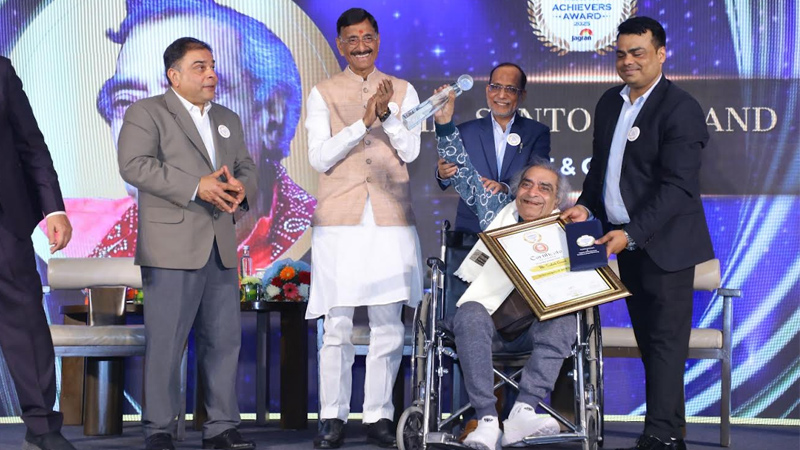
NEW DELHI: Hamdard Laboratories gathered a cross-section of India’s achievers in New Delhi on Friday, handing out the Hakeem Abdul Hameed Excellence Awards to figures who have left their mark across healthcare, education, sport, public service and the arts.
The ceremony, attended by minister of state for defence Sanjay Seth and senior officials from the ministry of Ayush, celebrated individuals whose work blends professional success with a sense of public purpose. It was as much a roll call of achievement as it was a reminder that influence is not measured only in profits or podiums, but in people reached and lives improved.
Among the headline awardees was Alakh Pandey, founder and chief executive of PhysicsWallah, recognised for turning affordable digital learning into a mass movement. On the sporting front, Arjuna Awardee and kabaddi player Sakshi Puniya was honoured for her contribution to the game and for pushing women’s participation onto bigger stages.
The cultural spotlight fell on veteran lyricist and poet Santosh Anand, whose songs have echoed across generations of Hindi cinema. At 97, Anand accepted the honour with characteristic humility, reflecting on a life shaped by perseverance and hope.
Healthcare honours spanned both modern and traditional systems. Manoj N. Nesari was recognised for strengthening Ayurveda’s place in national and global health frameworks. Padma shri Mohammed Abdul Waheed was honoured for his research-backed work in Unani medicine, while padma shri Mohsin Wali received recognition for his long-standing contribution to patient-centred care.
Education and social development also featured prominently. Padma shri Zahir Ishaq Kazi was honoured for decades of work in education, while former Meghalaya superintendent of Police T. C. Chacko was recognised for public service. Goonj founder Anshu Gupta received an award for his dignity-centred rural development initiatives, and the Hunar Shakti Foundation was honoured for empowering women and young girls through skill development.
The Lifetime Achievement Award went to former IAS officer Shailaja Chandra for her long career in public healthcare and governance, particularly in the traditional systems under Ayush.
Speaking at the event, Hamdard chairman Abdul Majeed said the awards were a tribute to those who combine excellence with empathy. “These awardees reflect Hakeem Sahib’s belief that healthcare, education and public service must ultimately serve humanity,” he said.
Minister Seth struck a forward-looking note, saying India’s young population gives the country a unique opportunity to become a global destination for learning, health and wellness by 2047.
The ceremony also featured the trailer launch of Unani Ki Kahaani, an upcoming documentary starring actor Jim Sarbh, set to premiere on Discovery on 11 February.
Instituted in memory of Unani scholar and educationist Hakeem Abdul Hameed, the awards have grown into a national platform that celebrates those building a more inclusive and resilient India. For one evening at least, the spotlight was not just on success, but on service with substance.







