News Headline
TRAI always believes intervention should be limited to market failures: R S Sharma

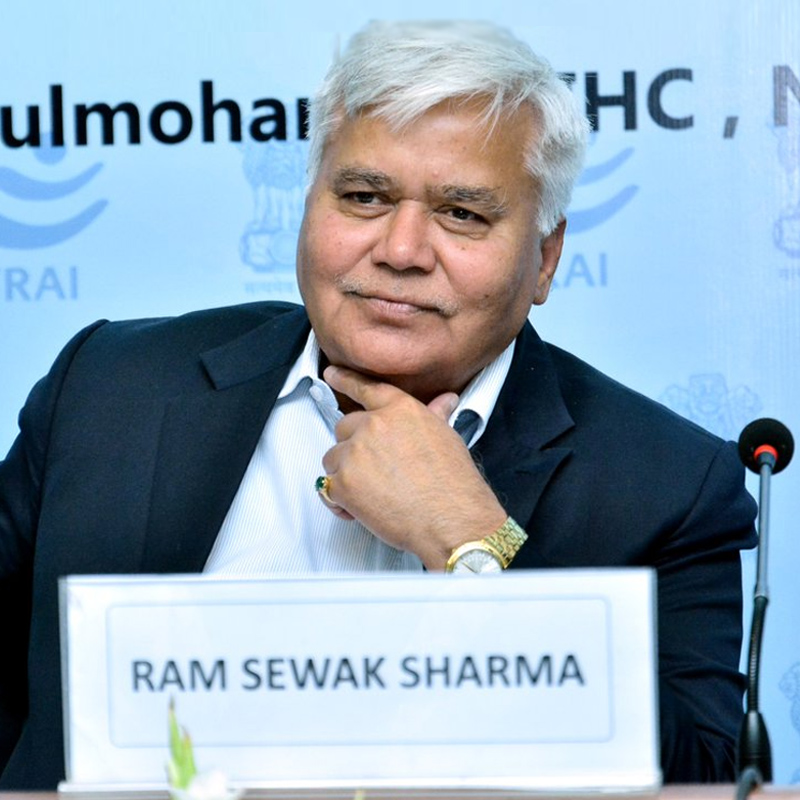
KOLKATA: The cable and broadcasting industry has been despondent of late due to several new regulations. Many of the stakeholders have complained about “over-regulation” stunning the growth of the business and causing unnecessary burdens. The outgoing chairman of the Telecom Regulatory Authority of India (TRAI), R S Sharma, has refuted the claims reemphasizing that the authority has always looked at light-touch regulation. Sharma stated that TRAI has always believed intervention should be limited to market failures, adding that it has never interfered if the market is trouble-free. He addressed several controversial issues.
During a conversation with Governance Now MD Kailashnath Adhikari, Sharma has spoken in favour of the most controversial regulation of this year, the amended New Tariff Order (NTO 2.0). He said that the tariff order was brought to strike a perfect balance between consumer choice and industry benefits.
Sharma mentioned that while it has given new power to consumers to watch channels of his own choice, it has also given broadcasters the liberty to decide the pricing of their channels, distributors to have an independent source of revenue through network capacity fees. “In such a situation, it will be unfair to call it over-regulation,” he commented.

He reiterated that TRAI’s data shows that 90 per cent of the people watch only about 50 channels out of the 800-900 channels in the country. He also added that OTT platforms allow much more freedom to watch content compared to linear TV, and this is one of the primary reasons for the audience shifting to OTT platforms. After the implementation of NTO in last year, many long-tail channels shut their shops. “IBF’s statement is rubbish, and it brings fear in the minds of people,” Sharma stated, mentioning that the case is sub judice in court.
Earlier this year, when the pandemic started hitting the ad revenue dependent broadcasting industry, TRAI issued a set of recommendations for a major overhaul of the country’s TV viewership measurement agency, BARC India, a joint industry body of the broadcasters, advertisers, and advertising agencies. Recommendations included an increasing number of people meters from 44,000 to 66,000 by the end of 2020 and 1,00,000 by the end of 2022. Many stakeholders commented that it seemed to throttle the entire system rather than reforming.
“Audience measurement is a significant source for broadcasting to get advertising and program sponsorship. In fact, that is the only currency. An industry dependent on advertising for survival and growth, audience measurement is a critical activity. Broadcasting is one such sector that is largely dependent on advertising revenue. Broadcasters earned revenue Rs 45000 crore in 2019, 32000 crore was collected from advertising. This underlies the dependence on the flow of advertising, which largely hinges on the profile of their audience and popularity of the content, which is assessed by television audience measurement rating. It is imperative that the process of that measurement should be objective, fair, neutral, transparent,” Sharma commented.
“Some important recommendations are the need for structural reformation of governing of BARC to mitigate the potential risk of conflicts, bring transparency, and the confidence of all stakeholders on the TV audience measurement system. To create a credible and accurate collection of data, multiple data agencies need to be in competition, which would bring new technologies, research methodologies, and new ways to ensure better data quality,” Sharma further adds.
According to him, technology is ever-evolving, and the TV rating system needs to be in tandem. While Sharma mentioned that TRAI only gave the recommendation of the constitution of BARC, he also stated that periodical reformations are needed. Many stakeholders raised the issue of huge investment in restructuring. He said that many reformations could be carried out in a frugal way on the back of new technologies.





NEW DELHI: Hamdard Laboratories gathered a cross-section of India’s achievers in New Delhi on Friday, handing out the Hakeem Abdul Hameed Excellence Awards to figures who have left their mark across healthcare, education, sport, public service and the arts.
The ceremony, attended by minister of state for defence Sanjay Seth and senior officials from the ministry of Ayush, celebrated individuals whose work blends professional success with a sense of public purpose. It was as much a roll call of achievement as it was a reminder that influence is not measured only in profits or podiums, but in people reached and lives improved.
Among the headline awardees was Alakh Pandey, founder and chief executive of PhysicsWallah, recognised for turning affordable digital learning into a mass movement. On the sporting front, Arjuna Awardee and kabaddi player Sakshi Puniya was honoured for her contribution to the game and for pushing women’s participation onto bigger stages.
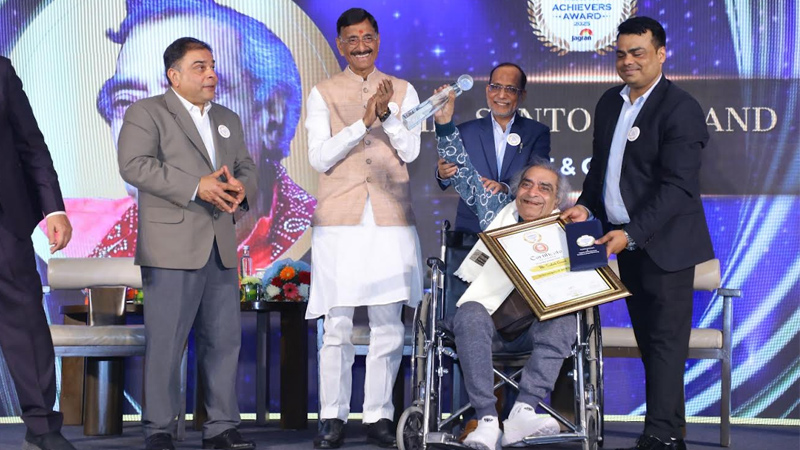
The cultural spotlight fell on veteran lyricist and poet Santosh Anand, whose songs have echoed across generations of Hindi cinema. At 97, Anand accepted the honour with characteristic humility, reflecting on a life shaped by perseverance and hope.
Healthcare honours spanned both modern and traditional systems. Manoj N. Nesari was recognised for strengthening Ayurveda’s place in national and global health frameworks. Padma shri Mohammed Abdul Waheed was honoured for his research-backed work in Unani medicine, while padma shri Mohsin Wali received recognition for his long-standing contribution to patient-centred care.
Education and social development also featured prominently. Padma shri Zahir Ishaq Kazi was honoured for decades of work in education, while former Meghalaya superintendent of Police T. C. Chacko was recognised for public service. Goonj founder Anshu Gupta received an award for his dignity-centred rural development initiatives, and the Hunar Shakti Foundation was honoured for empowering women and young girls through skill development.
The Lifetime Achievement Award went to former IAS officer Shailaja Chandra for her long career in public healthcare and governance, particularly in the traditional systems under Ayush.
Speaking at the event, Hamdard chairman Abdul Majeed said the awards were a tribute to those who combine excellence with empathy. “These awardees reflect Hakeem Sahib’s belief that healthcare, education and public service must ultimately serve humanity,” he said.
Minister Seth struck a forward-looking note, saying India’s young population gives the country a unique opportunity to become a global destination for learning, health and wellness by 2047.
The ceremony also featured the trailer launch of Unani Ki Kahaani, an upcoming documentary starring actor Jim Sarbh, set to premiere on Discovery on 11 February.
Instituted in memory of Unani scholar and educationist Hakeem Abdul Hameed, the awards have grown into a national platform that celebrates those building a more inclusive and resilient India. For one evening at least, the spotlight was not just on success, but on service with substance.







