News Broadcasting
Tom And Jerry, Scooby Doo creator Joseph Barbera passes away

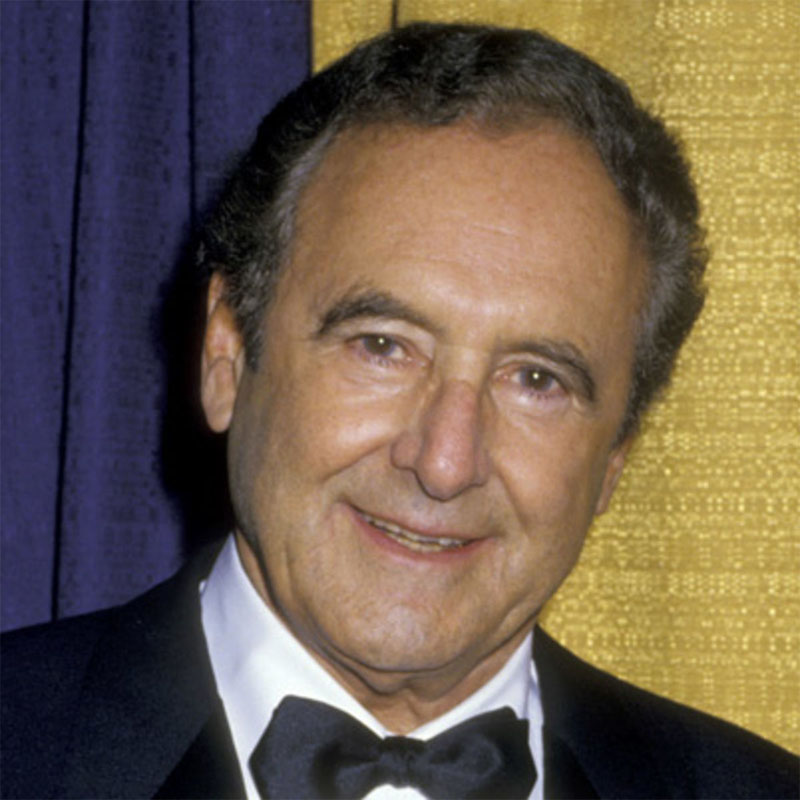
MUMBAI: Animation icon Joseph Barbera who created popular characters like Tom And Jerry and Scooby Doo passed away at the age of 95.
He was also part of the famous Hanna-Barbera team.
Born in the Little Italy section of New York City, New York, on March 24, 1911, Barbera and his partner William Hanna (who passed away in March of 2001) created hundreds of beloved cartoon characters during their 60-plus-year partnership. They enjoyed one of the most enduring and successful relationships in entertainment history and together created some of the world’s most recognisable and beloved characters including Tom and Jerry, Huckleberry Hound, The Flintstones, The Jetsons, Scooby-Doo and Yogi Bear among many others.

Barbera worked as a New York banker until the 1930’s when Collier’s Magazine published some of his hand drawn “comics.” After studying art at the Pratt Institute in Brooklyn, Barbera honed his animation skills at the Van Beuren animation studios in New York. It wasn’t until 1937 when Barbera was hired by MGM as as an animator and writer that he met William Hanna, whom MGM had also just hired as a director and story editor. Hanna’s precise comedic timing and ability to manage top creative talent were the ideal complement to Barbera’s strong animation skills and storytelling instincts.
The pair’s first collaboration at MGM was entitled Puss Gets the Boot, which led to the creation of the immortal Tom and Jerry. The duo won tremendous acclaim in the 1940s when their cartoon cat and mouse danced alongside Gene Kelly in the motion pictures Anchors Aweigh and Invitation to Dance and alongside Esther Williams in Dangerous When Wet. Over the years, Tom and Jerry have been honored with seven Academy Awards.
Concerned by the advent of television, MGM eliminated the studio’s animation department and, suddenly unemployed, Hanna and Barbera decided to make cartoons directly for the small screen. In 1957, twenty years after the birth of Tom and Jerry, Hanna-Barbera Studios opened its doors as one of the first independent animation studios to produce series television.
The fledgling studio’s first production was Ruff and Reddy followed by The Huckleberry Hound Show in 1958. The lovable blue canine became an immediate hit and won Hanna-Barbera its first Emmy Award, marking the first time an animated television series had been honored with an Emmy. The studio’s next series Quick Draw McGraw premiered in 1959 and showcased the lanky, Stetson-wearing horse on two legs, ol’ Quick Draw McGraw himself. The series also introduced America to Jellystone Park’s most famous bears, Yogi and Boo Boo, and the mischievous mice, Pixie and Dixie.
Breaking new ground became a tradition at the Hanna-Barbera Studios. In 1960, the team created television’s first animated family sitcom, The Flintstones, a series marked by a number of other firsts — the first animated series to air in primetime, the first animated series to go beyond the six or seven-minute cartoon format, and the first animated series to feature human characters. “The Flintstones” ran for six years and went on to become the top-ranking animated programme in syndication history, with all original 166 episodes currently seen in more than 80 countries worldwide.
Fred, Wilma, and Pebbles Flintstone, along with Betty and Barney Rubble are some of Hanna-Barbera’s most celebrated classic characters and have spawned spin-off television series, specials and feature films. Hanna and Barbera served as executive producers of 1994’s The Flintstones feature film and even made a cameo appearance. The Flintstones soon paved the way for other primetime cartoons including The Jetsons, Top Cat and The Adventures of Jonny Quest.
Another popular offering from Hanna-Barbera featured a cowardly Great Dane named Scooby-Doo, who eventually made his own place in television history. The popular series Scooby-Doo, Where Are You? remained in production for 17 years and maintains the title as television’s longest-running animated series. In 2002, the character returned with an all-new series aptly-titled What’s New Scooby-Doo? The popular snack-eating canine has inspired a pair of live-action feature films, and an ongoing series of direct-to-video movies that now numbers in double-digits. As further testament to the character’s everlasting appeal, the new series Shaggy & Scooby-Doo Get a Clue! currently airs on the block Kids’ WB! on US broadcaster The CW.
In addition to their animated series, Hanna-Barbera also produced animated feature films including the award-winning Charlotte’s Web and Heidi’s Song a full-length animated musical based on Johanna Spyri’s classic novel Heidi.
After nearly 50 years of making animation magic, Barbera and his partner William Hanna were elected by their peers to the Academy of Television Arts and Sciences’ Hall of Fame in 1994. During his 80s and even in his 90s, Barbera continued to report to his office regularly, taking an active role in the creation of new Hanna-Barbera projects.
In 2000, Cartoon Network in the US launched the Boomerang Network. This was created specifically as a showcase for the Hanna-Barbera library. The cable network airs animated programmes thus bringing the delights of the Hanna-Barbera legacy to new generations.
Barbera wrote his autobiography My Life In Toons in 1994. He is survived by his wife Sheila, and his three children by a previous marriage — Jayne, Neal and Lynn.



News Broadcasting
CNN-News18 to host Fury in the Gulf conclave on West Asia crisis
Three-hour summit to unpack geopolitical fallout and impact on India

MUMBAI: CNN-News18 is set to host a special three-hour broadcast, Fury in the Gulf – War Conclave, on April 7, aiming to decode the escalating West Asia crisis and its far-reaching implications for India.
Scheduled from 4:00 PM to 7:00 PM, the conclave comes at a time when tensions between Iran and the United States are reshaping global geopolitics and triggering economic uncertainty. With India’s deep energy ties, trade links and large diaspora in the Gulf, the developments carry significant domestic relevance.
Built around the theme ‘Conflict, Consequences, and The Future,’ the programme will feature six curated sessions combining one-on-one interviews and panel discussions. The focus is to cut through the clutter and offer viewers a clearer understanding of the fast-evolving situation.
Key sessions include ‘Diplomacy in Times of War’ featuring Shashi Tharoor, and ‘World After the Iran Conflict’ with voices such as Ram Madhav, Reuven Azar, representatives from the European Union and the Iranian Deputy Envoy. Another session titled ‘Another Dunkirk?’ will bring together K. J. S. Dhillon and Jitin Prasada among others.
CNN-News18 editorial affairs director Rahul Shivshankar said, “In times of war, clarity becomes the most powerful tool. Fury in the Gulf – War Conclave brings together credible voices to address the questions and confusion that arise amid an overwhelming influx of information.”
He added that the initiative is aimed at delivering “facts, perspective, and insight” at a time when misinformation can easily cloud public understanding.
Echoing the sentiment, CNN-News18 CEO– English and business news Smriti Mehra said the conflict marks a defining global moment, with consequences that extend well beyond the region. She noted that the conclave seeks to present the crisis with “depth, nuance and responsibility” so audiences can better grasp its real-world impact.
As geopolitical tensions continue to dominate headlines, the conclave positions itself as an attempt to bring order to the noise, offering viewers a structured, insight-led look at a complex and rapidly shifting global situation.






