News Broadcasting
TiVo introduces TV audience measurement tool


CALIFORNIA: TiVo which creates television services for digital video recorders (DVRs) has announced a new audience measurement tool. The tool will give broadcasters and advertisers the first opportunity to analyse second-by-second specific viewing patterns within television programmes.
An official release informs that the company will for the first time, offer a subscription quarterly report that uses this new measurement capability to report on viewing patterns within primetime programmes. This quarterly report was developed with assistance from global brand communications company Starcom MediaVest Group.
TiVo’s new measurement capabilities mark an expanded effort by the company to leverage features of its electronic service to collect data that will offer the television and advertising industry tools never before available for analysing specific viewing behaviour.

The data used to produce this highly detailed analysis is derived from anonymous and aggregate data collected when TiVo DVRs make a daily phone call to the company’s broadcast centre each day to retrieve and download programming information. This aggregate viewer data can be culled into large samples that can be analysed on a near real-time basis.
TiVo president TiVo Martin J. Yudkovitz said: “Our audience measurement capabilities will offer broadcasters and advertisers an unprecedented, detailed look at how viewers consume programming and advertising. As the leader and pioneer of the DVR experience, we want to embrace the opportunity to help advertisers and broadcasters better understand the current and future impact of DVR so they can adapt content and advertising strategies to this new medium.”
“These new analysis tools can allow TiVo to play a role in assisting broadcasters and advertisers in developing compelling and interesting content for tomorrow’s television audience,” Yudkovitz added.
TiVo can provide data on programmes in any day part, allowing clients to analyse specific viewing patterns during key programmes. These customised reports can be prepared for any programme airing on television, and can pinpoint specific incidents in programming where viewers responded strongly.
As far as the quarterly report is concerned an analysis of the report’s overall findings indicates that programming that created the greatest sense of urgency and immediate desire to watch was most successful at retaining viewers from start to finish and through commercial breaks.
The report also showed “stickiness” of the programmes varied greatly depending on genre. Sitcoms and dramas tended to have the lowest retention and commercial viewing rate. Reality TV, news and event based shows often scored significantly better in their ability to retain viewers in programming and during commercials because more viewers tended to watch these programmes live.
This is a snapshot of key programmes measured and their TiVo commercial viewing.
Programme TCVI
45th Annual Grammy Awards 75
Fear Factor 58
20/20 57
CSI: Miami 46
American Idol 45
Friends 39
Starcom MediaVest group VP and director of emerging contacts Tim Hanlon said:” This report points to two really great challenges for broadcasters and those of us in the advertising industry. We need to help broadcasters develop programming that has a sense of urgency and immediacy so that viewers feel they can’t wait to watch. And we need to develop more compelling content that viewers feel adds to the experience of enjoying these programmes.”
The primetime programming will be sold to industry partners on a subscription basis with updates to data provided quarterly. TiVo is also developing additional audience measurement reports for other day parts. The penetration of DVR technology in US households is growing rapidly.
TiVo is projecting that over one million households will be using its DVR by the end of this year. The company has stated that its time-shifting and commercial avoidance capabilities will challenge programmers and advertisers alike to approach the medium in new, inventive ways.


News Broadcasting
UDF poised to return to power in Kerala, says Manorama-CVoter survey
Massive opinion poll projects shift in Kerala politics ahead of 2026 Assembly elections.
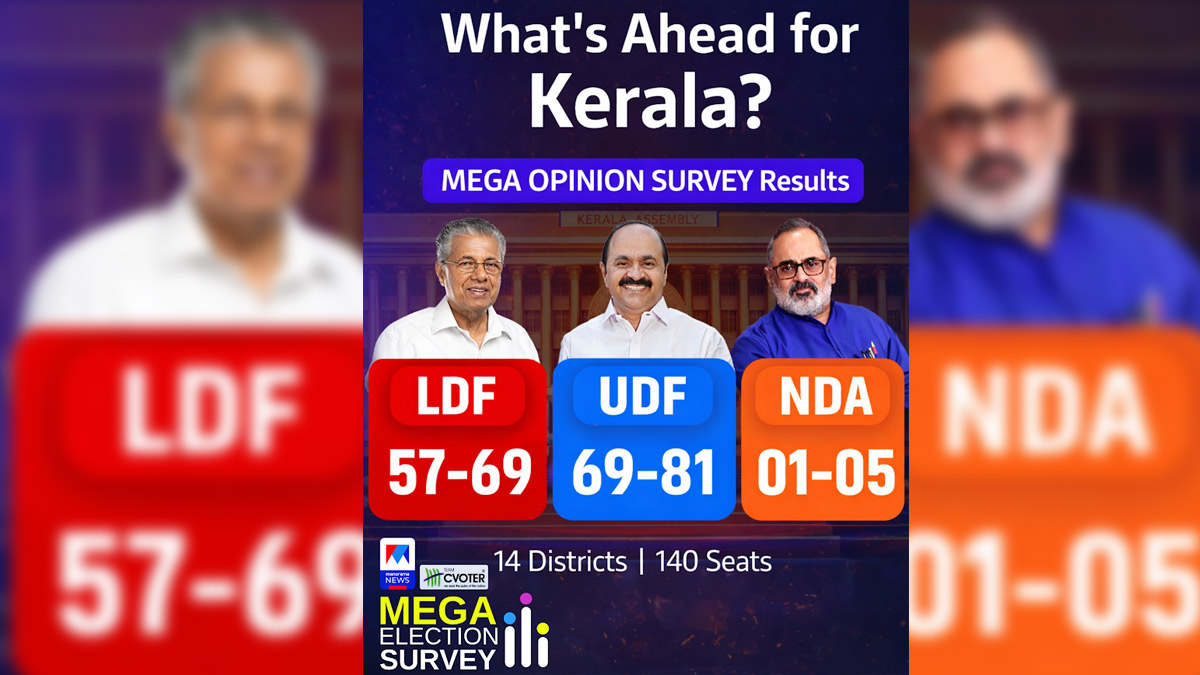
MUMBAI: The winds of change appear to be blowing through Kerala’s political landscape and this time, they seem to favour the United Democratic Front. A comprehensive mega opinion survey conducted by Manorama News in partnership with CVoter projects a potential comeback for the UDF in the upcoming Kerala Legislative Assembly Elections 2026. The survey, covering all 140 constituencies with a massive sample size of nearly 90,000 respondents, predicts the UDF could win between 69 and 81 seats.
The ruling Left Democratic Front (LDF) is expected to secure 57 to 69 seats, a significant drop from the 99 seats it won in the 2021 elections. This would mean the LDF losing 30 to 42 of its sitting seats. Meanwhile, the National Democratic Alliance (NDA), which drew a blank in 2021, is projected to open its account with 1 to 5 seats.
Region-wise, the UDF is expected to make strong gains in Malabar, winning 25 to 34 out of 48 seats, and in Central Kerala, where it could bag 29 to 33 out of 53 seats. In South Kerala, the LDF is likely to retain an edge with 21 to 25 seats, while the UDF may improve to 12 to 16 seats. The NDA could pick up 1 to 3 seats in the southern region.
The survey was conducted between 14 and 26 March 2026, with additional tracker and snap polls carried out from December 2025 to March 2026. A total of 89,693 respondents participated, ensuring representation across all demographics and social segments.
Manorama News has a strong track record of accuracy, with its previous projections closely matching the actual results of the 2019 and 2024 Lok Sabha elections as well as the 2021 Kerala Assembly polls.
In Kerala’s famously fierce political battles, this survey suggests the pendulum may be swinging back. Whether the final verdict matches these numbers or throws up another surprise, one thing is clear, the 2026 Assembly elections are shaping up to be one of the most keenly watched contests in the state’s history.






