News Broadcasting
Times Network unveils Times Fact India Outbreak Report for COVID-19


MUMBAI: Times Network in partnership with a global consulting firm Protiviti unveiled Times Fact India Outbreak Report, a comprehensive analysis that highlights the impact of the pandemic in India and projects the possible number of active cases in the weeks ahead.
Aligned with the Network’s umbrella campaign — Fighting Fear with Facts — the report was featured across network’s news channels – TIMES NOW, ET NOW and Mirror NOW – on 17 April with an exclusive two-hour-long programme that discussed the emerging COVID-19 scenario and its implications with leading experts and policymakers.
“Times Fact India Outbreak Report is based on three different models, the percentage model, which involves mapping trends from Italy and the United States onto India; the Time Series Model, which involves factors in data across time periods in China and South Korea in addition to two polynomial regression models adapted to Indian data, and the Susceptible Exposed Infected Recovered (SEIR) model which is based on an estimation of a reproduction rate of the epidemic,” reads the official statement of the network.

Drawing critical information from central government data, state government bulletins, and daily updates provided by the health ministry, the report is a holistic COVID-19 projection for the nation. It also takes into account the healthcare capacity of the nation and its states, to understand shortfall of beds and availability of ICUs, in the event of an escalation.
Based on a predictive model which leverages verified big data and new technologies for effective decision-making, the report aims to empower the administrative authorities to spot possible hotspots, critical gaps and build capacity to meet the arising situation.
It captures six national projections and includes individual analysis for eight states and four cities. The study also provides a projection of what could happen if the lockdown is lifted within a certain time-frame.
Times Network chief executive officer and managing director MK Anand says: “The Times Fact India Outbreak Report is a step aimed to dispel the uncertainty with facts, ably backed by a scientific approach that analyses the impact of COVID-19 in India and throws light on potential lethal gaps in infrastructure which can be a lead indicator of social unrest and disruption in specific geographies.”
He further says that the current pandemic disruption is probably the most significant event of our lifetime with socio-economic implications. we believe in taking the onus and proactively responding with timely and high-quality information that assists in arresting the adversity.
“I am confident that this report will act as an important enabler to navigate the evolving scenario of the pandemic with a systematic approach and help in building decisive strategies to flatten the curve,” exhorts Times Network’s CEO and MD.
Protiviti India director – data and digital transformation Dhrubabrata Ghosh Dastidar says, “The study is an example of how with the help of data, technology and sophisticated analytical algorithms, we can analyze a ‘black swan’ – in this case, a global pandemic, monitor the same on a regular basis to see the various possible paths it can take, and provide insights based on strong modelling outcomes. This will help the nation face the future with confidence.”





News Broadcasting
CNN-News18 to host Fury in the Gulf conclave on West Asia crisis
Three-hour summit to unpack geopolitical fallout and impact on India
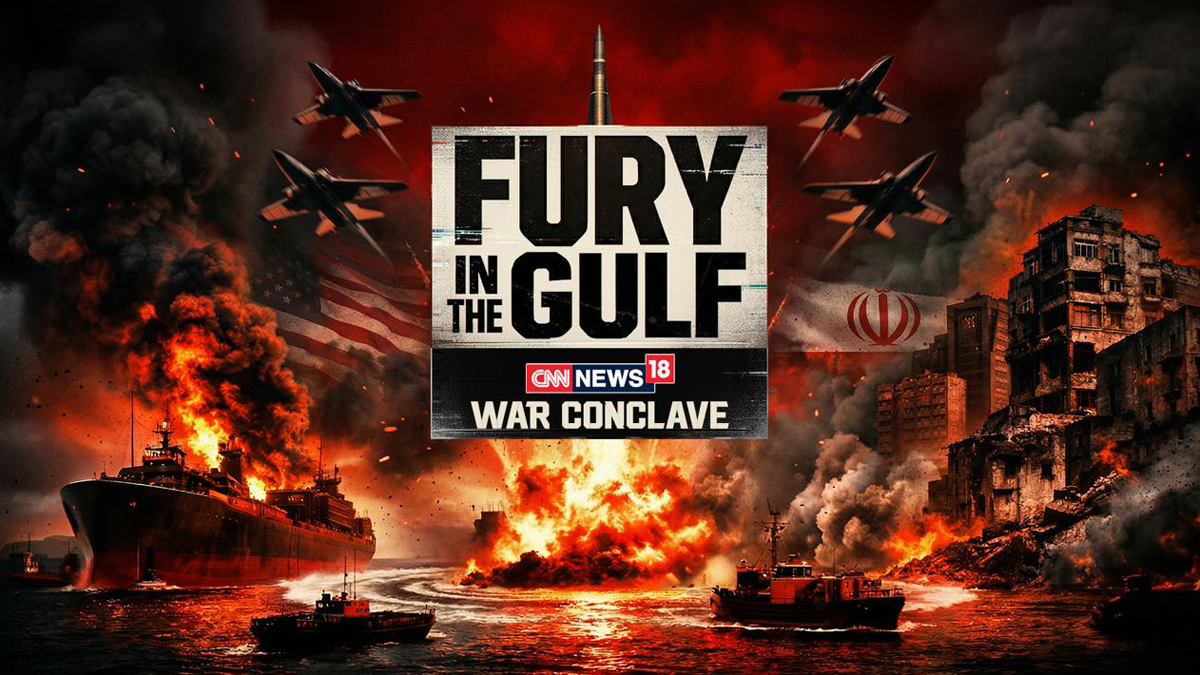
MUMBAI: CNN-News18 is set to host a special three-hour broadcast, Fury in the Gulf – War Conclave, on April 7, aiming to decode the escalating West Asia crisis and its far-reaching implications for India.
Scheduled from 4:00 PM to 7:00 PM, the conclave comes at a time when tensions between Iran and the United States are reshaping global geopolitics and triggering economic uncertainty. With India’s deep energy ties, trade links and large diaspora in the Gulf, the developments carry significant domestic relevance.
Built around the theme ‘Conflict, Consequences, and The Future,’ the programme will feature six curated sessions combining one-on-one interviews and panel discussions. The focus is to cut through the clutter and offer viewers a clearer understanding of the fast-evolving situation.
Key sessions include ‘Diplomacy in Times of War’ featuring Shashi Tharoor, and ‘World After the Iran Conflict’ with voices such as Ram Madhav, Reuven Azar, representatives from the European Union and the Iranian Deputy Envoy. Another session titled ‘Another Dunkirk?’ will bring together K. J. S. Dhillon and Jitin Prasada among others.
CNN-News18 editorial affairs director Rahul Shivshankar said, “In times of war, clarity becomes the most powerful tool. Fury in the Gulf – War Conclave brings together credible voices to address the questions and confusion that arise amid an overwhelming influx of information.”
He added that the initiative is aimed at delivering “facts, perspective, and insight” at a time when misinformation can easily cloud public understanding.
Echoing the sentiment, CNN-News18 CEO– English and business news Smriti Mehra said the conflict marks a defining global moment, with consequences that extend well beyond the region. She noted that the conclave seeks to present the crisis with “depth, nuance and responsibility” so audiences can better grasp its real-world impact.
As geopolitical tensions continue to dominate headlines, the conclave positions itself as an attempt to bring order to the noise, offering viewers a structured, insight-led look at a complex and rapidly shifting global situation.






