News Broadcasting
Times Network elevates Nikunj Dalmia as managing editor of ET Now

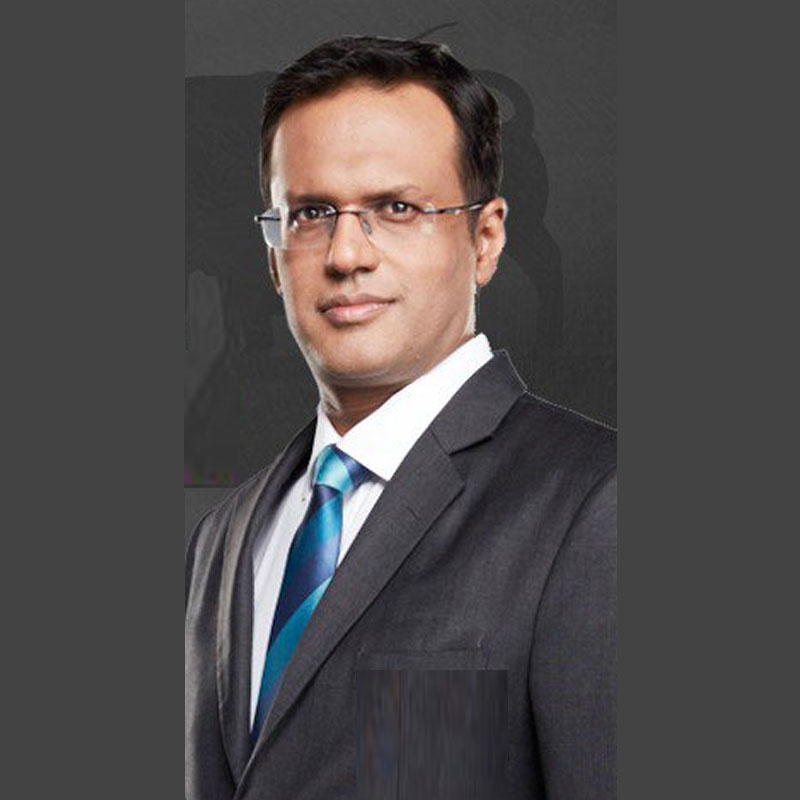
MUMBAI: Times Network has elevated Nikunj Dalmia as managing editor of ET Now. He will succeed Sandeep Gurumurthi, who announced his decision to move on from his current responsibilities.
In his new role, Dalmia will report to Times Network MD and CEO MK Anand and will lead all editorial decisions for the channel, head news programming, conceptualise shows in addition to his anchoring responsibilities – The Market, Closing Trades and Market Makers.
Commenting on the development Times Network MD and CEO MK Anand said, “Sandeep has been an integral part of ET Now, right from its inception. We are grateful to him for his many contributions in making ET Now a front runner and the most coveted Business news channel in India. We wish him well in his future endeavor. We are also pleased to welcome Nikunj in his new role and I’m sure he will lead ET Now to greater glories.”

Dalmia has over 20 years of experience. In his previous role as the executive editor – Financial Markets, ET Now has built a reputation of understanding the dynamics of the markets and has gained respect of the market voices and viewers alike. Dalmia is India’s most seasoned Business News anchor who has witnessed the journey of the SENSEX from 2800 to 36000.
On his new role, ET Now managing editor, Nikunj Dalmia said, “I’m honored to take over the new responsibility and I’m thankful to Sandeep for his guidance and contribution to the success of the channel. I look forward to taking on this mantle and further the momentum of ‘Rise with India’.
Sandeep Gurumurthi said, “I’ve cherished a decade long association with ET Now and I’m thankful to the Times Group, MK Anand and the fabulous team for their support in building a powerful brand. Under Nikunj’s leadership, I feel very confident that the channel and the company will continue to follow its aggressive growth path and achieve more success.”





News Broadcasting
UDF poised to return to power in Kerala, says Manorama-CVoter survey
Massive opinion poll projects shift in Kerala politics ahead of 2026 Assembly elections.
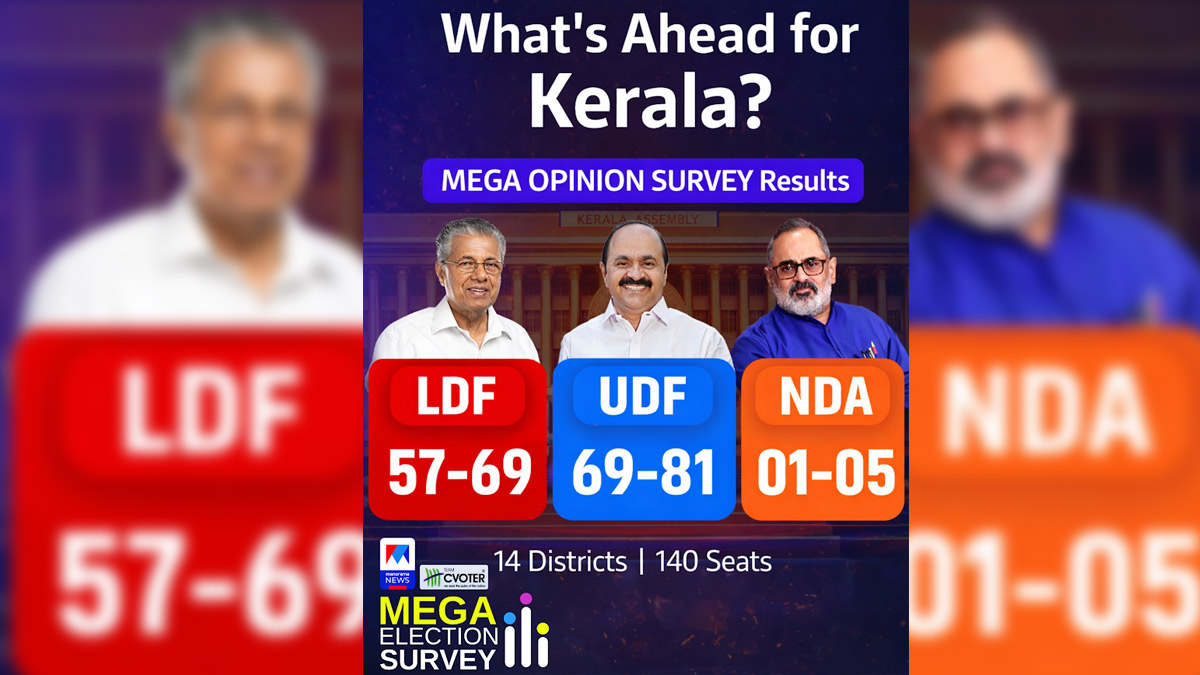
MUMBAI: The winds of change appear to be blowing through Kerala’s political landscape and this time, they seem to favour the United Democratic Front. A comprehensive mega opinion survey conducted by Manorama News in partnership with CVoter projects a potential comeback for the UDF in the upcoming Kerala Legislative Assembly Elections 2026. The survey, covering all 140 constituencies with a massive sample size of nearly 90,000 respondents, predicts the UDF could win between 69 and 81 seats.
The ruling Left Democratic Front (LDF) is expected to secure 57 to 69 seats, a significant drop from the 99 seats it won in the 2021 elections. This would mean the LDF losing 30 to 42 of its sitting seats. Meanwhile, the National Democratic Alliance (NDA), which drew a blank in 2021, is projected to open its account with 1 to 5 seats.
Region-wise, the UDF is expected to make strong gains in Malabar, winning 25 to 34 out of 48 seats, and in Central Kerala, where it could bag 29 to 33 out of 53 seats. In South Kerala, the LDF is likely to retain an edge with 21 to 25 seats, while the UDF may improve to 12 to 16 seats. The NDA could pick up 1 to 3 seats in the southern region.
The survey was conducted between 14 and 26 March 2026, with additional tracker and snap polls carried out from December 2025 to March 2026. A total of 89,693 respondents participated, ensuring representation across all demographics and social segments.
Manorama News has a strong track record of accuracy, with its previous projections closely matching the actual results of the 2019 and 2024 Lok Sabha elections as well as the 2021 Kerala Assembly polls.
In Kerala’s famously fierce political battles, this survey suggests the pendulum may be swinging back. Whether the final verdict matches these numbers or throws up another surprise, one thing is clear, the 2026 Assembly elections are shaping up to be one of the most keenly watched contests in the state’s history.






