Fiction
This is not the time to think of loss or profit: SVF’s Mahendra Soni


MUMBAI: The unprecedented COVID-19 crisis has thrown a spanner in the works of both large companies as well as small and medium enterprises. SVF, one of the biggest production houses in East India, is also not an exception. Although its over-the-top platform Hoichoi has fared well, its massive film and TV production business, which had seven daily soaps going on, has come to a halt. SVF co-founder and director Mahendra Soni acknowledges the crisis but he thinks it is a time to support the fraternity, rather than overdoing the loss count.
In an interaction with Indiantelevision.com, Soni spoke on wide-ranging topics including the impact of the crisis in the Bengali market, on SVF and the way forward.
Edited excerpts:

What will be the overall impact of the crisis on the Bengali industry?
If we take the financial year 2020-2021, I think there will be at least 30-40 per cent drop than the last year for sure, if it opens before May end or around that period. So, I think August will be a very important time period in the Bengali market because by that time people should start coming back to theatres and we can have a few footfalls by Durga Puja. But if we continue beyond that (May end), then it becomes difficult because the whole cycle is stuck. At this moment all I can say is that it’s not about loss or profit, it is about at least looking after the people that work there, daily wage workers, etc. Honestly, we are not also thinking beyond that.
How does this crisis impact SVF's overall finances as well?
No one was prepared for it. It’s not the time to be thinking about balance sheets. I am not listed on the share market so I am not worried about that. We know that we have a pool of great creative talent and whenever it opens, we will bounce back stronger. At this moment our priority is to be safe and make sure that everybody stays in their home and also reach out to everyone who can help in any way. In fact, I would like to appeal to others in the industry to be strong, support your people, stand by them and not think of losses.
How many projects of yours are stuck and how many were in the initial stage?
We were working on almost seven new films. Six were already shot or in the production/post-production stage. Apart from that, there are six-seven films that we were planning from April to December, all those films got stuck.
How much impact are you seeing on TV production?
To be honest, TV is a daily loss. As it has stopped, we are not making any money or any content. So that’s revenue-wise more impactful and the team size is also bigger there.
Since you have a robust movie library and you have worked along with Bengali Star Jalsha, Zee Bangla, are you planning to offer some of your movies to the channels?
So we spoke about that but almost 80 per cent of my library is already with Jalsha. I also feel that TV broadcasters are a little reluctant to invest in new content. At least, I can say from the regional perspective because the advertising revenue has definitely gone down. I had some discussions about monetising that content with a couple of channels but I feel that also has been stuck because of their budget issues and cash flow issues because they also have to look after so many people they have already employed.
How are you focusing on the development part of the projects currently?
We have divided the teams into two-three groups. Everybody is working from home and we use Microsoft Teams to connect. One team speaks to directors. A lot of creative things are happening because the scenario would change a lot after this even when we come back; how people feel, how people see things, how we're going to change ourselves so that’s also going to create a lot of content that we create every day. So those discussions are happening. We are going back to also thinking what all we have done and what has gone wrong so we should not be doing those mistakes again.
So, we do one meeting every week to figure out what they have watched and from there we would pick up at least seven-eight ideas that can be developed or looked into.
Once things resume, how much time will it take for you to go back to normalcy for your production?
I don’t think we will take even half a minute to go back to normalcy. We are paying our dues, we are supporting our people, we don’t see any reason for a delay of anything.
Are you expecting any support from the government?
Again it's not the time to ask that. It is the time to get past through it. I am sure the government also would be supportive but at this moment we should support our government to just make sure that the poor people, the homeless people, the medical fraternity should be looked after well and whatever we can do for them is more important than doing for our business.






Fiction
Banijay merges with All3Media in $6.65 billion deal
Marco Bassetti will lead the combined company as CEO
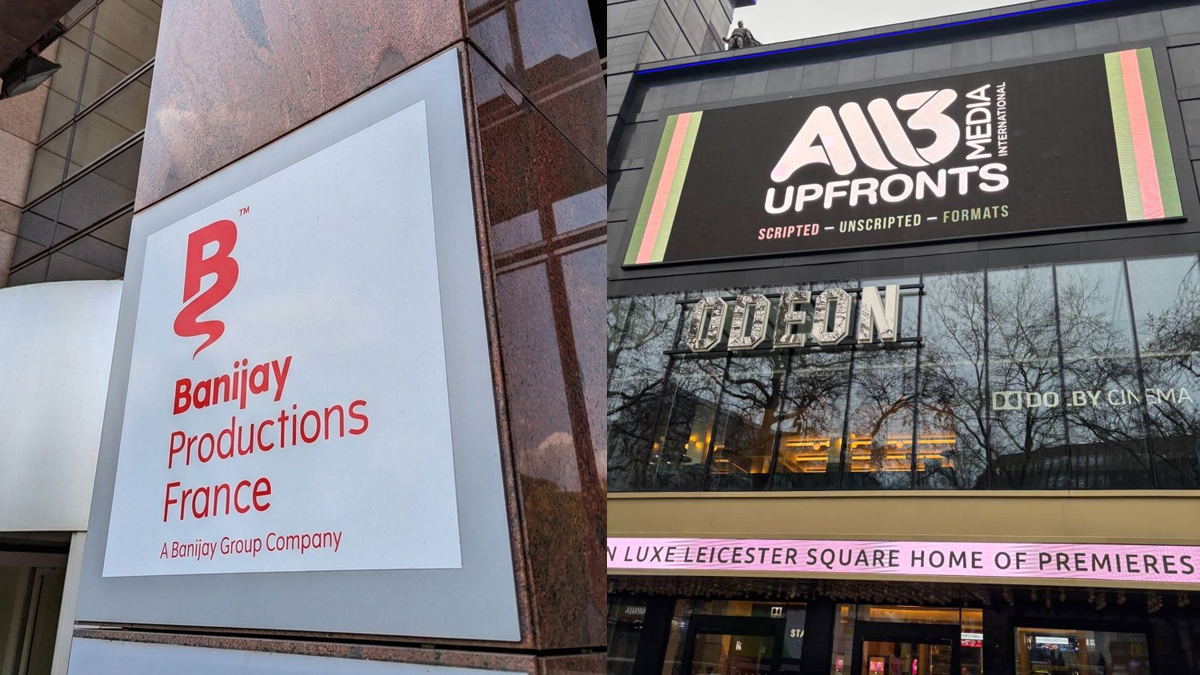
PARIS: Six years after acquiring Endemol Shine at the height of the pandemic, Banijay has struck again. The European production heavyweight is merging with All3Media in a deal that will create a television titan with $6.65 billion in revenue and redraw the contours of a fast-consolidating market.
The combined company will trade under the Banijay name and be owned 50 per cent each by Banijay Group and RedBird IMI, which acquired All3Media in 2024. The transaction is expected to close by autumn, subject to regulatory approvals.
Banijay Entertainment CEO Marco Bassetti, will take the top job at the enlarged group. All3Media CEO Jane Turton becomes deputy CEO. RedBird IMI CEO Jeff Zucker will serve as chairman.
The logic is scale. Broadcasters are commissioning less, streamers are tightening budgets and global buyers are fewer but bigger. Against that backdrop, heft matters. The merged entity will generate roughly $6.65 billion in revenues based on 2024 figures, giving it sharper elbows in rights negotiations and deeper pockets for franchise-building.
“Entrepreneurialism, ambition and creativity” remain core to Banijay’s DNA, Bassetti said, flagging plans to invest more heavily in new intellectual property, live events and emerging platforms. Turton struck a similarly bullish note, pointing to All3Media’s journey from a 2003 start-up to a global supplier of hit formats and high-end drama.
Between them, the two groups control a formidable slate. Banijay’s catalogue spans MasterChef, Big Brother, Survivor, Black Mirror, Peaky Blinders and Deal or No Deal. All3Media’s labels include Studio Lambert, producer of The Traitors and Squid Game: The Challenge; Two Brothers, behind The Tourist; and Neal Street, currently producing the forthcoming Beatles biopics directed by Sam Mendes for Sony.
The back catalogue is equally muscular. Banijay Rights holds some 220,000 hours, while All3Media International adds around 35,000 hours, forming one of the industry’s largest libraries.
Banijay, controlled by French entrepreneur Stéphane Courbit and listed in Amsterdam, counts more than 130 production companies across 25 territories. All3Media operates over 40 labels, with strong positions in the UK, US and Germany. The enlarged group will also lean into live entertainment, building on Banijay’s Balich Wonder Studio, which produced the opening ceremony of the Milan-Cortina Winter Olympics, and the Independents.
The deal marks a shift in tone. As recently as October, Bassetti suggested that mergers and acquisitions were not a priority. But the drumbeat of consolidation has grown louder. Mediawan has moved for Peter Chernin’s North Road. David Ellison’s Paramount has agreed to a $110 billion takeover of Warner Bros, with plans to combine HBO Max and Paramount plus. ITV has explored selling its media and entertainment arm to Comcast-owned Sky, though talks have reportedly slowed.






