News Headline
“There’s a sense of purpose at Prasar Bharati..”

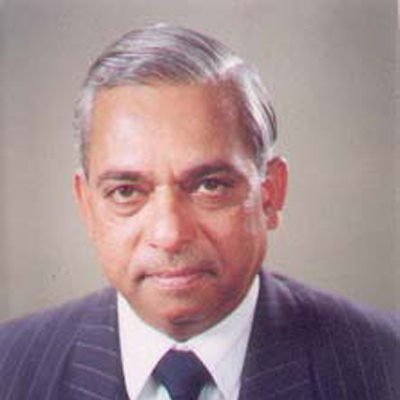
Over the last decade or so, broadcasting markets around the world have changed dramatically. De-regulation of terrestrial markets, growth of multi-channel radio and television and emergence of strong pay TV operators have altered the competitive dynamics in many markets. While private channels, in pursuit of advertising revenue often stick to offering only those programmes that fetch returns, it is the public service broadcaster that takes on itself the responsibility of reaching out to the masses, catering to their diverse entertainment and information needs.
“Plurality of interest is always good and it has come to the fore where FM radio is concerned. Private players will provide what AIR cannot provide as far as content is concerned”

As a public service broadcaster, which is constantly feeling the pressure of living up to its designated role of being a public service broadcaster on one side and the need to generate revenues on the other, for Prasar Bharati year 2002 was a pretty good one. I feel more elated about All India Radio, which always seems to be living in the shadows of Doordarshan. The revenues from radio would cross the Rs 100 crore mark by the time we finish the current financial year (ending March 31, 2003) and most of it was generated during 2002.
Simultaneous to doing our own business, Prasar Bharati has been instrumental in helping others. Take, for example, the case of the private FM players. When the private players were finding it difficult to put up their own infrastructure, AIR came to their help by leasing out infrastructure at its disposal. What’s more, neither Prasar Bharati nor AIR considers the private FM players as competition. Plurality of interest is always good and it has come to the fore where FM radio is concerned. Private players will provide what AIR cannot provide as far as content is concerned.
There are several achievements during 2002, but we can say with pride that we also lived up to our role of a public service broadcaster when, for the first time, DD covered the National Games held at Hyderabad in an unprecedented manner. For the first time, the regional DD Kendras covered the National Games exhaustively, while the National channel provided in-depth coverage for viewers country-wide.
It also gives us great satisfaction that from the National Games, DD earned Rs. 50 lakh as advertising revenue. Compare this to the last National Games when the revenue generated was a mere Rs. 5 lakh.
Now, why am I referring to these instances ? All these go on to highlight a sense of purpose in Prasar Bharati — looking at opportunities to generate additional revenue without sacrificing our importance as a public service broadcaster. I don’t see much conflict in interest. Such things can be done and would be done.
These days, since I also double up as the director-general of AIR, I am realising the importance of the organisation as also the vast possibilities that AIR offers. For instance, for the last five years the rate card of AIR had not been revised which was done during 2002. Not only Prasar Bharati has gone in for rationalisation of the AIR rate card, but, in the process, has the possibility of giving TV channels a run for their money.
For the sponsored category, we have reduced the buy rates and the response has been overwhelming from sponsors and advertisers. With increased number of AIR radio stations, coupled with low rates, Prasar Bharati hopes to generate more sponsors and more revenues.
There are certainly some concerns relating to Doordarshan that may just, just, be able to meet its revenue target. As the position is today, the task is a bit tough. But if we set our sight firmly on our goals, I think, they can be achieved. And achieved within the time frame.
There have been several cases that have contributed to the shortfall in DD’s revenue target. In the previous financial year, there were some big deals like Channel Nine and Budha Films, all of which have come to an end. Then there are a number of disputed cases where quite a few organisations still owe DD money, but the money cannot be realised as some cases are under arbitration.
By end-December, DD had managed to garner revenues worth about Rs. 270 crore, while the net revenue target is something around Rs. 525 crore. The problem of bridging the gap is being looked into and the Prasar Bharati board is seized of the matter. One way to do is to drive the defaulters to pay up. This, certainly amongst others, would be one of our priorities in 2003. We have been holding talks with those companies where the cases have gone for arbitration and trying, amicably, to settle the issues and expedite the matter fast.
I think the Planning Commission and the Finance ministry would set reasonable targets for us for the next financial year (beginning April 1).
As part of such initiatives, Prasar Bharati, subject to board clearance, would ask the target for AIR to be revised upward by at least 20 per cent. This would go a long way in reducing the burden on DD. I really feel that with many more TV channels coming up this year, there would be tough competition on hand for DD. With the advertising pie not increasing much, one should not expect large revenues from DD. That’s a worst-case scenario.
But, with the Prasar Bharati board, including director-general of DD, S Y Quraishi, looking into this matter, one of the focus areas for us this year will be to try increase government business— tap government and semi-government organisations to come on to the DD platform. Maybe also on AIR. The deal that Prasar Bharati recently signed with the Insurance Regulatory & Development Authority is part of this initiative.
On the whole, with a satisfying 2002 when both DD and AIR did commendable jobs on all fronts, including earmarking Rs. 6 crore to be spent on making of classics on DD and starting a national radio channel in short-wave, we think that 2003 should be exciting as the broadcasting scenario in India is likely to undergo a sea change — conditional access system will contribute a lot to that.
In the end, I can only say that the more commercial the broadcasting market becomes, the role of a public service broadcaster, correspondingly, will become that much more necessary.
(The author is chief executive officer, Prasar Bharati. The ideas expressed here are his personal ones and indiantelevision.com need not necessarily endorse them)




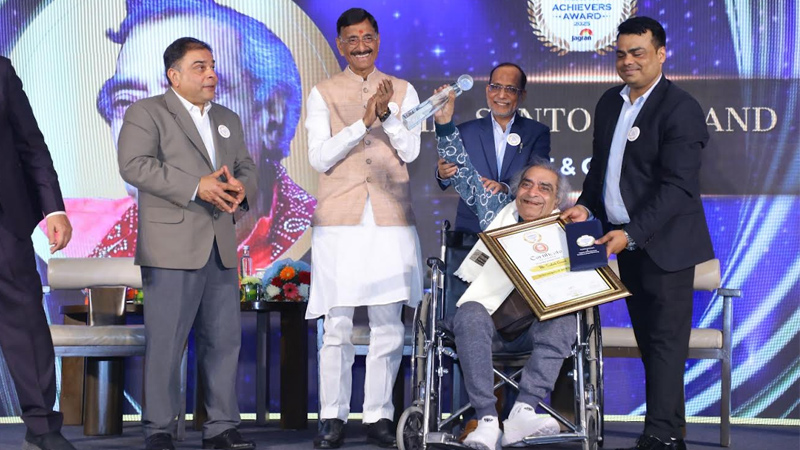
NEW DELHI: Hamdard Laboratories gathered a cross-section of India’s achievers in New Delhi on Friday, handing out the Hakeem Abdul Hameed Excellence Awards to figures who have left their mark across healthcare, education, sport, public service and the arts.
The ceremony, attended by minister of state for defence Sanjay Seth and senior officials from the ministry of Ayush, celebrated individuals whose work blends professional success with a sense of public purpose. It was as much a roll call of achievement as it was a reminder that influence is not measured only in profits or podiums, but in people reached and lives improved.
Among the headline awardees was Alakh Pandey, founder and chief executive of PhysicsWallah, recognised for turning affordable digital learning into a mass movement. On the sporting front, Arjuna Awardee and kabaddi player Sakshi Puniya was honoured for her contribution to the game and for pushing women’s participation onto bigger stages.
The cultural spotlight fell on veteran lyricist and poet Santosh Anand, whose songs have echoed across generations of Hindi cinema. At 97, Anand accepted the honour with characteristic humility, reflecting on a life shaped by perseverance and hope.
Healthcare honours spanned both modern and traditional systems. Manoj N. Nesari was recognised for strengthening Ayurveda’s place in national and global health frameworks. Padma shri Mohammed Abdul Waheed was honoured for his research-backed work in Unani medicine, while padma shri Mohsin Wali received recognition for his long-standing contribution to patient-centred care.
Education and social development also featured prominently. Padma shri Zahir Ishaq Kazi was honoured for decades of work in education, while former Meghalaya superintendent of Police T. C. Chacko was recognised for public service. Goonj founder Anshu Gupta received an award for his dignity-centred rural development initiatives, and the Hunar Shakti Foundation was honoured for empowering women and young girls through skill development.
The Lifetime Achievement Award went to former IAS officer Shailaja Chandra for her long career in public healthcare and governance, particularly in the traditional systems under Ayush.
Speaking at the event, Hamdard chairman Abdul Majeed said the awards were a tribute to those who combine excellence with empathy. “These awardees reflect Hakeem Sahib’s belief that healthcare, education and public service must ultimately serve humanity,” he said.
Minister Seth struck a forward-looking note, saying India’s young population gives the country a unique opportunity to become a global destination for learning, health and wellness by 2047.
The ceremony also featured the trailer launch of Unani Ki Kahaani, an upcoming documentary starring actor Jim Sarbh, set to premiere on Discovery on 11 February.
Instituted in memory of Unani scholar and educationist Hakeem Abdul Hameed, the awards have grown into a national platform that celebrates those building a more inclusive and resilient India. For one evening at least, the spotlight was not just on success, but on service with substance.







