News Broadcasting
The show must go on! When news anchors broadcast live from homes

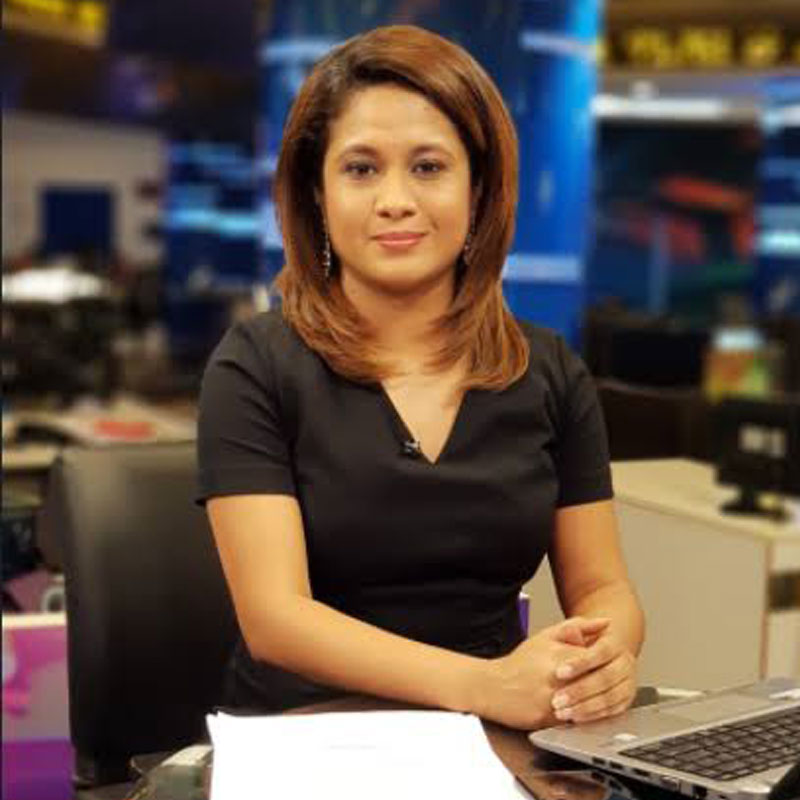
MUMBAI: The COVID-10 pandemic has virtually thrown every aspect of human life out of gear. The television media, in particular the news genre, teetered on the brink of breakdown in the face of an unprecedented lock-down. But, as they say, the show must go on. Most of the news channels, in the face of the pandemic, have acclimatised to the situation by changing their reporting style and adopting the work-from-home mode to practice social distancing. And the change has been palpable. Anchors, who usually appear on screen in their flamboyant best, are now anchoring from their homes with minimal makeup and in casual attire.
The slick get-up has given way to a casual one.
There are, however, challenges, especially on the technical and connectivity fronts. Mirror Now news editor and anchor Tanvi Shukla, who hosts the prime time debate show The Urban Debate, believes, “The biggest challenge is communication with the team while preparing and presenting the show. For example, the time lag makes holding a debate a challenging task.”

At home, everything is amateur: the lighting, camera angle, backdrop and makeup, because when an anchor works from home as he/she has to set up everything and be ready for the show to roll, says Asianet News assistant executive editor Sindhu Suryakumar, who anchors the show Cover Story.
The news anchor is considered to be the face of a news channel. And to maintain that, broadcasters not only groom them but also take good care of their makeup, hairstyle and wardrobe in order to make the look and feel of the channel appealing.
Usually, before an anchor goes live from the TV studio, there are dozens of people involved in creating that face value. They strive to make the anchor look presentable and flamboyant. Makeup, hairstyle and wardrobe play critical roles. All these paraphernalia has now been done away with, as work-from-home mode has become the new normal in these days of social distancing.
“I do my own makeup now. Over the years, I have picked up a trick or two and keep it pretty simple,” says ET Now senior news editor Tamanna Inamdar, who hosts prime time debate show India Development Debate. “What many don't realise is that makeup is important because of the studio lights and at the end of the day, the focus is to be presentable and bring the facts for our viewers.”
So, no more wardrobe rooms with stylish shirts, blazers and pants to choose from. Anchors appear now in their own clothes!
Fashion stylist Mitali Ambekar, who has worked with prominent brands such as Netflix India, says: “We are living in a visually-appealing society. People entertain you only if you appeal to them visually first. Appropriate attire is the most important factor. An anchor must look presentable, be at home or office. Unless an anchor is professionally dressed, the audience may not take the anchor and channel seriously, and of course, that could eventually impact viewership. While working from home, not only does the attire matter but also the frame background, wardrobe, colour and light setting.”
Other factors that enhance the look and feel of the channel include camera framing, background, lighting and quality of the video. “A video camera and live unit has been set up in one corner of my apartment and I connect it myself,” says Shukla. She also states that the camera is never moved from that corner in order to maintain the background, light and other aspects.
Unlike Shukla, Inamdar uses a phone camera, with an app that helps her go live. Similarly, Suryakumar says: “We have this set-up called T-view which is positioned at an anchor’s house and the T-view Anywhere mobile app helps reporters and anchors go live.”
Gaining and maintaining the trust of viewers is a major channel asset. So, all anchors add a disclaimer while on-air, informing their audience that they are beaming live from their homes. Inamdar says, “I have been mentioning that I am anchoring from home as a message to viewers to practice social distancing and fight COVID-19 together.”
Asianet is also following the same protocol. The disclaimer also helps avoid any embarrassment if there is a technical glitch. “Technological evolution has somehow made the life of anchors and journalists easy,” says independent journalist and former Mirror Now executive editor Faye D’Souza. “Today, you’re just one click away from going live on any platform and, of course, the same thing is possible when broadcasting live news on TV, except for a few technical hindrances.”
She also predicts that the work-from-home module is going to change the whole ball-game in the future. With new tricks in the kitty, things won’t go back to the same old system which requires heavy manpower.
Agreeing with D’Souza, Suryakumar says, “Work-from-home will see a bring about a change in work culture. It, of course, increases productivity as people have become more responsible and accountable. However, this module is not feasible 100 per cent for a 24×7 news channel considering there are things which have to be done only through the office such as production and transmission, among others.”
Inamdar points out, “The experience has been a huge learning curve with me having to pick up skills that were not necessarily in my domain, like a camera set up.”
What drives a news channel is real-time content. The look and feel are secondary, but important aspects. However, during unprecedented times even the audience understands their compulsions. D’Souza believes that the audience is appreciative of the efforts put in by every person in news channels, including anchors and journalists, who are getting them the real-time updates during testing times.





News Broadcasting
CNN-News18 to host Fury in the Gulf conclave on West Asia crisis
Three-hour summit to unpack geopolitical fallout and impact on India

MUMBAI: CNN-News18 is set to host a special three-hour broadcast, Fury in the Gulf – War Conclave, on April 7, aiming to decode the escalating West Asia crisis and its far-reaching implications for India.
Scheduled from 4:00 PM to 7:00 PM, the conclave comes at a time when tensions between Iran and the United States are reshaping global geopolitics and triggering economic uncertainty. With India’s deep energy ties, trade links and large diaspora in the Gulf, the developments carry significant domestic relevance.
Built around the theme ‘Conflict, Consequences, and The Future,’ the programme will feature six curated sessions combining one-on-one interviews and panel discussions. The focus is to cut through the clutter and offer viewers a clearer understanding of the fast-evolving situation.
Key sessions include ‘Diplomacy in Times of War’ featuring Shashi Tharoor, and ‘World After the Iran Conflict’ with voices such as Ram Madhav, Reuven Azar, representatives from the European Union and the Iranian Deputy Envoy. Another session titled ‘Another Dunkirk?’ will bring together K. J. S. Dhillon and Jitin Prasada among others.
CNN-News18 editorial affairs director Rahul Shivshankar said, “In times of war, clarity becomes the most powerful tool. Fury in the Gulf – War Conclave brings together credible voices to address the questions and confusion that arise amid an overwhelming influx of information.”
He added that the initiative is aimed at delivering “facts, perspective, and insight” at a time when misinformation can easily cloud public understanding.
Echoing the sentiment, CNN-News18 CEO– English and business news Smriti Mehra said the conflict marks a defining global moment, with consequences that extend well beyond the region. She noted that the conclave seeks to present the crisis with “depth, nuance and responsibility” so audiences can better grasp its real-world impact.
As geopolitical tensions continue to dominate headlines, the conclave positions itself as an attempt to bring order to the noise, offering viewers a structured, insight-led look at a complex and rapidly shifting global situation.






