iWorld
The nihilist penguin who walked away and has now broken the internet

MUMBAI: One penguin, one strange walk and a flood of online meaning: how an old Antarctic clip became social media’s newest obsession
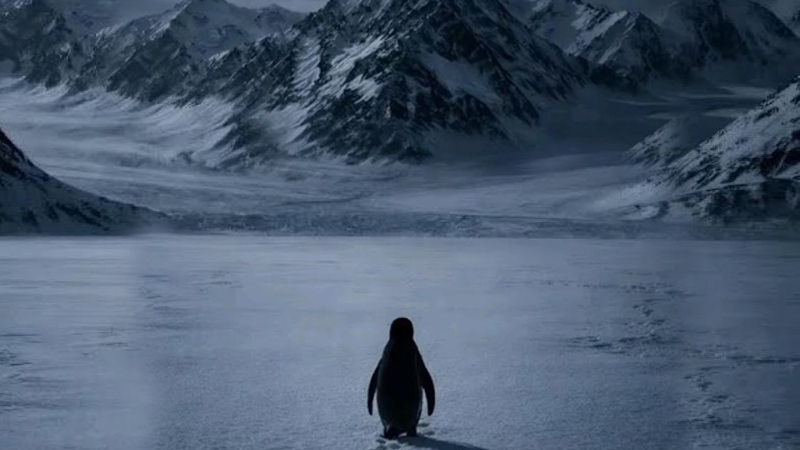
A lone penguin waddles away from its colony. No drama. No predators. No chase. Just a steady, deliberate march into the vast white unknown.
That quiet moment has now become one of the internet’s loudest conversations.

This video was shot 15 years ago long before it went viral, long before people tried to add meanings to it.
A lone penguin, filmed in Antarctica, walking endlessly through the ice… No edits. No background story, No narration.
Just a penguin and time.
For years, no one knew… pic.twitter.com/30RcdNIjGo
— Aman_Chain ?️ (@Amanprabhat9) January 23, 2026
A short clip from Encounters at the End of the World, Werner Herzog’s 2007 documentary set in Antarctica, has resurfaced and gone viral across platforms, spawning memes, philosophical captions, brand jokes and cultural commentary. Online, it has been christened the “nihilist penguin”, a reluctant mascot for modern exhaustion and existential dread.
The footage shows an Adélie penguin breaking formation, turning its back on the sea, where food and survival lie, and heading inland towards distant mountains. In the documentary, scientists note that such behaviour is rare and almost certainly fatal. Penguins are built for the ocean, not for wandering across ice towards barren terrain.
As the footage continues, Doctor David Ainley, an ecologist featured in the film, underlines the mystery. “Even if he caught him and brought him back to the colony, he would immediately head back for the mountains. But why?” he asks. The question, left hanging in the frozen air, is never answered.
Herzog himself later distilled the moment into a single line, sharing the clip with the caption: “The story of my lonesome penguin.”
But social media is not interested in biology alone.
On Instagram, X and Reddit, the penguin has been cast as a symbol of burnout, rebellion, quiet quitting, mid-life crises and the desire to opt out. Captions range from bleak humour to poetic resignation. Some users frame the penguin as a tragic existential hero, others as the ultimate mood for a generation tired of constant striving.
That damn penguin inspired a whole generation in one night pic.twitter.com/HjK0jZNJIa
— autist (@litteralyme0) January 25, 2026
The meme has travelled fast and wide. Brands have jumped in with tongue-in-cheek posts. Public institutions and police handles have repurposed the image for awareness messages. Even political figures and commentators have referenced the penguin as shorthand for defiance or despair. What began as a fleeting documentary moment has become cultural shorthand.
Scientists, meanwhile, have gently poured cold water on the symbolism. There is no evidence that penguins make philosophical choices. Such solitary inland journeys are believed to result from disorientation, illness, injury or navigational error. In the harsh Antarctic environment, straying from the colony usually ends badly.
Spot the difference $Penguin pic.twitter.com/h5gs4veesT
— Shape (@ShapeFN_) January 24, 2026
Yet the gap between scientific explanation and public imagination has only fuelled the meme’s appeal.
The penguin’s power lies in its ambiguity. It does not run. It does not panic. It simply walks, calmly and stubbornly, away from the expected path. In an online world saturated with noise, outrage and urgency, that quiet refusal resonates.
The timing has helped. The clip’s revival comes amid widespread conversations about work fatigue, mental health and the pressure to constantly perform. The penguin’s slow march has become a visual metaphor for opting out of the grind, even if the destination is unclear.
There is also something deeply internet-native about the moment. Social media thrives on rediscovery, remixing and emotional projection. A two-decade-old documentary scene can be stripped of context, layered with music, reframed with text and reborn as a collective feeling. Meaning is crowdsourced, irony embraced.
For Herzog, whose films often dwell on nature’s indifference to human meaning, the viral afterlife of his work feels almost fitting. A scene meant to highlight the strangeness and fragility of life in extreme environments has been reinterpreted as a mirror for human anxiety.
The penguin does not know it is famous. It does not know it has become a meme, a metaphor or a mood. It simply walks on, frozen in a loop of pixels, carrying whatever meaning viewers choose to load onto it.
In the end, the “nihilist penguin” says less about Antarctica and more about us, a reminder that in the digital age, even a silent animal wandering off course can become a voice for millions trying to make sense of where they are headed.
The moment itself is not new. The footage dates back to the mid-2000s, filmed during Werner Herzog’s Antarctic documentary Encounters at the End of the World. What is new is the internet’s fixation.
And perhaps that is why the clip refuses to fade. Sometimes, the most viral stories are not about where we are going, but about the unsettling feeling of walking away, without quite knowing why.







eNews
Piyush Thakur steps down as Inshorts’ chief revenue officer
Former vice president and cro says exit marks a new chapter after close to a decade of building revenue and partnerships at Inshorts Group.

NOIDA: Piyush Thakur has stepped away from Inshorts Group after nearly 10 years with the company, marking the end of a long tenure that culminated in his role as chief revenue officer.
In a farewell note, Thakur said he was “turning a new page” after almost a decade at Inshorts, calling it one of the hardest professional decisions he has made. He added that his exit was not driven by uncertainty about the future, but by reflection on a long association with the company.
Thakur joined Inshorts in October 2016 as vice president and spent around seven years in the role before being elevated to chief revenue officer in April 2024, a position he held until April 2026.
He said his tenure was defined by “thousands of mornings, late nights, product debates and breakthrough moments”, as the company evolved into a large-scale digital news platform used by millions.
In his note, Thakur emphasised that Inshorts’ growth was a collective effort across teams, adding that engineers, designers, sales teams and customer support staff all contributed to building the platform. He said the company’s success was not the result of individuals but of “everyone who stayed, passed through, and left their mark”.
Before Inshorts, Thakur worked across several digital media and business development roles. At ESPN, he served as senior regional manager from October 2015 to October 2016, focusing on growth initiatives, strategic opportunities and video distribution.
At Times Internet, he worked for nearly three years, including as head of business development from April 2015 to September 2015 and chief manager from January 2013 to March 2015. His responsibilities included monetisation of mobile platforms, managing media and developer partnerships, and driving revenue across digital properties such as The Times of India and The Economic Times.
Earlier, he worked at Brandmovers as head of business development from June 2012 to June 2013, handling digital, mobile and social media marketing solutions, client development and strategic consulting. During this period, he also worked on advertising revenue, brand strategy and CRM-based solutions.
At Inshorts, Thakur’s role focused on revenue strategy, mobile and media partnerships, and growth initiatives across platforms. His profile highlights experience in mobile product management, digital business models, partner ecosystems and revenue expansion in high-growth environments.







