Content Hub
The Content Hub: Few breakaways from herd mentality


MUMBAI: The fiction show space in India is going through a changing scenario. While there is experimentation, several shows address similar themes. Discussing about the same at indiantelevision.com’s, ‘The Content Hub,’ were Hats Off Productions founder JD Majethia, Balaji Telefilms creative director Nivedita Basu, Epic Television Networks creative head Ravina Kohli, MTV programming head Vikas Gupta, writer and producer Ila Bedi Dutta and author and scriptwriter Gajra Kottary. The session was moderated by IPR Times Group head of content and operation Monisha Singh Katial.
The discussion began with Katial questioning whether the fiction space was experiencing a lull period. Basu who joined Balaji after a sabbatical, said that the reason why she rejoined was because the fiction space was still evolving. However, Kottary felt that there is a lull in terms of the fact that everything looks the same.
Kohli too agreed that there is a herd mentality, but Epic isn’t competing in the GEC space, since it is a different channel. “Usually people evaluate shows by seeing if others will like it. We believe that if we can watch a show, we will go ahead with it rather than make it for an audience that we don’t even know,” she informed.

Gupta said that due to age group differences, looking at a show from an age group perspective wasn’t easy. “I may be older but I am creating shows for the age group of 15 to 20. And research is showing us that 30 is the new 18,” he explained.
Writers on board said that most of them have had unusual stories to tell, but broadcasters pick up shows depending on their research. “When a creative person comes up with a good show, which receives appreciation, but not the ratings, then the broadcaster pulls the plug on it. He loses conviction in experimenting and goes back to the tried and tested shows,” opined Majethia. He mentioned that Sarabhai vs Sarabhai which was telecast once a week never got the desired ratings and when Star One put it as a repeat daily, the ratings shot up.
Through the discussion, Kohli added that it isn’t possible to sustain creativity day after day, which was agreed by Majethia, who said that the current shows are squeezing writers so much that they lose the creativity and passion that they began the show with.
While Basu said that it was encouraging to see the type of content that Epic and MTV are creating, Balaji’s experience has been quite different. “Channels want success. We at Balaji have also tried doing mature shows such as Kehna Hai Kuch Mujhko but our experiments have failed miserably and so we were asked to go back to doing dailies,” she said.
The issue with having a single episode a week shows is that the audience doesn’t usually come back like it does for a daily because it has been trained that way, said Majethia. According to him, the way to do this was to have Monday to Thursday shows and Friday to Sunday shows because it is easier to remember weekends than once a week.
Gupta said that the audience looks forward to weekend shows being larger than life. He said that while experiments have happened such as MTV’s own show about a gay love story, not every viewer is ready. While earlier shows catered to urban settings, with increasing TV penetration shows have also gone backward. He also highlighted a point saying, “There isn’t a lull in fiction, there is a lull in fiction success. Everyone tries something new in fiction almost every year.”
Over the years, there has also been an increasing competition among GECs, unlike the limited channels earlier. Kottary also spoke about one of her shows which was broadcast on Zee TV in the early 2000s which was about a 34 year old lady doctor falling in love with a younger man. This according to her was much ahead of its time and yet worked for three years.
Basu, who has also worked on the Indian adaptation of 24, said that though a lot of efforts went behind it, but it didn’t garner the expected ratings. She then proposed a question asking which of the two channels, Zindagi and Sony Pal that launched with different content, could be called a success? Majethia to this said that Zindagi has spent little on buying the shows while Pal has invested heavily in producing original shows. “Zindagi is a success because it is a finance driven model,” he said.
Basu with her bag full of ideas, said that channels have been typecast. So a comedy show will be sent to Sab, while a youth oriented show will be sent to MTV, to which Gupta said that this level of segmentation is healthy.
Whether writers, producers and channels are really pushing the envelope was a question raised in the session, to which most people replied with a positive note, while Kottary said that she doesn’t feel they are really pushing it, but it was possible.






Mumbai: Exploring the shift from regional to national content, this synopsis delves into the trends and challenges. It navigates the transformation, analyzing industry dynamics, emerging trends, and the hurdles faced. From preserving regional variation to adapting to a broader audience, it examines the multifaceted journey of regional content evolving into a national narrative. In what ways do the emerging trends and challenges influence the dynamics of the entertainment industry during this transition? How can creators navigate these changes effectively? What strategic approaches can content creators adopt to strike a balance between maintaining regional identity and fostering a cohesive national narrative in their work? How can the transition from ‘regional’ to ‘national content’ impact cultural diversity within the entertainment industry, and what measures can be taken to ensure the preservation of regional variation?
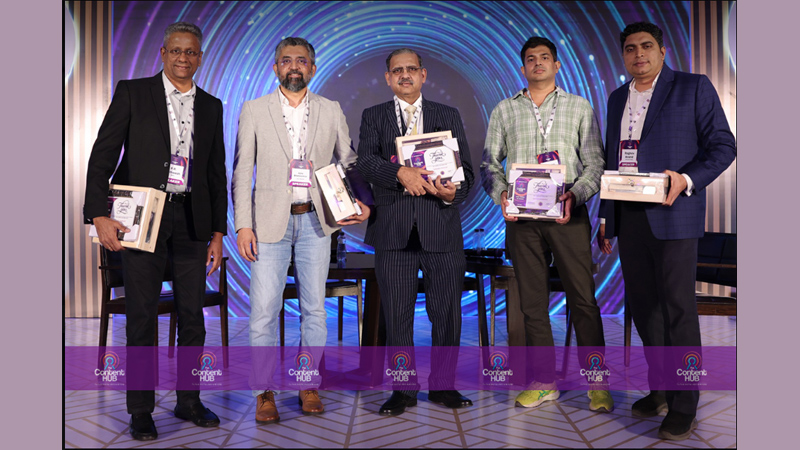
In a rapidly evolving media landscape, seasoned industry professionals have offered valuable insights into the transformation of content consumption and production. The session was chaired by Ernst and Young partner Raghav Anand, MMTV chief executive officer P.R. Satheesh, Sony Marathi business head Ajay Bhalwankar, PTC Network chairman & MD Rabindra Narayan, Shemaroo Entertainment COO, Digital, Saurabh Srivastava esteemed voices in the field, have articulated their perspectives on the burgeoning shift towards globalised content.
Rabindra Narayan emphasised the dissolution of regional boundaries in content consumption, attributing it to the accessibility facilitated by global platforms and connectivity options. He predicts a future where language barriers will fade, citing the potential of technology to clone and adapt voices, thus enabling seamless localization across languages.
Saurabh highlighted the democratisation of content creation in the digital era, underscoring its empowerment and revenue potential, particularly in linguistically diverse markets like India. He emphasizes the value of culturally rooted storytelling in filling gaps in content supply, with technology enabling effective monetization, especially through OTT platforms.
Ajay Bhalwan sheds light on the evolving landscape of Hindi and regional language content, noting a significant shift where a substantial portion of content on Hindi film channels originates from regional languages. He accentuates the importance of language in enhancing authenticity and audience engagement, exemplified by the strong resonance of Marathi content in Maharashtra.
PR Satheesh underscored the paramount importance of content quality in driving viewership and transcending language barriers. Drawing parallels with the global popularity of Korean dramas, he advocates for leveraging technology, including AI and real-time translations, to enhance content creation and distribution.
These insightful perspectives collectively echoed the industry’s adaptation to a globalised content landscape, where technology catalyzes innovation and accessibility. As content continues to evolve, these experts offered valuable guidance on navigating the dynamic media landscape and maximizing the impact of storytelling in diverse markets worldwide.