News Headline
The challenges & opportunities before incoming TRAI chairman PD Vaghela

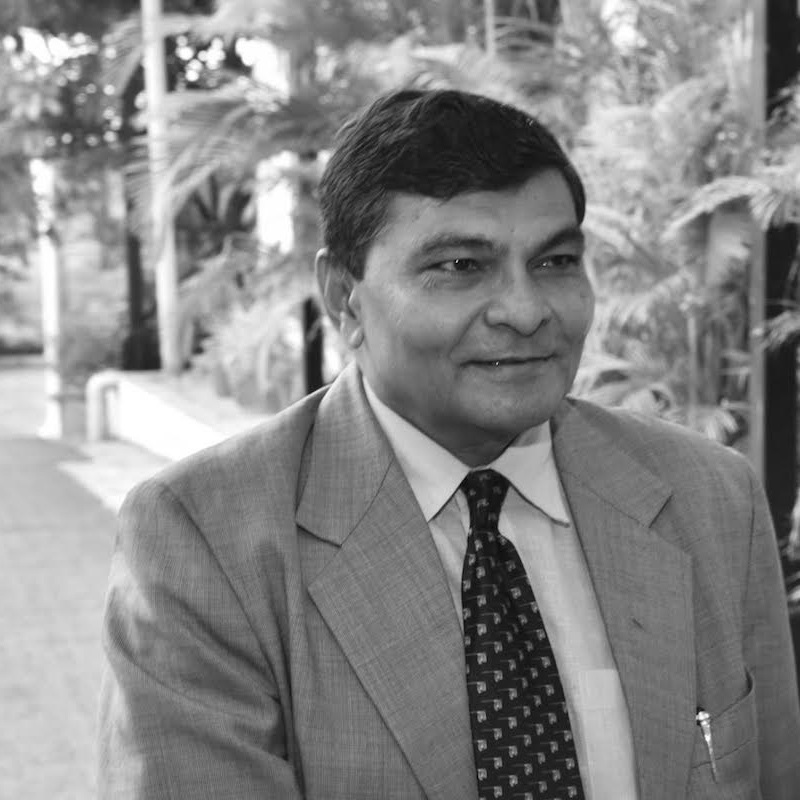
KOLKATA: As the extended five-year term of Ram Sewak Sharma as chairman of the Telecom Regulatory Authority of India (TRAI) concludes today (30 September), industry will be looking closely at his replacement, PD Vaghela. The Gujarat cadre 1986 batch IAS officer is the outgoing pharma department secretary who celebrated his sixtieth birthday on 22 September. Prior to that, he was the chief commissioner of commercial tax in Gujarat. He is also believed to have played an important role in the roll out of the goods and service tax in 2017. Also
Vaghela is taking the chair at what can be termed a very crucial time for both the telecom and broadcasting sectors. While his predecessor has been widely criticised by stakeholders for over-regulating, Vaghela will have to bring more balance if he wants to narrow down the gap and sense of distrust between industry and the regulator.
A task which could be challenging as he apparently has not had much to do with the broadcasting sector during his 34 years of being a civil servant. A B.Com graduate from Gujarat, he has masters degree from an institute in the The Hague, a post-graduation in business administration and finally a doctorate in sociology.

Vaghela has held senior positions in the Kandla Port Trust, with Gujarat tourism, with the industries and mines department, the rural development department, as municipal commissioner (Bhavnagar), and in the home ministry.
One school of thought in the industry is that given his background and the circumstances during his appointment, Vaghela will mostly follow Sharma’s path during his tenure.
At this moment, broadcasters are indulged in legal battles with the industry watchdog on many fronts including the ad cap and the amended new tariff order.
A senior executive at one of the big four broadcasters says while the court’s verdict will have to be implemented by both broadcasters and the TRAI, Vaghela’s first challenge will be the direction TRAI will take once the litigation between industry and the regulator is adjudicated upon. According to him, the new chairman has to also look after the viability of small cable operators who are worried about their future.
The executive also adds that everyone is now perceiving broadband, not broadcasting, as the future of entertainment. Hence, he adds that the new chairperson can play an important role in carefully steering the future of the broadcasting industry.
While there is a high chance that a number of consumers will shift to IP-based streaming content via OTT services, Vaghela will have to tread carefully, balancing digitisation and safeguarding traditional broadcasters’ interests.
“The RS Sharma regime has failed broadcasters. He served an important role in UIDAI implementation. Hence, we had huge expectations from him but we have been disappointed at the end,” a senior industry source states.
Although the executive is not very optimistic about the new chairman being able to dilute this sentiment, he thinks the industry should at least observe him for the next few months, before pronouncing any judgements.
However, another industry veteran claims Vaghela is quite likely going to continue to carry on in the same vein as Sharma. Like his peers in the industry, he acknowledges that there have been frequent changes in regulation which have been challenging, but he also credits Sharma for bringing in some semblance of order in to the TV distribution ecosystem.
“There was so much of scrapping between MSOs, LCOs and broadcasters,” he says. “By pushing cable TV digitisation and mandating some sort of price standardisation through regulation, he forced the industry’s hand to try and work together, which they are doing currently. Yes, there is some irritation from time to time, but the value chain is working closer together, keeping rules modernisation, upgradation and customer service in mind.”
The veteran also adds that Sharma played a large role in pushing ahead the Narendra Modi-led government’s digitisation agenda, by allowing new pricing models as far as mobility is concerned. “The Jio phenomenon of cheap data, free calls, has been a game changer for the spread of the internet where incumbents such as Airtel and Vodafone and Idea were working with legacy business and consumer models.”
The CEO of a TV network points out that even though the court cases against NTO 2.0 continue in the courts, Vaghela will very much have to “balance value for consumers with the interest of broadcasters along with operators. He will also possibly play a significant role in OTT legislation as the government is gearing up its efforts to regulate this rapidly growing vertical.”
“Along with working on major rollouts like 5G implementation, enhancing fibre-to-home broadband connectivity across the country on the telecom side, Vaghela can choose to leave his mark as far as cable TV amendments, a national broadcaster policy, DTH licensing are concerned. Additionally, he could things take a step further and start looking at drawing up a national video policy encompassing TV, streaming, and possibly mobile delivery of video,” says the CEO.
On the telecom side, Vaghela has contentious issues like super high 5G pricing (at Rs 492 crore per MHz in the 3500 Mhz band) which could deter the ailing telecom service providers(TSPs) from making a bid. The adjusted gross revenue ruling has gone against at least two of them who have been reeling courtesy the price war that Jio has waged for the past few years. The consultation paper on whether a floor price needs to be put in place for telecom services will also take up his attention. Then, he will have to decide on interconnect usage charges that TSPs charge each other for calls made by customers. They are due to be scrapped by early next year.
Of course, he will have a bunch of old hands who have been at the regulator for a few years. There’s the TRAI secretary Sunil Gupta, and numerous other advisers who provided back end support for almost every decisive direction, recommendation, and regulation the watchdog has given over the years. How he takes their advice and inputs and formulate these into law for broadcasting and telecom will decide whether he will be blessed or vilified by the industry.
(This piece has been penned following conversations with real executives from the business of television. Most of them requested that their identity be kept secret while using their quotes and views in this piece)







NEW DELHI: Hamdard Laboratories gathered a cross-section of India’s achievers in New Delhi on Friday, handing out the Hakeem Abdul Hameed Excellence Awards to figures who have left their mark across healthcare, education, sport, public service and the arts.
The ceremony, attended by minister of state for defence Sanjay Seth and senior officials from the ministry of Ayush, celebrated individuals whose work blends professional success with a sense of public purpose. It was as much a roll call of achievement as it was a reminder that influence is not measured only in profits or podiums, but in people reached and lives improved.
Among the headline awardees was Alakh Pandey, founder and chief executive of PhysicsWallah, recognised for turning affordable digital learning into a mass movement. On the sporting front, Arjuna Awardee and kabaddi player Sakshi Puniya was honoured for her contribution to the game and for pushing women’s participation onto bigger stages.
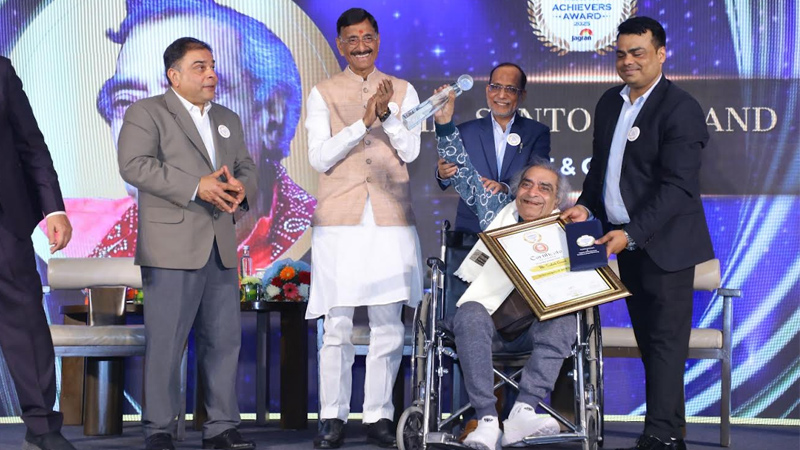
The cultural spotlight fell on veteran lyricist and poet Santosh Anand, whose songs have echoed across generations of Hindi cinema. At 97, Anand accepted the honour with characteristic humility, reflecting on a life shaped by perseverance and hope.
Healthcare honours spanned both modern and traditional systems. Manoj N. Nesari was recognised for strengthening Ayurveda’s place in national and global health frameworks. Padma shri Mohammed Abdul Waheed was honoured for his research-backed work in Unani medicine, while padma shri Mohsin Wali received recognition for his long-standing contribution to patient-centred care.
Education and social development also featured prominently. Padma shri Zahir Ishaq Kazi was honoured for decades of work in education, while former Meghalaya superintendent of Police T. C. Chacko was recognised for public service. Goonj founder Anshu Gupta received an award for his dignity-centred rural development initiatives, and the Hunar Shakti Foundation was honoured for empowering women and young girls through skill development.
The Lifetime Achievement Award went to former IAS officer Shailaja Chandra for her long career in public healthcare and governance, particularly in the traditional systems under Ayush.
Speaking at the event, Hamdard chairman Abdul Majeed said the awards were a tribute to those who combine excellence with empathy. “These awardees reflect Hakeem Sahib’s belief that healthcare, education and public service must ultimately serve humanity,” he said.
Minister Seth struck a forward-looking note, saying India’s young population gives the country a unique opportunity to become a global destination for learning, health and wellness by 2047.
The ceremony also featured the trailer launch of Unani Ki Kahaani, an upcoming documentary starring actor Jim Sarbh, set to premiere on Discovery on 11 February.
Instituted in memory of Unani scholar and educationist Hakeem Abdul Hameed, the awards have grown into a national platform that celebrates those building a more inclusive and resilient India. For one evening at least, the spotlight was not just on success, but on service with substance.






