News Headline
Ten Sports proposed sale: Biz acumen trumps emotions


NEW DELHI: In business, emotions have importance, but they have to be weighed against the larger interest (of the company). This was Zee boss Subhash Chandra telling an eager journalist on the media beat for a business newspaper in the fag end of 90s after having just bought out Rupert Murdoch from three joint ventures in a cash-and-stock deal worth few shades less than $ 300 million.
When an announcement came on 29 August 2016, almost 16 years and mega growth later, on the Bombay Stock Exchange from Zee Entertainment Enterprises Ltd (ZEEL) that in order to maximize shareholders returns, the company, while exploring various strategic options to start or exit businesses, is in an advanced stage of negotiations to sell off its sports business (carried out under the Ten Sports brand), it generated lot of hiccups all around. This despite the fact that the rumor about an impending sale had been going around for quite some time now.
But to indiantelevision.com shedding off of a business that could — and is partially doing so, financial analysts opine — turn the company’s bottomline scarlet is classic Chandra. A risk taker to the core, he is equally quick to invest as he is to divest. Of course, at a price that makes sense. He has designed his group to be very bottom line focused and cut losses whenever things are not looking good.

Though it could be argued that this time round the final call to exit the sports business in the face of rising content acquisition costs and inadequate proportionate revenues (India’s slow digitisation process has been hampering real-time growth in subscription earnings) must have been taken by Chandra’s eldest son helming ZEEL, Punit Goenka, a true chip off the old block.
The speculated price for Ten Sports’ impending sale, acquired from its Dubai-based owner Abdul Rahman Bukhatir’s Taj Group in 2006, is around Rs 2,000 crore. The prospective buyer: Japan’s Sony group’s Sony Pictures Networks India (SPN India), presently headquartered in the US with its APAC head office in Singapore.
If the Indian Premier League (IPL) cricket is now a phenomenon to reckon with in world sports, being compared with the likes of the money-spinning NBA, tennis and golf leagues, it had an ancestor in ICL (Indian Cricket League).
Conceptualized by Zee with Chandra’s active backing, ICL in the mid-2000 era couldn’t flower like IPL, a property of the Indian cricket board. Reason: Zee and Chandra were on the wrong side of the Indian cricket bosses who refused to recognize ICL and also pressured the international cricket community to boycott it terming it an illegitimate affair. A lot of cloak and dagger followed with some associates and partners apparently letting him down as he sought to fulfill his passion and dream that sports television in India should be in the hands of Indians, rather than some foreign broadcasters as it is in other countries.
And, then came Lalit Modi with his own blueprint for a cricket league about nine years back that’s now known as IPL and, along with Kaun Banega Crorepati (KBC), is one of the bigger revenue earners for the present broadcast rights holder SPN India. However, many argue that Modi simply polished Chandra’s ICL — an allegation that the now-banished Indian has always denied saying the IPL idea was much older than even ICL.
ZEEL did make attempts to get the broadcast rights for the IPL too to boost revenues for its Ten Sports channels, but was out-batted and bowled by the Indian cricket bosses. Not to mention that in the meantime the acquisition cost of cricket rights related to anything Indian kept going north.
In a cricket-crazy nation where advertisers pour in money in cricket (except probably the original domestic leagues like the Ranji and the Duleep Trophy that get much discounted rates from sponsors and broadcasters), Zee’s Ten Sports ventured out looking for cricket rights in places like Sri Lanka, Bangladesh, and Zimbabwe, which enthused sponsors less compared to, say, an India vs. Australia cricket series. Additionally, from time to time the Essel group announced that it would be putting together other cricket leagues, involving local Indian domestic teams or international ones. But apparently, that did not go well, either courtesy resistance from boards or the fact they ended up being commercially unviable.
Though while announcing its financial results for the first quarter for FY 2017 ending June, Zee did mention that key properties on its sports channels during the April-June 2017 quarter included telecast of Zimbabwe vs. India cricket series, WI-Australia-SA cricket series, the UEFA Champions League football final and WWE among others. The sports business revenue in the first quarter of FY2017 was Rs 1,700 million, while the cost incurred in this quarter was Rs 1,529 million. Certainly a narrow gap that would tend to get narrower with former ally-turned-competitor Murdoch’s Star India investing aggressively in sports led by cricket rights.
For Ten Sports to survive largely on properties that not only had limited appeal for viewers and, thus, Indian sponsors (considered one of the bigger spenders in the world of sports, especially cricket) it would have always been an uphill task. Despite a Tour de France here and US Open tennis there with some premium golf thrown in for good via a dedicated golf channel.
In most countries, unlike India, the business of sports broadcasting thrives on monopoly or most duopoly. Like in the UK with Sky Sports or in the US with Fox Sports and ESPN (NBC does make an occasional splash in the US with mega sporting properties like the recent Olympics coverage) or in Australia with Fox and Channel Nine.
In India, three players in the sports broadcasting business – actually there’s a fourth in Nimbus, but it has retreated to being a niche player with a few sports – was a tad too much. SPN India had been gradually curating its sports telecast properties over the past 10 years or so – of which of course the premier one was the mega spinner IPL – and had launched a couple of channels, with ambitions to launch more. And then came the blinder of an announcement that SPN India was marshalling forces and getting into bed with the global sports heavyweight ESPN as it made efforts to make a comeback into sports television in India. This followed the annulment of its Star-ESPN joint venture (meant specifically for Asia) and the necessary cooling off period post its divorce from Star about a couple of years back.
A three-way fight for Indian viewers despite 153 million TV households and growing was always going to be tough when Star was splurging money on sporting properties and the now Sony-ESPN joint venture brought to the table the expertise and deep pockets of two global media conglomerates.
With the kind of financial muscle these two media heavyweight gorillas bring, Goenka and Chandra probably thought it would not be okay just being a member of the pack. And in such a scenario, it clearly makes business sense to cut one’s losses and get out. And if emotions have no business to be in business, then Zee getting out of the sports business makes more sense. Still, it must have been a tough call for Chandra and Punit to cut the cord.
However, the sale deed has yet to be signed – ZEEL informed the BSE that it is in advanced discussions to sell its sports business to potential buyer(s). The ball is in the hands of Sony Pictures Television worldwide networks boss Andy Kaplan, SPN India CEO NP Singh and of course the two main players out on the green – Subhash Chandra and Punit Goenka. Keep watching this space!
(SPN India and Zeel have since announced that they had reached an agreement on the buyout of Ten Sports. Read the announcement by clicking on the link below)
SPN India acquires ZEEL’s Ten Sports for USD 385 mn
http://www.indiantelevision.com/television/tv-channels/gecs/spn-india-acquires-zeels-ten-sports-for-usd-385-mn-160831






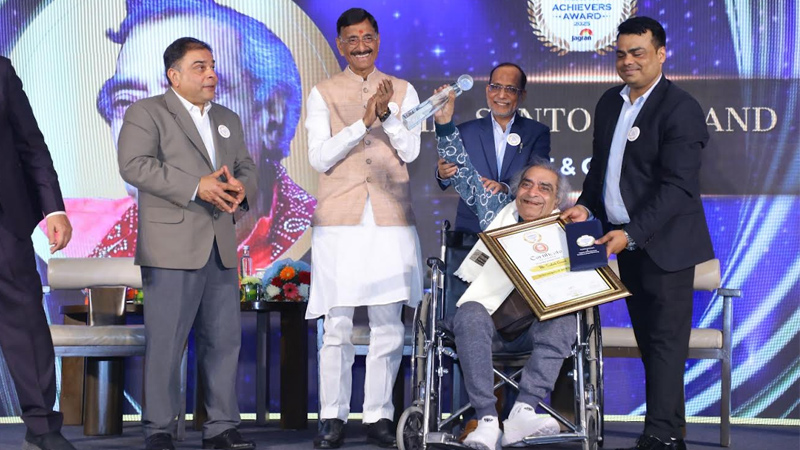
NEW DELHI: Hamdard Laboratories gathered a cross-section of India’s achievers in New Delhi on Friday, handing out the Hakeem Abdul Hameed Excellence Awards to figures who have left their mark across healthcare, education, sport, public service and the arts.
The ceremony, attended by minister of state for defence Sanjay Seth and senior officials from the ministry of Ayush, celebrated individuals whose work blends professional success with a sense of public purpose. It was as much a roll call of achievement as it was a reminder that influence is not measured only in profits or podiums, but in people reached and lives improved.
Among the headline awardees was Alakh Pandey, founder and chief executive of PhysicsWallah, recognised for turning affordable digital learning into a mass movement. On the sporting front, Arjuna Awardee and kabaddi player Sakshi Puniya was honoured for her contribution to the game and for pushing women’s participation onto bigger stages.
The cultural spotlight fell on veteran lyricist and poet Santosh Anand, whose songs have echoed across generations of Hindi cinema. At 97, Anand accepted the honour with characteristic humility, reflecting on a life shaped by perseverance and hope.
Healthcare honours spanned both modern and traditional systems. Manoj N. Nesari was recognised for strengthening Ayurveda’s place in national and global health frameworks. Padma shri Mohammed Abdul Waheed was honoured for his research-backed work in Unani medicine, while padma shri Mohsin Wali received recognition for his long-standing contribution to patient-centred care.
Education and social development also featured prominently. Padma shri Zahir Ishaq Kazi was honoured for decades of work in education, while former Meghalaya superintendent of Police T. C. Chacko was recognised for public service. Goonj founder Anshu Gupta received an award for his dignity-centred rural development initiatives, and the Hunar Shakti Foundation was honoured for empowering women and young girls through skill development.
The Lifetime Achievement Award went to former IAS officer Shailaja Chandra for her long career in public healthcare and governance, particularly in the traditional systems under Ayush.
Speaking at the event, Hamdard chairman Abdul Majeed said the awards were a tribute to those who combine excellence with empathy. “These awardees reflect Hakeem Sahib’s belief that healthcare, education and public service must ultimately serve humanity,” he said.
Minister Seth struck a forward-looking note, saying India’s young population gives the country a unique opportunity to become a global destination for learning, health and wellness by 2047.
The ceremony also featured the trailer launch of Unani Ki Kahaani, an upcoming documentary starring actor Jim Sarbh, set to premiere on Discovery on 11 February.
Instituted in memory of Unani scholar and educationist Hakeem Abdul Hameed, the awards have grown into a national platform that celebrates those building a more inclusive and resilient India. For one evening at least, the spotlight was not just on success, but on service with substance.






