News Headline
Television actors should also get royalties on reruns and repeat telecasts: Taarak Mehta Ka Ooltah Chashmah’s Shailesh Lodha

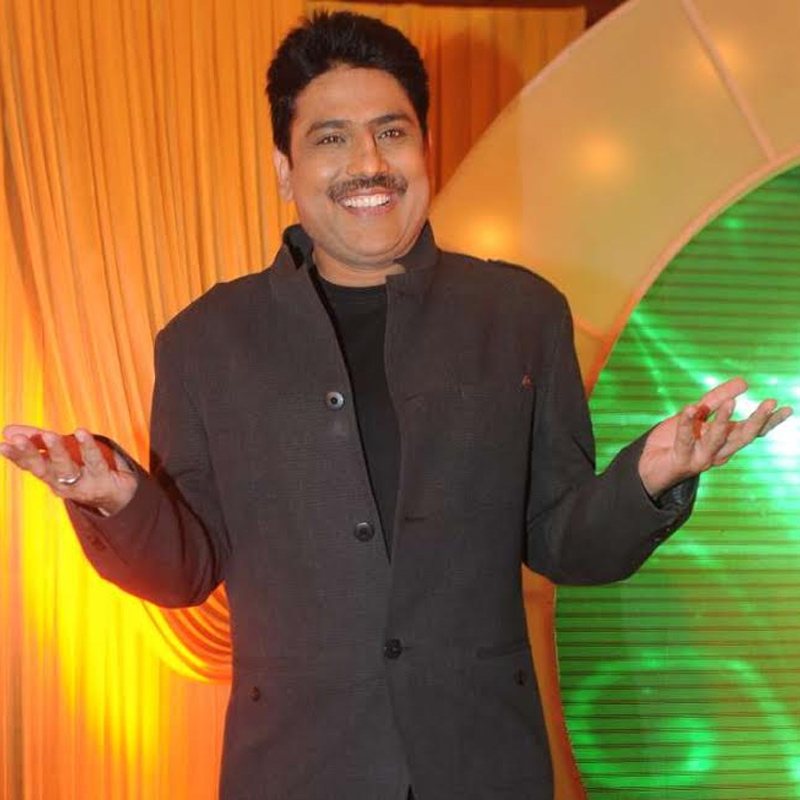
MUMBAI: Television industry has been one of the worst-hit sectors due to the pandemic followed by the subsequent lockdown. Now, when the shoots have finally resumed after a hiatus of four long months amid all SOPs and safety measures laid down by the government, many celebs are working with a sense of fear.
aAmpere Analysis projected that the pandemic had delayed at least 60 per cent of scripted television programming worldwide, including at least half of the programming originally scheduled to air in the second half of 2020. There had been a noticeable increase in non-scripted productions—including smaller-scale series capable of being produced remotely—that can be used to fill schedules until scripted programs resume production (noting that audiences may eventually become tired out by pandemic-themed programming).
Shailesh Lodha, an Indian actor, comedian, writer, and best known for playing the role of Taarak Mehta in India's longest-running sitcom serial Taarak Mehta Ka Ooltah Chashmah, in an interaction with Governance Now MD Kailashnath Adhikari talks about challenges faced by the television industry, actors and much more.

According to him actors especially who also do brand endorsements, live shows and appearances are facing the brunt of pandemic.
LodhaShailesh shares, “I belong to show business, which has been severly impacted due to pandemic. There are no events or live shows. Thankfully television shooting started last month. So professionally speaking there were no activities during pandemic. I did quite a few online shows, but they don’t give you satisfaction. You don’t feel like you are performing.”
He mentions that it is difficult to predict when the normalcy will return but according to him situations are better than before. However, he believes that the turmoil caused by the pandemic has instilled the sense of fear among people. He said that while entering the set when someone sees cast and crew members in masks, PPE kits, and gloves it creates a fearful environment. He also thinks that India is doing considerably better, with recovery rate at 72 percent and death rate at 2 percent.
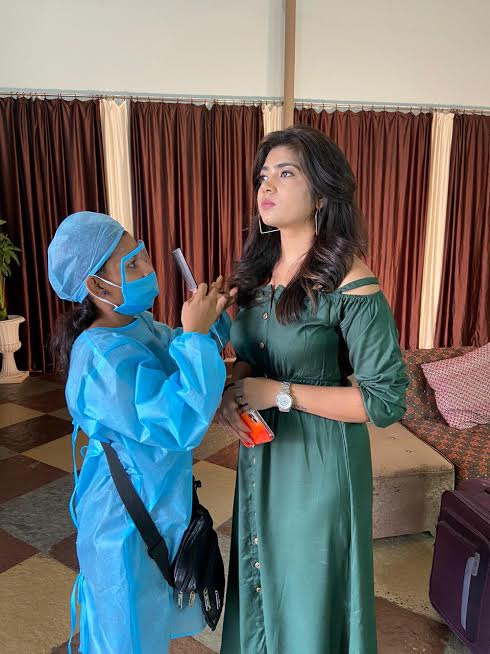
Kailash Adhikari raised a question to Lodha if production houses broadcasters are partially responsible for the issues faced by artists, hair and makeup artists and technicians.
Lodha quipped that the challenges faced by the entertainment industry is no different from other sectors. It is just that the entertainment world is glamorous, and people are more attracted towards entertainment news, hence the media stays in the limelight. But he believes there are various issues and it is going to be in every section of the society and entertainment world is no different from that. He suggests operating business to create job opportunities and strengthen the economy.
As far as the industry’s responsibility towards daily wage earners is concerned Lodha said, “I think if we had taken our responsibility towards the lower section of the society more seriously, it would have been a much better situation.”
As the daily soaps went out of stock, broadcasters resorted to popular reruns of their shows. However, TV reruns might have attracted viewers but not advertisements. Despite viewership no shareholders have been benefited. But during the conversation with Adhikari, Lodha sparks a larger debate about royalties. He said, “Why artists are not benefited when reruns or repeat telecasts are happening. In most of the instances, we look at what is happening in the West, but I think it is high time when artists should also get the royalties of the show. There should be some provision’s under IPRs (Intellectual Property Rights).”
Actors who are part of endorsements, appearances and live shows are severely impacted with their earnings being hampered by the pandemic and lockdown.
Lodha who is a renowned poet and worked in SAB TV’s Waah Waah Kya Baat Hai and several other shows notes that for an artist it is important to have a live audience. Looking at the audience’s reaction gives a certain amount of happiness. But to the pandemic there are no live shows, you are not able to see audience reaction.
He adds, “As a writer and a performer I can say there is not much earning, and whatever is there it is biased earning. In a biased market there is earning but no satisfaction. People are arguing to reduce rates as things are happening virtually, but the artist remains the same. I think it will take one year to get back to normal.”
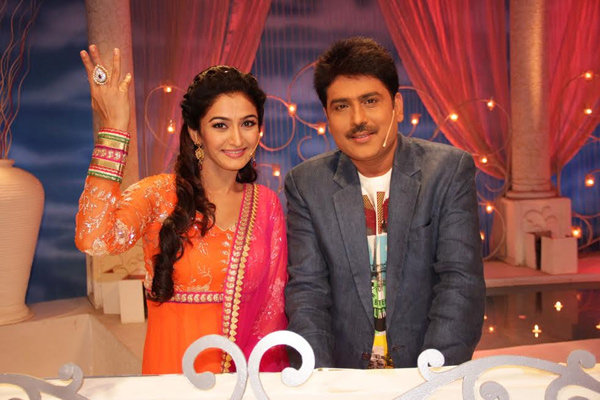
Finally, film and television shootings have started with a lot of restrictions and limitations. Speaking about the same Lodha highlights that it is the new normal. However, he points out that shooting is more about precautions and less about limitations. He thinks that technology will have to play a much bigger role. Production houses are heavily dependent on chroma, special effects and VFX to shoot crowd scenes.
Recently, a blanket ban was introduced in the industry where actors, technicians and crew members above the age of 65 years were not allowed on the film and television set. However, as per Bombay high court’s verdict the ban is now lifted. Lodha thinks at that time it was justified to impose a ban considering elderly citizens were at high risk.







NEW DELHI: Hamdard Laboratories gathered a cross-section of India’s achievers in New Delhi on Friday, handing out the Hakeem Abdul Hameed Excellence Awards to figures who have left their mark across healthcare, education, sport, public service and the arts.
The ceremony, attended by minister of state for defence Sanjay Seth and senior officials from the ministry of Ayush, celebrated individuals whose work blends professional success with a sense of public purpose. It was as much a roll call of achievement as it was a reminder that influence is not measured only in profits or podiums, but in people reached and lives improved.
Among the headline awardees was Alakh Pandey, founder and chief executive of PhysicsWallah, recognised for turning affordable digital learning into a mass movement. On the sporting front, Arjuna Awardee and kabaddi player Sakshi Puniya was honoured for her contribution to the game and for pushing women’s participation onto bigger stages.
The cultural spotlight fell on veteran lyricist and poet Santosh Anand, whose songs have echoed across generations of Hindi cinema. At 97, Anand accepted the honour with characteristic humility, reflecting on a life shaped by perseverance and hope.
Healthcare honours spanned both modern and traditional systems. Manoj N. Nesari was recognised for strengthening Ayurveda’s place in national and global health frameworks. Padma shri Mohammed Abdul Waheed was honoured for his research-backed work in Unani medicine, while padma shri Mohsin Wali received recognition for his long-standing contribution to patient-centred care.
Education and social development also featured prominently. Padma shri Zahir Ishaq Kazi was honoured for decades of work in education, while former Meghalaya superintendent of Police T. C. Chacko was recognised for public service. Goonj founder Anshu Gupta received an award for his dignity-centred rural development initiatives, and the Hunar Shakti Foundation was honoured for empowering women and young girls through skill development.
The Lifetime Achievement Award went to former IAS officer Shailaja Chandra for her long career in public healthcare and governance, particularly in the traditional systems under Ayush.
Speaking at the event, Hamdard chairman Abdul Majeed said the awards were a tribute to those who combine excellence with empathy. “These awardees reflect Hakeem Sahib’s belief that healthcare, education and public service must ultimately serve humanity,” he said.
Minister Seth struck a forward-looking note, saying India’s young population gives the country a unique opportunity to become a global destination for learning, health and wellness by 2047.
The ceremony also featured the trailer launch of Unani Ki Kahaani, an upcoming documentary starring actor Jim Sarbh, set to premiere on Discovery on 11 February.
Instituted in memory of Unani scholar and educationist Hakeem Abdul Hameed, the awards have grown into a national platform that celebrates those building a more inclusive and resilient India. For one evening at least, the spotlight was not just on success, but on service with substance.






