iWorld
Telecom stakeholders’ views sort over MWA and MWB spectrum allocation and pricing


NEW DELHI: The Telecom Regulatory Authority of India (TRAI) on 28 March asked stakeholders in the telecom sector to give their views on whether excess spectrum should be withdrawn from existing telecom service providers and whether what should be the criteria for determining this excess usage.
Following a reference from the Department of Telecom (DoT), the regulator issued a consultation paper on the issue of Microwave Access and Backbone (MWA/MWB), and has sought the views by 21 April with counter-comments by 28 April.

TRAI has sought to know the number of Microwave Access and Backbone (MWA/MWB) carriers that should be assigned to a TSP deploying 2G technology only, 3G technology only, BWA technology only, both 2G and 3G technologies, 2G and BWA technologies and 2G, 3G and BWA technologies.
The charging of MWA and MWB carriers is regulated by the AGR based annual spectrum usage charges notified in the DoT’s orders of 3 November 2006, its amendments dated 10 November 2008 and 19 February 2009. However, these orders were set aside by a judgment of the Telecom Disputes Settlement Appellate Tribunal (TDSAT) of 22 April 2012 and are now sub-judice in view of an appeal by the government before the Supreme Court. As an interim arrangement, the DoT has issued guidelines in respect of allotment of MWA carriers for BWA services through its order of 16 March 2012. TRAI had been asked to give its recommendations on certain issues in a letter sent by the DoT on 26 November 2012.
According to TRAI, Microwave transmission refers to the technology of transmitting information using radio waves. Microwave technology is widely deployed in mobile communications to provide point-to-point (PTP) Radio Frequency (R.F.) links in mobile backhaul as well as in the backbone network. Mobile backhaul is that portion of the network infrastructure that provides interconnectivity between the access and core networks. The backbone network is used to interconnect different nodes situated at different geographical locations.
For PTP links, microwave frequencies are generally assigned in blocks of 2×28 MHz, known as microwave carriers. There are two types of microwave carriers viz. Microwave Access (MWA) Carriers and Microwave Backbone (MWB) Carriers.
TRAI wants to know from stakeholders the number of MWA/MWB carriers that should be assigned to TSPs in case of 2G, 3G and BWA at the start of their services [at beginning of rolling of services].
Some of the other questions to which views have been sought are:
1. What should be the preferred basis of assignment of MWA/MWB carriers to the TSPs i.e. ‘exclusive basis assignment’ or ‘link-to-link based assignment’?
2. In case ‘exclusive basis’ assignment is preferred, whether MWA and MWB carriers should be assigned administratively or through auction.
3. In case ‘link-to-link basis’ assignment is preferred, how the carrier assignment for different links should be carried out, particularly in nearby locations?
4. Considering the fact that different TSPs may require additional carriers at different point of time, what should be the assignment criteria for allocation of additional carriers for MWA and MWB?
5. How can it be ensured that spectrum carriers assigned are used optimally and the TSPs are encouraged to move towards the OFC?
6. Should an upfront charge be levied on the assignment of MWA or MWB carriers, apart from the annual spectrum charges?
7. What should be the pricing mechanism for MWA and MWB carriers? Should the annual spectrum charges be levied as a percentage of AGR or on link-by-link basis or a combination of the two?
8. In case of percentage AGR based pricing, is there any need to change the existing slabs prescribed by the DoT in 2006 and 2008?
9. In case link-by-link based charging mechanism is adopted then:
(a) Should the spectrum be priced differently for different MW spectrum bands (6GHz/7GHz/13GHz/15GHz/18GHz/21 GHz/26GHz/28GHz/32GHz/42 GHz etc) and the formula for such charges
(b) What are the factors that should appear in the formula?
10. Should the option of assignment of MWA carriers in all the spectrum bands in 6-42 GHz range be explored in line with other countries? What are the likely issues in its assignment MWA carriers in these additional spectrum bands?
11. In your opinion, what is the appropriate time for considering assignment of MWA carriers in higher frequency bands viz. E-band and V-band?
12. Should E-band be fully regulated or there should be light touch regulations?
13. What charging/pricing mechanism would be appropriate for these bands?







Gaming
MTG gaming chief Benninghoff joins NODWIN board as esports firm primes for IPO
The Gurugram-based esports firm is pursuing a public listing, has returned to profitability and is growing revenues by 42 per cent
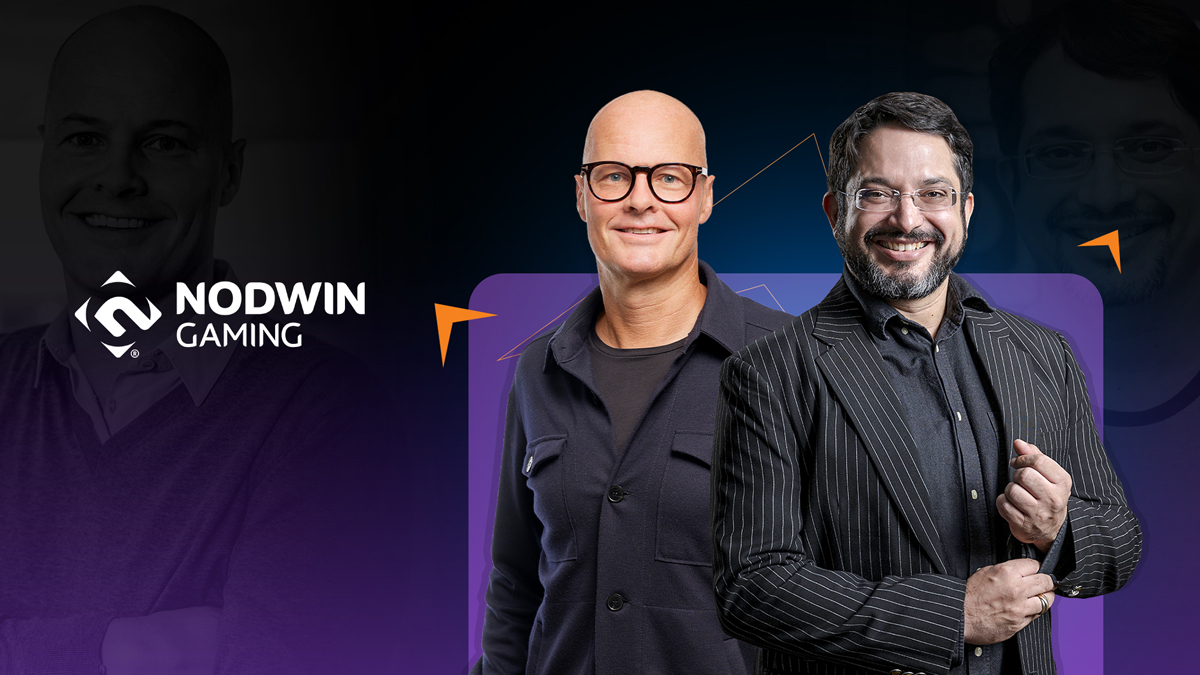
GURUGRAM: NODWIN Gaming is moving fast. The Gurugram-based gaming and esports company has launched a pre-IPO fundraising round, appointed UBS as lead adviser for both the round and a subsequent public listing, and landed a heavyweight board director, all in one go.
The new board member is Arnd Benninghoff, executive vice president of gaming at Stockholm-listed Modern Times Group (MTG), who has overseen the group’s strategic investments and portfolio growth since 2014. He is no stranger to building things: Benninghoff has founded and built fifteen companies, served as chief digital officer at ProSiebenSat.1 Media AG, managing director of SevenVentures, and chief executive of Holtzbrinck eLAB. He began his career as a journalist at Deutsche Presse Agentur and various TV networks, holds a Diplom-Kaufmann in business and administration from the University of Münster, and previously sat on the board of Edgeware AB.
The numbers back the ambition
NODWIN is not pitching a story without substance. The company has returned to EBITDA profitability and posted a 42 per cent year-on-year revenue surge, reaching $58.5m in the first nine months of FY2026. The pre-IPO round will combine a primary issuance to fund global expansion through organic growth and acquisitions, alongside a secondary sale to give existing shareholders some liquidity.
Akshat Rathee, co-founder and managing director of NODWIN Gaming, said Benninghoff understands “the entire lifecycle of the gaming and media ecosystem, from the boots-on-the-ground reality of building startups to the strategic complexity of managing multi-billion dollar global portfolios.”
Benninghoff, for his part, said the company “sits at the intersection of sports, entertainment, and technology, making it one of the most exciting players in the global gaming landscape today.”
A portfolio built for the global south
Founded in 2014 by Rathee and Gautam Virk, NODWIN has quietly assembled one of the more compelling esports portfolios outside the Western hemisphere. Its properties include DreamHack India and Comic Con India, and it recently acquired StarLadder, the Ukraine-based tournament organiser behind premier events in CS:GO and Dota 2. The company also serves as a long-term strategic marketing partner for the Evolution Championship Series (EVO), the world’s most prominent fighting game tournament, helping push it into new geographies.
Its geographic focus spans South Asia, Central Asia, Southeast Asia, the Middle East and Africa. Backers include Nazara Technologies, KRAFTON, Sony Group Corporation, JetSynthesys, and the founders’ investment vehicle Good Game Investments.
What comes next
With UBS running the books, a board freshly reinforced with European media and gaming expertise, and revenue heading in the right direction, NODWIN is laying the groundwork deliberately. The esports industry has burned investors before with big promises and thin margins. NODWIN’s return to profitability, combined with a real portfolio of owned intellectual properties across gaming, music and youth culture, gives it a more credible runway than most. The IPO clock is now ticking.