iWorld
Telcos support net neutrality but root for checks on OTT platforms

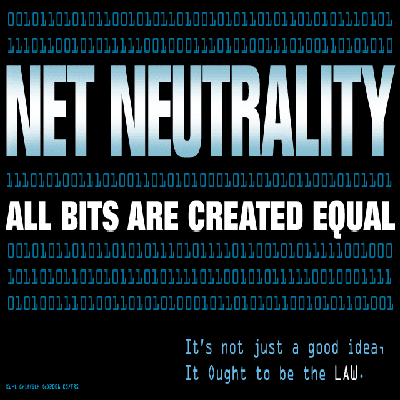
NEW DELHI: While supporting net neutrality and firmly holding that access should be made available to all on a non-discriminatory manner, the Cellular Operators Association of India (COAI) has said that there is a need to evolve the regulatory framework for Over The Top (OTT) communication services to prevent various regulatory imbalances between the Telecom Service Providers (TSPs) and the OTT communication players.
It is response to the Telecom Regulatory Authority of India’s (TRAI) consultation paper on OTT, COAI has said a “common regulatory framework for businesses providing the same services is the need of the hour and will benefit all players as it will reduce legal ambiguity and prevent unnecessary litigations.”

At the outset, COAI said it welcomed the entry of OTT players and believes that they play an important role and offer many new services. However, the body added that, “it is pertinent to note that some of the services that are offered by the OTT players such as messaging/instant messaging and VOIP telephony are perfect substitutes of the services that can be offered by the telcos. These OTT players have rightly been classified by the Authority as “OTT Communication Services” players and their services are in direct competition with the licensed communication services offered by the TSPs.”
The COAI wants not only net neutrality, but also net equality – the need to connect the one billion citizens of India, who are still not connected to the internet, by facilitating an open, inclusive and affordable access to the Internet, and with the same rules being made applicable to the same services.
There is a need to review the regulatory framework and “we submit that the time is ripe for a comprehensive review to build a regulatory neutral, forward looking and transparent framework that ensures that the principles of “net equality” and “same service, same rules” are implemented.”
“The need of the hour is to connect the 80 per cent of India’s population, which is still unconnected; and our campaign “Sabka Internet, Sabka Vikas” reaffirms our commitment to the Government’s vision for “Broadband for All” and Digital India, for socio-economic inclusion of all strata of the society. We believe a customer should be free to choose the device, technology and access platform – paid or subsidized, as long as the Internet is always open in terms of access in a non-discriminatory manner. Also, we offer choice and do not block or provide preferential access to any website or application, thereby safeguarding Net Neutrality,” COAI said.
Some stakeholders have suggested that there are already adequate laws controlling the operations of OTT players such as Information Technology Act, Indian Penal Code, the Criminal Procedure Code etc. It is pertinent to point out here that such laws are general laws, which in its terms and effect apply to the entire country irrespective of the sector and framework in which they operate. While these laws are important and useful in a general context, they cannot be said to be a substitute of a common regulatory framework, which would govern and regulate similarly placed service providers and give them a common platform for the provision of services on common terms, which would ensure a level playing field.
The telecom industry has already invested over Rs 7,50,000 crore in setting up world class mobile networks over the last 20 years and is looking at investing another Rs 5,00,000 crore in the next five years to roll-out into rural areas and also upgrade existing networks to connect one billion Indians to the internet. Moreover, going by the Government’s commitments, the Digital India Programme itself will require investments to the tune of Rs 113,000 crore. Additionally, the Planning Commission’s 12th Five Year Plan requires an investment of Rs 943,899 crore with 93 per cent of the total investment expected to come from the private sector.
The Indian mobile telephony industry today, is in dire financial straits with a cumulative debt of over Rs 300,000 crore, and a one per cent return on investments, with many operators even making negative returns on their investments. This situation puts at risk the nation’s agenda of “Broadband for All”, as private operators will be unable to attract additional investments in the sector, required to support the ambitions of the government.
COAI said there were various regulatory imbalances that existed between the telecom operators and OTT communication players. “We would like to submit that the TSPs bear the cost of infrastructure, spectrum, and payment of license fees and spectrum usage charges, which are not applicable to the OTT communication players. The TSPs also have the obligations related to roll-out, meeting quality of service parameters and security related obligations. Many of these do not apply to OTT communication players, which result in an arbitrage opportunity. The National Security and consumer security, safety and privacy are of paramount importance, and should not be compromised at any cost. The security framework has evolved over the years along with the growth and proliferation of telecom services and all the telecom operators provide these services under a strict licensing framework, including compliances with the security conditions and service standards. The extensive and stringent security conditions laid down and required to be met by the licensed TSPs are not applicable to the OTT Communication players. Most of the OTT players do not meet the encryption and decryption requirements of the Law Enforcement Agencies (LEA).”
In response to a Parliamentary question on security threats from OTT applications, COAI said that the Telecom Ministry has acknowledged the fact that security/LEAs are facing difficulty while dealing with encrypted communication services provided by OTT service providers and the same may also be used by anti-national and criminal elements, posing a security threat. Lack of regulation on communication related application services could lead to serious national security and data privacy implications because they bypass the regulatory regime enforced on licensed service providers. Therefore, it is essential to ensure that the principles of “Same service, Same rules” are implemented.
Referring to claims by some stakeholders that Internet Based Services (IBS) players should not pay for use of the TSPs network over and above data charges paid by customers, COAI highlighted that increased data usage fails to compensate for loss of revenues to TSPs arising due to OTT services. Further, these services demand high-speed networks that require substantial investment in infrastructure, particularly for the development of the broadband infrastructure both from the fixed and mobile perspective. “We hereby advocate for the Open and Pro-innovation Environment wherein pricing flexibility is provided to the operators and the choice is provided to the customers.”
On traffic management for different OTT services, COAI said traffic management allows operators to secure their networks, prioritize time-critical services and match scarce network resources to service requirements. It is an essential function of networks to meet the performance expectations of different types of traffic to ensure better customer experience. Traffic management is a tool for consumer benefit not consumer harm as it provides a number of clear benefits to end users in terms of improved performance, innovation, consumer protection and efficiency.
On the contention that TSPs should not be allowed to implement non price based differentiation as it would be grossly uncompetitive and would kill competition leading to all traffic being cornered by a few, the Association said there is a need to look at the internet as a two sided market, which involves the consumer and the content app provider. The TSP is the platform that market together and needs to be given the flexibility of implementing based differentiation.






eNews
How short, addictive story videos quietly colonised the Indian smartphone
A landmark Meta-Ormax study of 2,000 viewers reveals a format that is growing fast, paying slowly and consumed almost entirely in secret

CALIFORNIA, MUMBAI: India has a new entertainment habit, and it arrived without anyone really noticing. Micro dramas, those short, cliffhanger-driven episodic stories built for the smartphone screen, have quietly embedded themselves into the daily routines of millions of Indians, discovered not by design but by algorithmic accident, watched not in living rooms but in bedrooms, on commutes and in the five minutes before sleep.
That, in essence, is the finding of a sweeping new audience study released by Meta and media insights firm Ormax Media at Meta’s inaugural Marketing Summit: Micro-Drama Edition. Titled “Micro Dramas: The India Story” and based on 2,000 personal interviews and 50 depth interviews conducted between November 2025 and January 2026 across 14 states, it is the most comprehensive study of the category in India to date, and its findings are striking.
Sixty-five per cent of viewers discovered micro dramas within the last year. Of those, 89 per cent stumbled upon the format through social media feeds, primarily Instagram and Facebook, without ever searching for it. The algorithm did the heavy lifting. Discovery, as the report puts it bluntly, is algorithm-led, not intent-led.
The typical viewer journey begins with accidental exposure while scrolling, moves through a cliffhanger-driven incompletion hook that makes stopping feel unfinished, and is reinforced by algorithmic repetition until habitual consumption sets in. Only then, when a platform asks for an app download or a payment, does the viewer pause. Trust, not content quality, determines what happens next, and many simply return to the free feed rather than pay. It is a funnel with a wide mouth and a narrow neck.
The numbers on consumption tell their own story. Viewers spend a median of 3.5 hours per week watching micro dramas, spread across seven to eight sessions of roughly 30 minutes each, peaking sharply between 8pm and midnight. Daytime viewing is snackable and low-commitment, squeezed into morning commutes, work breaks and coffee pauses. Night-time is where the format truly lives: private, uninterrupted and, for many viewers, socially invisible. Ninety per cent watch alone, compared to just 43 per cent for long-form OTT content. Half the audience watches during their commute, well above the 37 per cent figure for streaming platforms, a direct reflection of the format’s low time investment advantage.
The audience itself breaks into three segments. Incidental viewers, comprising 39 per cent of the total, are passive consumers who stumble in and rarely seek content actively. Intent-building viewers, the largest group at 43 per cent, are beginning to form habits and seek out episodes but remain cautious. High-intent viewers, just 18 per cent, are the ones who download apps, tolerate ads and occasionally pay: skewing male, younger and urban.
What audiences want from the content is revealing. The top three genres are romance at 72 per cent, family drama at 64 per cent and comedy at 63 per cent, precisely the same top three as Hindi general entertainment television. The format rewards emotional familiarity over complexity. Romance in particular thrives because it demands low cognitive investment, needs no elaborate world-building and plays naturally into the private, pre-sleep viewing window where inhibitions lower and emotional intimacy feels safe.
The most-recalled shows, led by Kuku TV titles such as The Lady Boss Returns, The Billionaire Husband and Kiss My Luck, share a common narrative DNA: rich-poor conflict, hidden identities, power imbalances, melodrama and cliffhangers that make stopping feel physically uncomfortable. Predictability, the research warns, is fatal. Each episode must re-earn attention from scratch.
The terminology question is telling. Despite the industry’s embrace of the phrase “micro drama,” viewers have not adopted it. They call the content “short story videos,” “short dramas,” “reels with stories” or simply “serials.” One respondent from Chennai said bluntly that “micro sounds like a scientific word.” The category is at the stage that OTT occupied in 2019 and podcasts in the same year: widely consumed, poorly named and not yet crystallised in the public imagination.
Platform awareness remains alarmingly thin. Only three platforms, Kuku TV at 78 per cent, Story TV at 46 per cent and Quick TV at 28 per cent, have crossed the 20 per cent awareness threshold. The rest languish in single digits. This creates a trust deficit that directly throttles monetisation: viewers who cannot remember which app they used are hardly primed to enter their payment details.
Yet the appetite is clearly there. Sixty-five per cent of viewers watch only Indian content, drawn by the TV-serial familiarity of the storytelling, the comfort of Hindi as a shared language and the sight of actors they half-recognise from decades of television. South languages are rising fast: Tamil, Telugu and Kannada together account for 24 per cent of first-choice viewing. And AI-generated content, still a novelty, has landed better than expected: 47 per cent of viewers call it creative and unique, with only 6 per cent actively rejecting it.
Shweta Bajpai, director, media and entertainment (India) at Meta, called micro drama “a category that is rewriting the rules of Indian entertainment,” adding that the discovery engine being social distinguishes this wave from previous content formats. Shailesh Kapoor, founder and chief executive of Ormax Media, was characteristically measured: the format, he said, is showing “the early signs of becoming a distinct content category” and, given how closely it aligns with natural mobile behaviour, “has the potential to scale very quickly.”
The format’s fundamental mechanics are working. It enters lives quietly, through boredom and a scrolling thumb, and burrows in through incompletion and habit. The challenge now is monetisation: converting a category of highly engaged but deeply anonymous viewers into paying customers who trust the platform enough to hand over their UPI credentials. The story, as any micro-drama writer knows, is only as good as the next cliffhanger. India’s platforms had better have one ready.







