Cable TV
Tech firms up in arms over proposed television rights treaty


MUMBAI: Dell, HP, AT&T, Sony, podcast firms and net broadcasting firms are among those who have come together to voice their dissent against a proposed treaty by the World Intellectual Propertry Organisation (Wipo).
This will give television channels a new set of intellectual property rights over content. The firms mentioned above will fight to stop the UN proposal being adopted internationally.
Media reports state that the plan being opposed is called the Treaty on the Protection of Broadcasts and Broadcasting Organisations. Wipo convenes in Geneva this week to discuss steps to be taken regarding the treaty.
It would create a new class of IP rights designed to protect broadcasters from having their signals being stolen. The treaty reports indicate is designed to help fight signal piracy across countries. Here a channel shown in one country is re-broadcast in another without permission.

The technology companies have signed a protest document against the treaty. The firms say that they remain unconvinced that a treaty is necessary at all. “We note with concern that treaty proponents have not clearly identified the particular problems that the treaty would ostensibly solve, and we question whether there are in fact significant problems that are not addressed adequately under existing law. Further, we are concerned that the current treaty approach differs radically from US legal traditions, and, if implemented, would require substantial and unnecessary changes to current US law.”
The parties say that if the treaty moves forward in any form then the current rights-based approach of the treaty must be abandoned. They argue that creating broad new intellectual property rights in order to protect broadcast signals is misguided and unnecessary, and risks serious unintended negative consequences. They recommend instead a signal protection-oriented approach, ideally focussing narrowly and specifically on protecting signals from intentional misappropriation or theft.
The protest is being co-ordinated by digital rights activist group the Electronic Frontier Foundation (EFF).
Podcasters and internet broadcasters claim that the treaty may give broadcasters a lot of rights over internet content.
The new rights that the treaty seeks to give channels include an exclusive right of retransmission for over-the-air television signals (retransmission involves capturing a broadcast signal and rebroadcasting it without permission of the copyright holder or the original broadcaster) and more than doubling the term of protection for broadcasts to 50 years from the current 20-year term.
EFF has expressed concern that the proposed treaty will endanger consumers’ existing rights, restrict the public’s access to knowledge, stifle technological innovation, preclude free and open source software, and limit competition in the next generation of broadcast and Internet technologies. It believes that Congressional hearings should be held in the US to address concerns.
EFF argues that before creating a brand new set of exclusive rights for broadcasters, cablecasters, and netcasters, there should be a demonstrated need for such rights, and a clear understanding of how they will impact the public, educators, existing copyright holders, online communications, and new Internet technologies.
Also it says that Treaty proponents have not provided a clear statement of the particular problem that justify the need for the new treaty, and why they are not able to be addressed adequately under current treaties and law. EFF notes that while Treaty’s ostensible goal is protection against broadcast signal theft, the treaty goes far beyond that by creating broad new intellectual property rights over the recording or fixation, and subsequent uses of, recorded
programming content.
Creating a new layer of rights that apply on top of, and in addition to, copyright law, would allow broadcasters to restrict access to public domain works and use of information that would be lawful under copyright law. This will directly impact all entities that rely on the balanced set of exceptions and limitations in national copyright.
A Wipo statement regarding the treaty said: “Updating the IP rights of broadcasters currently provided by the 1961 Rome Convention began at WIPO in 1997. A growing signal piracy problem in many parts of the world, including piracy of digitised pre-broadcast signals, has made this need more acute.”







Cable TV
Hathway Cable appoints Gurjeev Singh Kapoor as CEO
Leadership change comes as cable TV faces shrinking subscriber base and modest earnings pressure
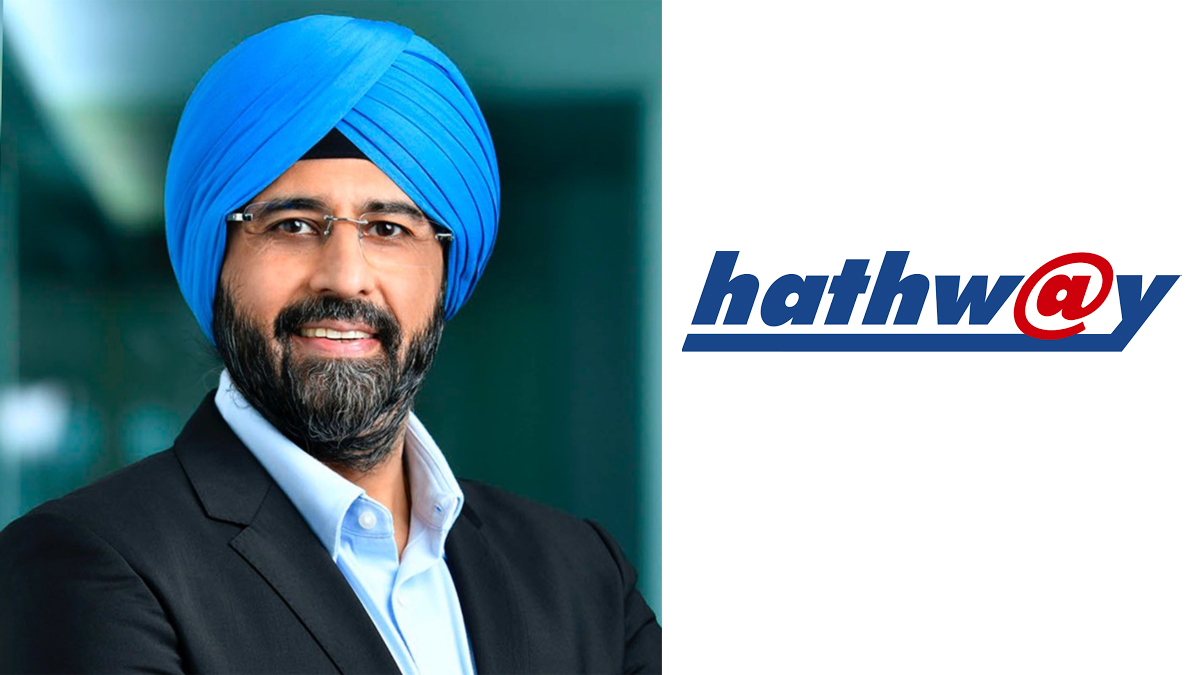
MUMBAI: Hathway Cable and Datacom has tapped industry veteran Gurjeev Singh Kapoor as chief executive officer, marking a leadership pivot at a time when India’s cable television business is under mounting strain.
Kapoor will take over from Tavinderjit Singh Panesar, who is set to retire in August after a long innings with the company. Panesar, chief executive since 2023, has held multiple leadership roles at Hathway, including his latest stint beginning in 2022.
Kapoor brings more than three decades of experience in media and entertainment. He most recently led distribution at The Walt Disney Company’s Star India business, now part of JioStar. His career spans television distribution and affiliate partnerships, with stints at Sony Pictures Networks India, Discovery Communications and Zee Entertainment.
Panesar, with over three decades in the industry, has worked across strategic planning, distribution and business development in media, broadcasting and manufacturing. His past associations include ESPN Star Sports, Star India, Apollo Tyres and JK Industries.
The transition lands as the cable sector grapples with structural disruption. Traditional operators are losing ground to streaming platforms, while telecom and broadband players tighten the squeeze with bundled offerings.
An EY report estimates India’s pay-TV base could shrink by a further 30 to 40 million households by 2030, taking the total down to 71 to 81 million. The slide follows a loss of nearly 40 million homes between 2018 and 2024, a contraction that has already wiped out more than 37,000 jobs in the local cable operator ecosystem.
Hathway’s numbers reflect the strain. The company reported a consolidated net profit of Rs 93 crore for FY25, down from Rs 99 crore a year earlier. Revenue inched up to Rs 2,040 crore from Rs 1,981 crore. As of December 2025, it had about 4.7 million cable TV subscribers and roughly 1.02 million broadband users.
Kapoor steps in with a familiar brief but a shrinking playbook. In a market where viewers are cutting cords faster than companies can reinvent them, the new chief executive inherits a business fighting to stay plugged in.







