News Headline
TDSAT nixes payment demands without written agreement

NEW DELHI: The Telecom and Disputes Settlement and Appellate Tribunal has said that a proceeding for recovery of money due for supply of TV signals is not maintainable under section 14A of the Telecom Regulatory Authority Act 1997 in the absence of a written interconnect agreement between the parties.
Dismissing two petitions, chairman justice Aftab Alam and member B B Srivastava turned down the argument that trading in TV signals or giving TV signals for retransmission is not per se illegal in terms of section 70 of the Indian Contract Act 1872 notwithstanding the provisions in the Digital Addressable System regulations mandating an agreement in writing.
One petition had been filed by multisystem operator Manthan Broadband Services Ltd against local cable operator Rajarhat Cable Broadband Service, while the other is by UCN Cable Network India Pvt. Ltd against Raj Cable Network.

The Manthan case is that Rajarhat has a large amount as dues of subscription fees but is shifting to another MSO without clearing arrears amounting to Rs 67,70,433 as dues of subscription charges up to 31 March 2015 and another sum of Rs 3,35,96,000 for the set top boxes (STBs) given to it by the petitioner, apart from interest @ 18 percent per annum from the date of filing of the petition till the date of payment. Manthan also wanted Rajarhat to be restrained from receiving signals from another MSO till all dues are cleared. The area comes under DAS.
UCN Cable Network filed for recovery of Rs 28,09,195 as dues of subscription fees and cost of STBs from Raj Cable Network and to restrain it from going to another MSO till the dues are cleared. The only difference in this case is that UCN had an interconnect agreement with Raj Cable in the form of a memo of understanding) that came to end on 31 August 2012, but the supply of signals continued beyond the term of the agreement and the dues claimed by the petitioner are computed up to September 2015. But the petition was filed on 5 November 2015 and the tribunal says this is ‘plainly barred by limitation and any claim for recovery of dues beyond that period is liable to rejection as being not based on any interconnect agreement.’ The area of operation relate to transmission in analogue mode.
Both the Interconnect Regulations 2004 and the DAS Interconnect Regulations 2012 contain almost identical provisions prohibiting distribution of TV signals for re-transmission without entering into an agreement in writing.
In view of this, the tribunal said it had in a number of cases taken the view that a distributor of TV channels acting in blatant disregard and deliberate disobedience of the regulations framed by TRAI in exercise of its powers under the TRAI Act cannot seek for recovery of its dues.
However, various counsellors had sought to argue on the basis of the Indian Contract Act and some Supreme Court judgments that the distributor was entitled to compensation.
However the tribunal said that the Interconnection Regulations 2004 were issued by TRAI on 10 December 2004 in order to cover arrangements for interconnection and revenue sharing among service providers in the broadcasting sector. On 17 March 2009 a notification was issued incorporating clause 4A in the body of the Regulations which clearly says ‘It shall be mandatory for the broadcasters of pay channels and distributors of TV channels to reduce the terms and conditions of all their interconnection agreements to writing’ and ‘No broadcaster of pay channels or distributor of TV channels such as multi-system operator or headend in the sky operator shall make available signals of TV channels to any distributor of TV channels without entering into a written interconnection agreement.’
The tribunal also said clause 5(16) of the DAS Interconnect Regulations 2012 (corresponding to clause 8 of the Interconnect Regulations 2004) allowed, after expiry of an agreement, three months’ time to the parties to negotiate the terms of the fresh agreement (which on being executed would relate back to the date of expiry of the previous agreement). The provision was widely misused, especially under DAS transmission, and supply of TV signals would be continued, in many cases for long periods of over a year after the existing agreement came to end.
The regulator clearly viewed it as an abuse of the regulation and by notification issued on 7 January 2016 amended clause 5(16) of the DAS Regulations 2012 with effect from 1 April 2016. Under this, no supply of signals can be made for a single day unless a fresh agreement is executed to replace the previous agreement on its expiry.
The tribunal also said cases coming to it showed a clear pattern. ‘When a major MSO wishes to enter a market, it poaches upon the LCOs, affiliated with other MSOs operating in the area from before by offering them much lower rates. As the LCOs shift to the new entrant in large numbers, conflicts arise between the LCOs and the MSO from which they earlier received signals. The new entrant gives its own STBs to the LCOs shifting to it for having the boxes seeded at the subscribers’ places. After LCOs in substantial numbers come under it and a large number of its boxes are seeded, the new entrant starts increasing its rates and then there is another round of conflict between the new entrant and its poached LCOs. All the arrangement is oral and without any inter-connect agreement. Hence, when the matter comes to the tribunal, it is the word of one side against the word of the other side. In the past months, a large number of such cases have come to the tribunal. It is obvious that such practices based on oral arrangements, besides being in violation of the regulation, vitiate the market and disrupt the orderly growth of the sector.”




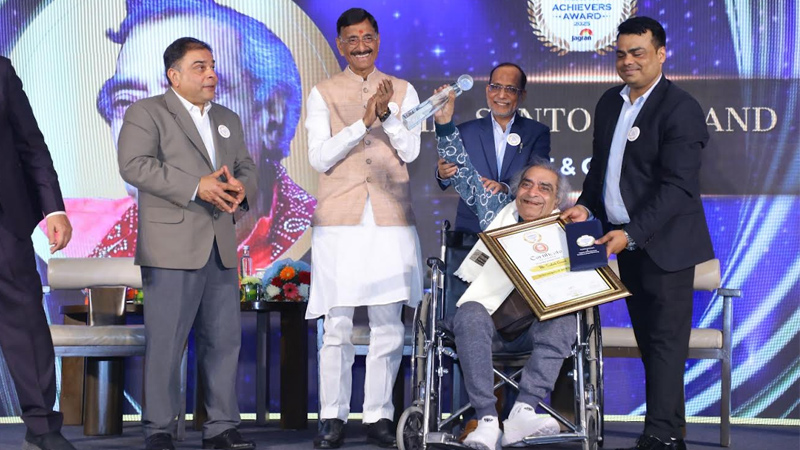
NEW DELHI: Hamdard Laboratories gathered a cross-section of India’s achievers in New Delhi on Friday, handing out the Hakeem Abdul Hameed Excellence Awards to figures who have left their mark across healthcare, education, sport, public service and the arts.
The ceremony, attended by minister of state for defence Sanjay Seth and senior officials from the ministry of Ayush, celebrated individuals whose work blends professional success with a sense of public purpose. It was as much a roll call of achievement as it was a reminder that influence is not measured only in profits or podiums, but in people reached and lives improved.
Among the headline awardees was Alakh Pandey, founder and chief executive of PhysicsWallah, recognised for turning affordable digital learning into a mass movement. On the sporting front, Arjuna Awardee and kabaddi player Sakshi Puniya was honoured for her contribution to the game and for pushing women’s participation onto bigger stages.
The cultural spotlight fell on veteran lyricist and poet Santosh Anand, whose songs have echoed across generations of Hindi cinema. At 97, Anand accepted the honour with characteristic humility, reflecting on a life shaped by perseverance and hope.
Healthcare honours spanned both modern and traditional systems. Manoj N. Nesari was recognised for strengthening Ayurveda’s place in national and global health frameworks. Padma shri Mohammed Abdul Waheed was honoured for his research-backed work in Unani medicine, while padma shri Mohsin Wali received recognition for his long-standing contribution to patient-centred care.
Education and social development also featured prominently. Padma shri Zahir Ishaq Kazi was honoured for decades of work in education, while former Meghalaya superintendent of Police T. C. Chacko was recognised for public service. Goonj founder Anshu Gupta received an award for his dignity-centred rural development initiatives, and the Hunar Shakti Foundation was honoured for empowering women and young girls through skill development.
The Lifetime Achievement Award went to former IAS officer Shailaja Chandra for her long career in public healthcare and governance, particularly in the traditional systems under Ayush.
Speaking at the event, Hamdard chairman Abdul Majeed said the awards were a tribute to those who combine excellence with empathy. “These awardees reflect Hakeem Sahib’s belief that healthcare, education and public service must ultimately serve humanity,” he said.
Minister Seth struck a forward-looking note, saying India’s young population gives the country a unique opportunity to become a global destination for learning, health and wellness by 2047.
The ceremony also featured the trailer launch of Unani Ki Kahaani, an upcoming documentary starring actor Jim Sarbh, set to premiere on Discovery on 11 February.
Instituted in memory of Unani scholar and educationist Hakeem Abdul Hameed, the awards have grown into a national platform that celebrates those building a more inclusive and resilient India. For one evening at least, the spotlight was not just on success, but on service with substance.