News Broadcasting
Tandberg Television brings IPTV video head-ends to Globalcomm 2006


MUMBAI: The Globalcomm 2006 to be held in Chicago this month will see Tandberg Television making its advances in the global standard definition (SD) and high definition (HD) IPTV video head-end market.
With the recent acquisition of SkyStream, Tandberg Television comes to Globalcomm with expanded compression capabilities. The acquisition combines two highly-complementary technology lines, providing Tandberg Television with increased encoding density and new transcoding solutions and expanding its premium SD video quality and HD AVC encoding. Thus, it is able to provide the industry with the broadest and most flexible IPTV video head-end solution set, informs an official release.
The expanded range of Tandberg Television IPTV products is designed to provide both large and small telcos with the necessary choice and flexibility to efficiently advance their IPTV service roll-outs. The enlarged product line, packaged in telco or broadcast chassis form factors, presents the industry’s widest selection of encoding and video processing technologies for streaming, transrating, transcoding, high density encoding and premium encoding with solutions that are shipping today for standard definition and high definition MPEG-2, MPEG-4 AVC and SMPTE VC-1, adds the release.

As a result of the acquisition, Tandberg Television’s Globalcomm booth will show fully operational SD and HD IPTV video head-ends with a number of new innovations including:
— Unified IPTV head-end control and management with Tandberg nCompass will provide integrated control for all Tandberg IPTV solutions, enabling telcos to save money through improved operational efficiency.
— Advancements in Picture in Picture (PiP) with the launch of SD PiP on the NEBS-certified, telco-designed Mediaplex and iPlex platforms, as well as SD and HD PiP on the Tandberg premium encoding range.
— Launch of a new HD encoder designed to meet the needs of the Tier 2 and Tier 3 Telco/IOC markets. Called the Tandberg EN5960, the HD platform has been well-received initially with several successful U.S. carrier deployments already completed. The EN5960 extends Tandberg Television’s market leadership in HDTV.
Tandberg Television will also continue its tradition of open integration by working with leading systems integrators, middleware providers and consumer device manufacturers to provide operators with complete systems. The Globalcomm booth will include live demonstrations with both Myrio TotalManage, Myrio Interactive and Microsoft TV IP-TV Edition middleware and leading set-top box vendors.
Tandberg Television EVP Jim Olson said, “Globalcomm will see Tandberg Television cement its lead as the IPTV compression powerhouse. Our unique offering of choice and flexibility enables operators to mix and match their head-end infrastructure investment to maximize utilization of existing network infrastructures (SONET, ATM and IP), to leverage increased bandwidth efficiencies and to select the most appropriate video compression performance and density to support picture quality requirements on a per channel/per program basis.”
“What’s more we will show telcos at Globalcomm how they can integrate our IPTV video head-end systems with our range of revenue-generating solutions for advanced IPTV services. These include Push/Pull video on-demand, interactive television, mobile TV and ad insertion, all of which will truly differentiate a telco’s offering from standard cable services in the Tier-2 and Tier-3 markets,” he added.
HD and SD Picture-in-Picture
According to the release, Tandberg Television is showcasing its latest developments in Picture-in-Picture (PiP) technology that increase operator options for real consumer benefits, such as enabling second channel live viewing, advanced video mosaics, next-generation video programming guides, user configurable multi-view screens and the simultaneous delivery of content to mobile, handheld or web streaming devices.
Tandberg Television will launch SD PiP on both the iPlex and Mediaplex video head-ends. These carrier-class platforms are complete head-end systems in a single chassis that enables a new level of converged services over any last mile access infrastructure (xDSL, FTTx, and CATV). The Mediaplex and iPlex video platforms are the industry’s first fully-integrated switched digital video head-ends to deliver MPEG-4 AVC encoding, MPEG-2 to MPEG-4 AVC transcoding, PIP encoding, transrating, remultiplexing and routing. With flexibility, and highly-dense capacity of up to 48 MPEG-2 or MPEG-4 AVC encoders or transcoders, Tandberg Television’s Mediaplex and iPlex platforms can distribute hundreds of high-quality video channels in multiple formats and rates to millions of subscribers simultaneously.
In addition, HD PiP capabilities will be shown on the Tandberg premium HD platform. Delivering outstanding quality and 3-in-1 resolution choices, the Tandberg EN5990 encoder is able to output MPEG-4 AVC HD main video (either 720p or 1080i), “HD-PIP” which is user selectable with resolutions from 192×192, SIF through to full resolution SD running between 256Kbit/s -> 5Mbit/s and “Micro-PIP” with 96×96 (PAL) / 96×80 (NTSC) resolution. This ability to deliver a full resolution SD version of the HD channel opens up several possibilities for broadcasters and operators and enables a number of HD user multiview applications. With HD source in and both HD and SD versions of the same channel out, SD only subscribers would get a chance to see the HD channel content. Tandberg Television has been shipping SD PiP in its premium EN5920 and EN5930 MPEG-4 AVC and VC-1 encoders since last year.





News Broadcasting
Kamlesh Singh receives Haldi Ghati Award from MMCF
India Today Group editor honoured for three decades of journalism at Udaipur ceremony.
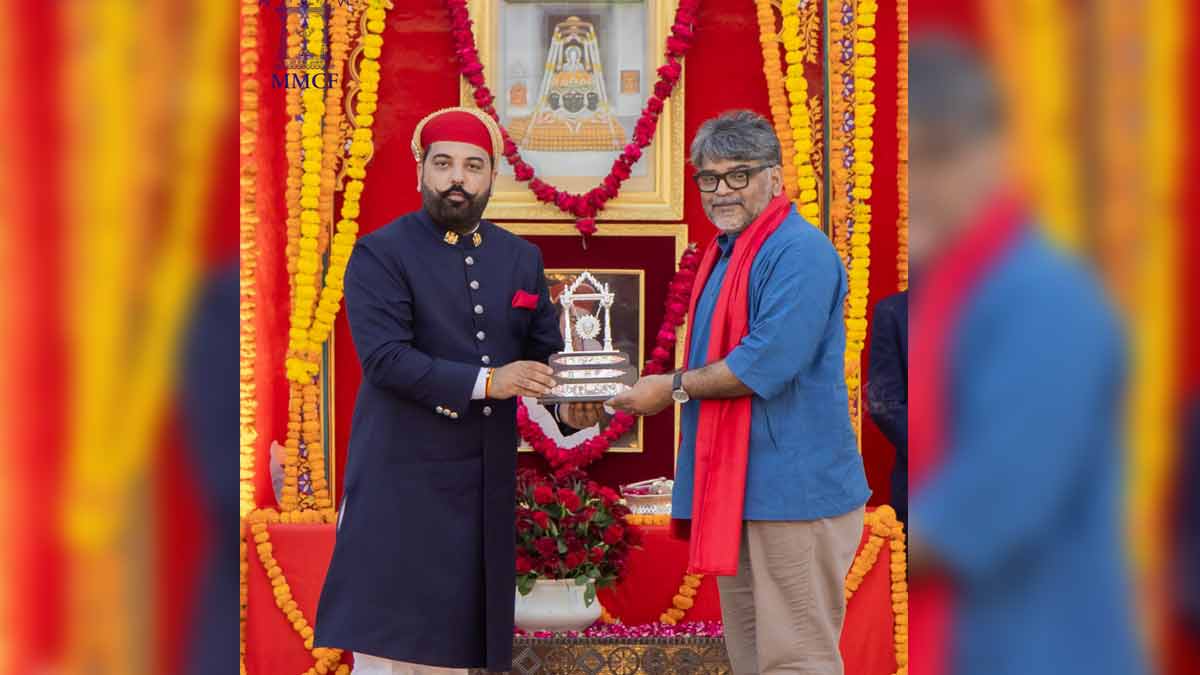
MUMBAI- Kamlesh Singh just turned a lifetime of sharp words into a shiny shield because when journalism wakes up a society, even the Maharana of Mewar wants to pin a medal on it.
The Maharana of Mewar Charitable Foundation (MMCF) conferred its prestigious Haldi Ghati Award on Kamlesh Singh, a senior editor at the India Today Group, during a ceremony in Udaipur on 15 March 2026. The national award, instituted in 1981-82, recognises “work of permanent value that initiates an awakening in society through the medium of journalism.”
Singh, who leads several editorial initiatives including Aaj Tak Radio, the Teen Taal community and The Lallantop, was presented the honour by Lakshyaraj Singh Mewar, Managing Trustee of MMCF. The citation highlighted his three decades of contributions to Indian media, innovations in digital journalism, mentoring young reporters, and his popular podcast persona “Tau” on Teen Taal, which fosters thoughtful public discourse.
The Haldi Ghati Award, named after the historic Battle of Haldighati symbolising valour and resilience, is one of four national awards given annually by MMCF. Past recipients include Tavleen Singh, Piyush Pandey and Raj Chengappa.
Other honourees this year included Padma Vibhushan Pt Hari Prasad Chaurasia, Vedamurti Devvrat Rekhe, Treeman of India Marimuthu Yoganathan, Vir Chakra Capt Rizwan Malik, and US-based researcher Molly Emma Aitken, who received the Colonel James Tod Award for contributions to understanding Mewar’s spirit and values.
In an era where headlines often shout louder than substance, the MMCF quietly reminded everyone that real journalism isn’t about noise, it’s about the quiet, persistent work that stirs society awake, one thoughtful story at a time.