News Broadcasting
Talk Show – Radio session yields little fruit


MUMBAI: If last year’s session on radio at Frames was a somber affair, this year’s discussion was a lively self promotional exercise for the bigger private players, each gung ho on their respective strengths and USPs.
The morose air heavy with impending payments of license fees due again in a couple of months did not seem to mar the mood of either Radio Mirchi chief A P Parigi or Radio City heavyweight Sumantra Dutta, both of whom wove lengthy discourses on their own stations, while Red FM CEO Nishchint Chawla contented himself with a brief talk on the effectiveness of radio as an advertising option.
Perhaps it was the covert positive reference to the liberalisation of the radio sector by I&B minister R S Prasad that had a buoyant effect on the mood of the speakers and moderator Anish Trivedi alike.

The session, which set out to ‘unravel the mystery of effective radio communication’, found some ground realities in the speeches of Unilever’s media planning head B. Venkataraman and Starcom India chief Ravi Kiran. While Venkatraman’s claim that it was well nigh difficult to ascertain whether ad spots bought on radio were actually aired nettled Dutta into countering that it was equivalent to buying Rin (a Lever product) without being sure of its ‘washes the whitest’ claim, Kiran stressed on the need for more interactivity in the medium.
He also urged advertisers not to consider radio as an ‘afterthought’ medium, as, while it takes take to build reach, radio is a live medium, which does not restrict the imagination of the listener with visuals. As a solution to the continuing tussle between broadcasters and advertisers on monitoring the efficacy of radio as a medium, Venkataraman suggested the setting up of a joint industry body that would look into relevant issues.
Dutta, who spoke on concepts that would take FM in India forward, said that local audience deliveries are getting critical. “Radio needs to become fashionable, needs a social stamp of approval and content needs to be relevant, immediate and tailored to timebands,” he said, pointing out that FM radio is no longer a community medium, but a one – on – one medium that needs to speak directly to the listener.
According to Dutta, FM radio today reaches 50 per cent of the population in the cities where FM is active. According to Venkataraman, homes with only a radio and no television set are 27 million in India. The numbers of radio are growing, the advertiser too is giving radio a serious thought, if Kiran and Venkataraman are to be believed. The turnout at the sessions on radio is growing bigger each year, pointed out Parigi, an indicator that interest in the medium is on the rise.
Prasar Bharati CEO K S Sarma who was supposed to speak on public broadcaster All India Radio, however, could not make it to the session, leaving the field open for the private players to make their pitch.With the I&B ministry now poised favourably on the industry recommendations and the Ernst and Young report putting it high on the list of growth areas, radio is just gearing for a serious innings in the country.

News Broadcasting
CNN-News18 to host Fury in the Gulf conclave on West Asia crisis
Three-hour summit to unpack geopolitical fallout and impact on India
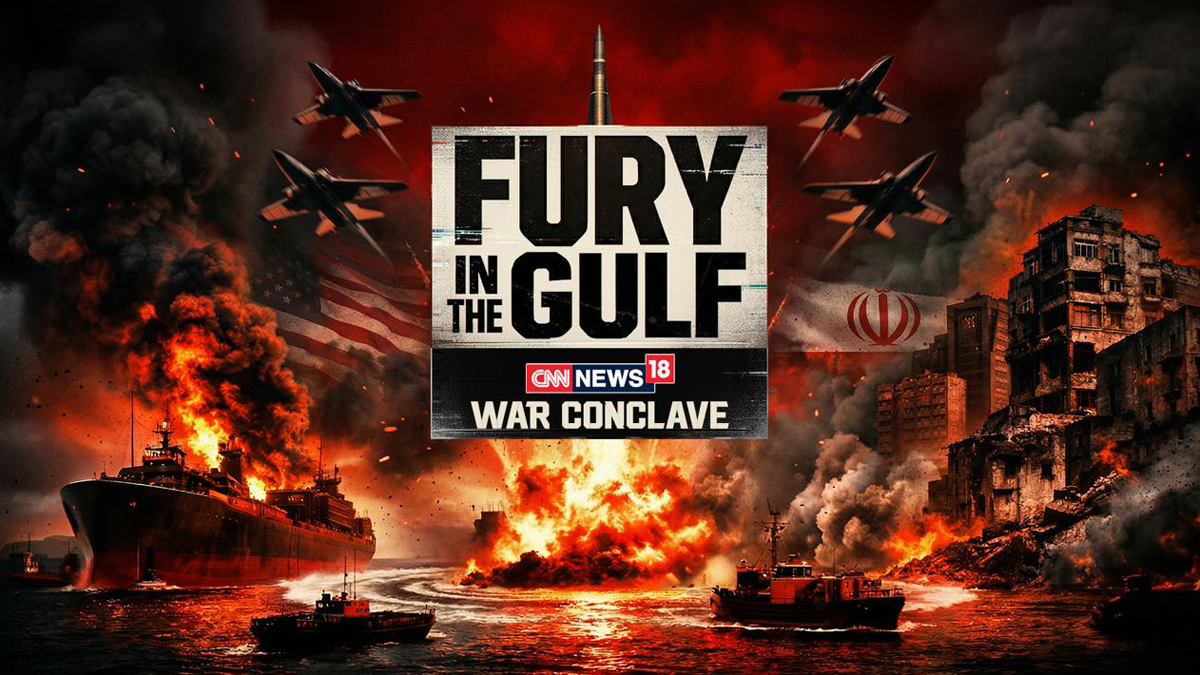
MUMBAI: CNN-News18 is set to host a special three-hour broadcast, Fury in the Gulf – War Conclave, on April 7, aiming to decode the escalating West Asia crisis and its far-reaching implications for India.
Scheduled from 4:00 PM to 7:00 PM, the conclave comes at a time when tensions between Iran and the United States are reshaping global geopolitics and triggering economic uncertainty. With India’s deep energy ties, trade links and large diaspora in the Gulf, the developments carry significant domestic relevance.
Built around the theme ‘Conflict, Consequences, and The Future,’ the programme will feature six curated sessions combining one-on-one interviews and panel discussions. The focus is to cut through the clutter and offer viewers a clearer understanding of the fast-evolving situation.
Key sessions include ‘Diplomacy in Times of War’ featuring Shashi Tharoor, and ‘World After the Iran Conflict’ with voices such as Ram Madhav, Reuven Azar, representatives from the European Union and the Iranian Deputy Envoy. Another session titled ‘Another Dunkirk?’ will bring together K. J. S. Dhillon and Jitin Prasada among others.
CNN-News18 editorial affairs director Rahul Shivshankar said, “In times of war, clarity becomes the most powerful tool. Fury in the Gulf – War Conclave brings together credible voices to address the questions and confusion that arise amid an overwhelming influx of information.”
He added that the initiative is aimed at delivering “facts, perspective, and insight” at a time when misinformation can easily cloud public understanding.
Echoing the sentiment, CNN-News18 CEO– English and business news Smriti Mehra said the conflict marks a defining global moment, with consequences that extend well beyond the region. She noted that the conclave seeks to present the crisis with “depth, nuance and responsibility” so audiences can better grasp its real-world impact.
As geopolitical tensions continue to dominate headlines, the conclave positions itself as an attempt to bring order to the noise, offering viewers a structured, insight-led look at a complex and rapidly shifting global situation.






