iWorld
Synamedia’s Media Edge Gateway equips video service providers with the anchor for a full cloud evolution


MUMBAI: Synamedia, the world’s largest independent video software provider, has announced its Media Edge Gateway, a software-based integrated receiver/decoder (IRD) that opens new routes to monetization, software-as-a-service (SaaS)-based business models, hybrid deployments and much more.
Based on Synamedia’s award-winning virtualized Digital Content Manager (DCM) architecture and its PowerVu IRD technologies, the new Media Edge Gateway is ideal for video service providers that are deploying in hybrid environments, looking to test out new channels or launching point-in-time updates such as for natural disasters, and events. This new service enables cost-effectiveness, flexibility and adaptability in creating new application-specific edge gateways including an ATSC 3.0 receiver and SMPTE 2110 decoder with further commercial, function, positioning and form adaptations to be added in the future.
The Media Edge Gateway can reduce go-to-market schedules from weeks to mere minutes using automation, the resulting benefit of its software-based architecture . This approach creates more value for end customers while offering video service providers new monetization paths. Additionally, it enables customers to experiment or launch varying business models including SaaS options and subscription-based packages.

Synamedia’s best-of-breed management systems like the Video Network Service Manager (VSM) and PowerVu Network Control (PNC) allow for fast and accurate analytics, control, monitoring and deployment. The Media Edge Gateway further helps Synamedia customers along their journey to all-IP delivery with hybrid deployments, combining on-premise and public cloud distribution.
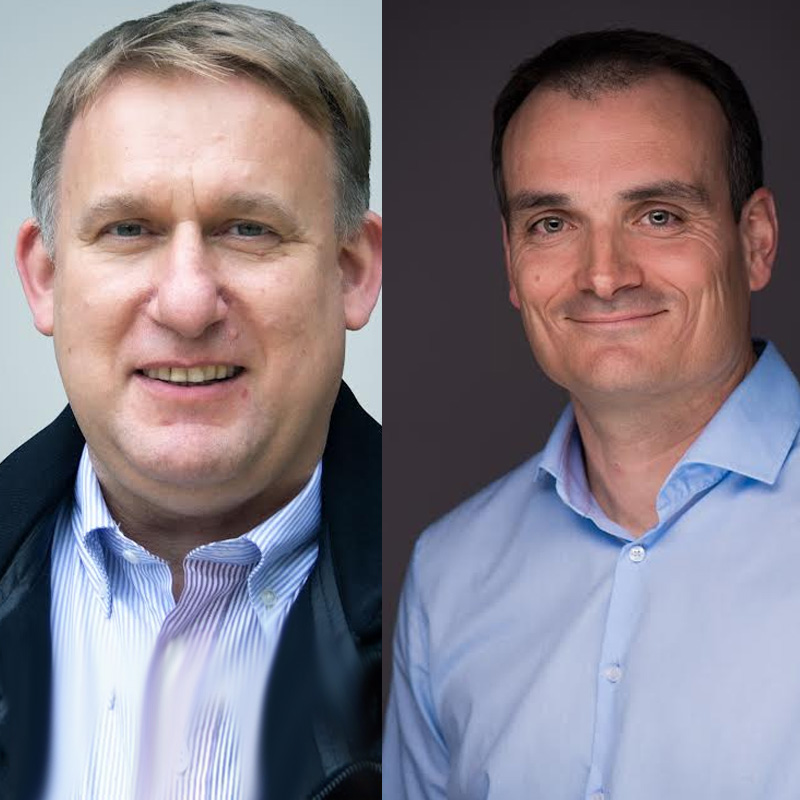
“Never before has there been a stronger need for cost efficient delivery of the high quality viewers expect, and never before has it been as simple to do as it is with our new Media Edge Gateway,” said Julien Signes, senior VP and GM, Video Network at Synamedia. “By adding our newest edge gateway to the mix, video service providers can truly optimize every single part of their network, and do so while being more efficient in today’s software-driven world.”
Synamedia’s video network portfolio powers premium quality broadcast and broadband video for more than 1,000 operators worldwide and 100 million daily viewers. Its video distribution, processing and delivery services and solutions create compelling live multi-screen experiences, enable software-defined video processing and unify operations. The award-winning portfolio also touts a cloud-ready, converged broadcast and broadband end-to-end ATSC 3.0 offering and low latency solutions for live video. Its virtualized Digital Content Manager (DCM) features live transcoding to multiple bit rates and formats, scalable video functions and best-in-class video quality all aimed to deliver infinite entertainment.



iWorld
Samay Raina returns with Still Alive, confronts 2025 controversy in bold comeback special
Comeback set tackles controversy, blending humour with raw storytelling
MUMBAI: Samay Raina is set to release his new stand-up comedy special, Still Alive, on YouTube on April 7, 2026, marking a high-profile return following a turbulent year.
The trailer for the special dropped on April 5, offering a glimpse into what Raina describes as a raw and unfiltered set that leans as much on honesty as it does on humour.
Positioned as a comeback of sorts, Still Alive draws heavily from the controversy surrounding his show India’s Got Latent in early 2025. The episode led to legal trouble, multiple FIRs, and a lengthy six-hour interrogation by the Maharashtra Cyber Cell, placing the comedian at the centre of intense public scrutiny.
Rather than sidestep the episode, Raina leans into it. The special reflects on the fallout and his personal journey through it, blending observational comedy with moments of emotional candour. Early audience feedback from live performances suggests the tone is less about rapid-fire punchlines and more about storytelling with bite.
The special was filmed during his global Still Alive & Unfiltered tour, which ran from August 2025 to early 2026. The tour saw Raina perform across major international venues, including the Madison Square Garden Theatre in New York, a milestone that places him among the youngest Indian comedians to take that stage.
The title itself signals resilience. “Still Alive” is a nod to navigating both legal and public backlash while choosing to remain unapologetically authentic, a theme that appears to anchor the set.
With the special set to premiere online, all eyes are now on how audiences respond to a performance that promises equal parts reflection and wit. For Raina, the message is clear. He is not just back, he is ready to be heard on his own terms.






