News Broadcasting
Swaraj’s broadcasting council plan shelved

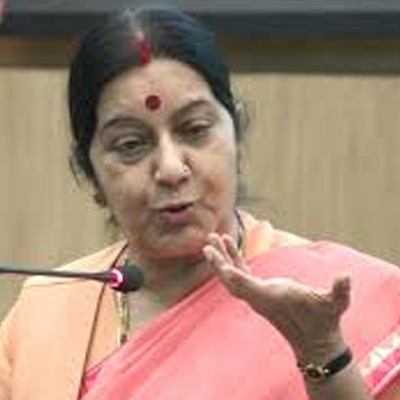
NEW DELHI: With the latest buzz in the information and broadcasting ministry being self-regulation, it seems that former I&B minister Sushma Swaraj’s grand plans to have a broadcasting regulatory authority or a Broadcasting Council in place to monitor content on television, ahead of the passage of the omnibus Communication Convergence Bill, is being given a quiet burial.
Pointing out that he is not at all for “moral policing” — and rightly so — the new I&B minister Ravi Shankar Prasad today said: “The broadcasting council has yet to get my consideration and attention.”
Interacting with media beat correspondents today, Prasad said, “My approach is simple: self-regulation. I would again appeal to all bonafide channels to go in for self-regulation.”

When it was pointed out that his predecessor had listed bringing a bill relating to broadcasting council in Parliament in the first quarter of this year, Prasad clarified that the issue is still to catch his attention and, in the meantime, before the government takes any action, it’d be nice if everybody went in for self-regulation.
When asked when does he propose to take the uplinking issue (the Star News case, to be precise) to the Cabinet, the minister clarified that feedback from all other ministries on the issue has come in, but some more consultation is being carried out within the I&B ministry.
“I am very well aware of the deadline,” he replied to a question that some proposed news channels’ future depended on a government decision. Was he aware of the Star News deadline? The minister would not specify. Jocularly reacting to indiantelevision.com’s prodding on the issue, he said, “All I am saying is I am aware of everything. That should suffice.”
The minister also said that he is having a “proper look” at the KU-band direct-to-home (DTH) guidelines and would not give details as to when the ministry proposes to clear the two application lying with it.
“As a minister I have the right to study issues relating to my ministry and I am doing that,” Prasad said without giving any hint whether there would be any review of some of the contentious points in the DTH policy guidelines.
The minister, however, sent out a categorical message to everybody in the cable and broadcasting industry: the deadline of July 14 for rollout of conditional access would be adhered to strictly.
“I am commited to bring in the effectiveness of CAS,” Prasad said and pointed out that one of his top priorities would be to ensure “good availability of set top boxes”.
Asked whether the consumer would be really interested in buying STBs (as per his admission a digital STB may cost up to Rs 4,000), Prasad said, “A lot of these questions are based on presumptions. The market forces would take care of the process (of affordability of STBs).”
He, however, would not be drawn out on whether the finance minister is mulling a duty cut on import of components for STBs that would make them cheaper.
The minister also said that as of now there is no proposal to allow FDI in print medium news agencies. The decision not to allow any FDI in news agencies was taken by the Caninet way back in 1956.
“It is a question of review,” the minister said, adding, “The view of the industry would be taken.”




News Broadcasting
WITT Summit 2026 concludes in New Delhi
Babar Azam’s comical diving attempt goes viral as league introduces anti-dew measures.
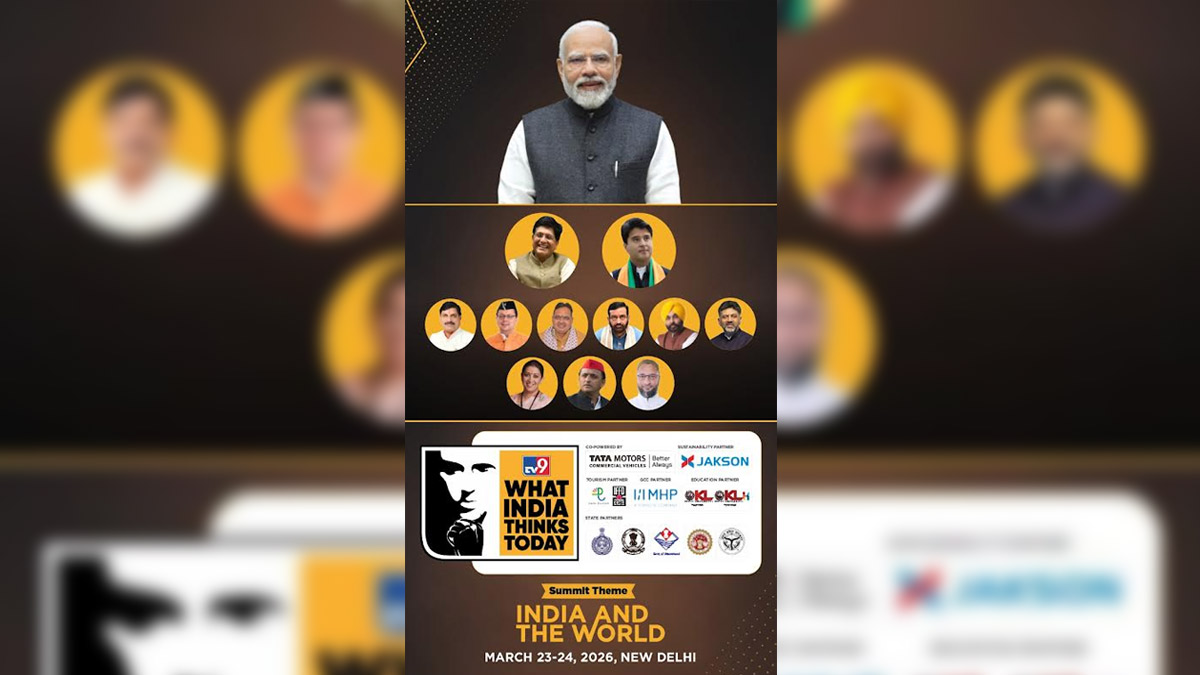
MUMBAI: The WITT Summit just wrapped up with enough big ideas to fill a policy playbook because when India’s leaders, thinkers and icons gather under one roof, even the conversations hit sixes. The eighth edition of TV9 Network’s flagship What India Thinks Today (WITT) Summit 2026 concluded on Saturday after two days of dynamic discussions at its New Delhi venue. India’s largest multi-domain public policy and culture summit brought together political leaders, policymakers, sports icons, artists and technology innovators to examine the forces shaping contemporary India and its global standing.
Prime minister Narendra Modi delivered the keynote address on the theme “India and the World” for the third consecutive year. In a wide-ranging speech, he addressed the ongoing conflict in West Asia, calling for restraint and compassion while highlighting India’s continued development trajectory despite global turmoil.
The summit featured candid conversations with state leaders. Telangana Chief Minister A. Revanth Reddy articulated a people-first governance model and contrasted it with other development approaches. Madhya Pradesh Chief Minister Mohan Yadav declared that Left-wing extremism had been effectively eliminated in his state and highlighted preparations for the upcoming Kumbh Mela. Punjab Chief Minister Bhagwant Mann defended his government’s record, citing the closure of 19 toll plazas and creation of the Sadak Suraksha Force. Karnataka Deputy Chief Minister D.K. Shivakumar expressed confidence in Congress prospects in Assam and addressed recent allegations against him.
On geopolitics and national security, Union Minister Jyotiraditya Scindia outlined India’s ambition to become a builder of trusted digital infrastructure for the world, citing the rapid 5G rollout and village-level 4G connectivity.
Cricket received significant attention. Former India captain Sourav Ganguly praised player freedom and trust as hallmarks of great leadership and named MS Dhoni as the greatest captain due to his World Cup successes. India women’s team bowling coach Aavishkar Salvi credited the BCCI and Women’s Premier League for building a pipeline of world-class talent behind the team’s recent ODI World Cup triumph.
The summit also hosted the inaugural AI² Awards 2026, celebrating the convergence of human creativity and machine intelligence in storytelling and content creation. Poet and kathavachak Kumar Vishwas delivered a nuanced take on India’s concept of Dharma and criticised the recent arrest of an 80-year-old Shankaracharya. Veteran lyricist Sameer Anjaan and storyteller Neelesh Misra reflected on changing music trends and artistic responsibility in the wake of a recent controversy involving Nora Fatehi.
In a country where conversations often run as deep as the Ganges, the WITT Summit proved once again that when leaders, thinkers and storytellers come together, the real winner is public discourse lively, layered and refreshingly unafraid to tackle the big questions shaping India’s tomorrow.








