I&B Ministry
Sushma Swaraj will be remembered as one of the most efficient I&B ministers of India

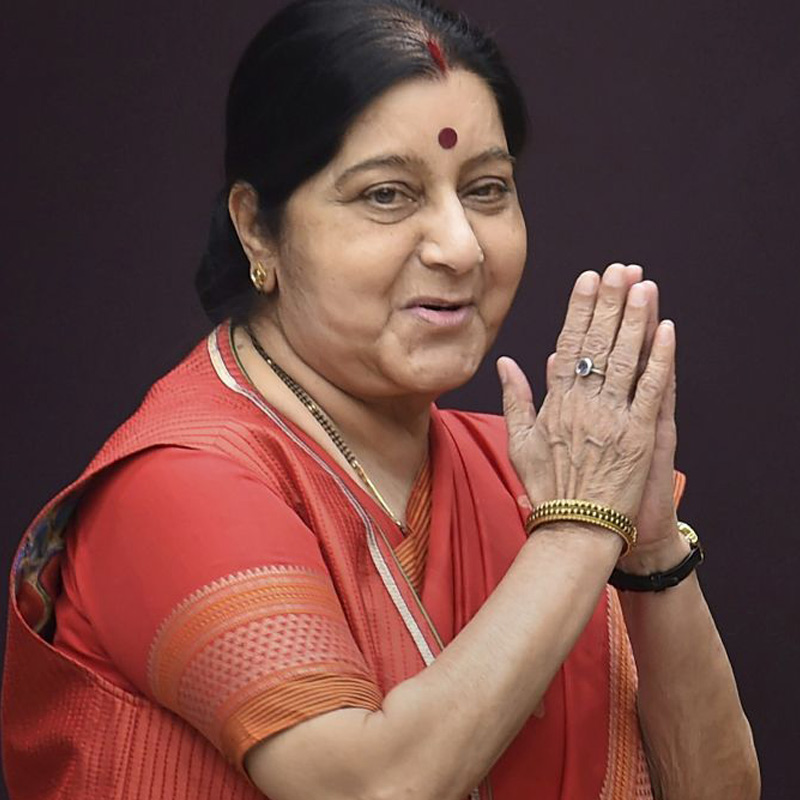
MUMBAI: It was a sad day for Indian politics, yesterday, as one of the most vibrant politicians of her time succumbed to a heart attack. Senior BJP leader Sushma Swaraj will be remembered as one of the greatest orators and one of the most efficient Minister of External Affairs that the Union of India has had. Her presence on Twitter during her tenure as MEA in the previous government had also got her a lot of praise.
But Swaraj, before becoming the MEA in the 2014-2019 government had a very interesting political career, and her role as Union Minister of Information and Broadcasting (I&B), between 2000 and 2003, will remain one of the key highlights of it.
One of her biggest achievements as I&B minister was passing of (Conditional Access System) CAS Bill in 2002, which made it mandatory for consumers to install a set-top box allowing them to pay for only those channels that they want to watch. The maximum price for the basic tier of service comprising free-to-air channels would be determined by the government under the bill.

Also, it was under her tenure as I&B minister that the Indian entertainment sector, including films, was declared as an industry, making it eligible to get loans from financial institutions.
She also actively batted for the introduction of FDI in Indian publications, which none of her predecessors spoke of after it was banned in 1955. She had said in the year 2002 that with the introduction of the internet, the government is planning to look into the matter.
Swaraj had also held the post of Minister of Information, Broadcasting, and Telecommunications for a short term between March 1998 and October 1998.
She breathed her last in national capital Delhi on 6 August following a cardiac arrest.





I&B Ministry
Devinder Kumar appointed Prasar Bharati chief vigilance officer
Senior IOFS officer to serve three-year term with Level-13 pay scale
MUMBAI: The Centre has appointed Devinder Kumar as the chief vigilance officer of Prasar Bharati, formalising a key oversight role within India’s public broadcasting network.
The appointment was cleared through an official order issued by the Department of Personnel and Training under the Ministry of Information and Broadcasting. Kumar, a senior Indian Ordnance Factory Service officer, will initially serve a tenure of three years or until further government orders, whichever comes earlier.
As chief vigilance officer, Kumar will be responsible for overseeing vigilance and compliance functions within Prasar Bharati, ensuring transparency and accountability across the organisation’s operations.
The role carries a Level-13 pay scale under the central government structure, translating to a salary range between Rs 1,23,100 and Rs 2,15,900. The compensation aligns the position with other senior administrative roles across government departments.
Kumar’s appointment follows due process, including a recommendation from the Central Vigilance Commission, which vets candidates for such critical oversight positions.
Currently serving under the Department of Defence Production, Kumar has been directed to be relieved of his existing duties with immediate effect to assume his new role.
The move comes as Prasar Bharati continues to strengthen its governance framework, with the CVO position playing a central role in maintaining institutional integrity. Kumar’s appointment is expected to bolster internal oversight at a time when accountability remains firmly in focus across public sector organisations.







