News Broadcasting
Supreme Court to hear Zee’s petition on Monday

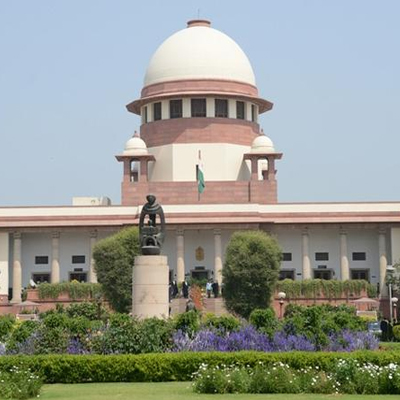
NEW DELHI: The Supreme Court today fixed Monday for hearing Zee Telefilm’s petition in the India cricket telecast rights case.
According to sources in Zee Telefilms, the company has also requested the apex court to start the proceedings at the earliest keeping in mind the gravity of the issue.
In its petition, Zee has contended that it is the rightful owner of the cricket rights as it has deposited $ 20 million with the Indian cricket board as per terms and conditions. It has also contended that the cricket board’s decision to cancel an earlier tender process, which saw Zee emerge as the highest bidder with a quote of $ 308 million, is unjust and the court should overturn that decision.

The respondents in the case include the government of India, ESPN-Star Sports, the Board of Control for Cricket in India (BCCI) and PriceWaterhouse Cooper (PwC), the audit firm that vetted the various bids.
Zee had moved the Supreme Court on Wednesday after the BCCI on Tuesday filed an affidavit in the Bombay High Court that it was cancelling the tendering process and would retain the rights of Indian cricket with itself. Immediately after that, ESPN Star Sports, a joint venture between Walt Disney and News Corp, withdrew its petition against the award of the rights to Zee.
Zee had said in its petition that its contract for cricket telecast rights with the BCCI was signed and was not incomplete as the BCCI maintains.






News Broadcasting
News TV viewership jumps 33 per cent as West Asia war draws audiences
BARC Week 8 data shows news share rising to 8 per cent despite T20 World Cup
NEW DELHI: Even as individual television news channel ratings remain under a temporary pause, the genre itself is seeing a clear surge in audience attention.
According to the latest data from Broadcast Audience Research Council India, television news recorded a 33 per cent jump in genre share in Week 8 of 2026, covering February 28 to March 6.
The news genre accounted for 8 per cent of total television viewership during the week, up from 6 per cent the previous week. The spike in attention coincided with escalating geopolitical tensions involving the United States, Israel and Iran, which have kept global headlines firmly fixed on West Asia.
The rise is notable because it came at a time when cricket was dominating television screens. The high-stakes stages of the ICC Men’s T20 World Cup, including the Super 8 fixtures and semi-finals, were being broadcast during the same period.
Despite the cricket frenzy, viewers appeared to be toggling between sport and global affairs, boosting the overall share of news programming.
The surge in genre share comes even as the government has enforced a one-month pause on publishing ratings for individual news channels. The move followed regulatory scrutiny of the television ratings ecosystem.
While channel-level rankings remain temporarily out of sight, the genre-level data suggests that when global tensions escalate, audiences continue to turn to television news for real-time updates.