iWorld
Sunjoy Waddhwa on the making of ‘Your Honor’

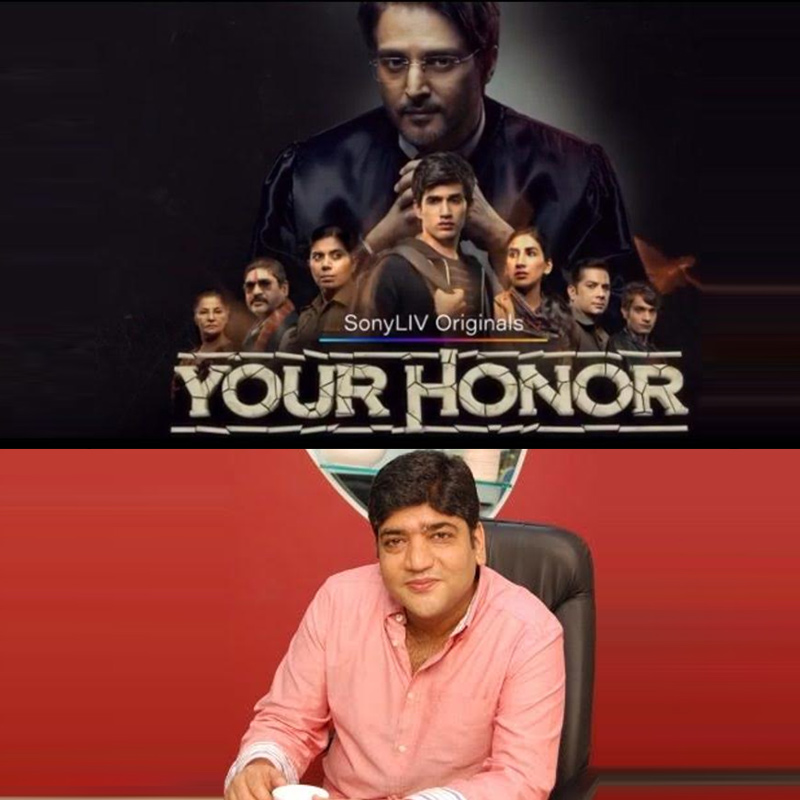
MUMBAI: Sony LIV’s latest drama-thriller, Your Honor produced for Applause Entertainment by Sphereorigins, is all set to release. In a special interaction with indiantelevision.com, Sphereorigins founder Sunjoy Waddhwa shed light on the making of the series.
The original Israeli series was created by Ron Ninio and Shlomo Mashiach and distributed by Yes Studios. The Indian adaptation is helmed by Shool fame, E Niwas.
The series is headlined in India by popular Bollywood actor Jimmy Sheirgill. The makers decided to cast Sheirgill because they wanted a face who can look more relatable to the audiences, who looks like a family man and not just a judge.

The series was shot in 2019. It took 65 days to shoot the entire series, but seven months went into research, followed by four to five recce of the location. While in reality most of the mafias were based out of North India and Mumbai, Bihar and Uttar Pradesh are usually shown as the crime capital. Hence, Waddhwa decided to take a different route and chose the backdrop of Ludhiana, Amritsar, Chandigarh and Mumbai believing it will give a different tone, texture and colour to the series. Around 60 to 70 per cent of the series was shot in Punjab. More than 125 people were involved in creating this drama thriller.
Waddhwa says, “A lot of effort went into the pre-production and designing the look and character of actors, giving authentic touch in terms of language and costume. The director, writer, production designer, they all worked collectively to give the show a more rustic feel.”
In the series, Bishan Khosla (Jimmy Sheirgill), is a reputed judge whose teenage son Abeer (Pulkit Makol) is involved in a hit and run case. The victim of the accident is the son of a gangster. So, a lot of time went into the legalities. Waddhwa sought help from advocates and legal advisers to understand the details.
He mentions, “My takeaway from this has been that the importance of having the script in hand and working properly as per the script and doing good research makes life easier.”
As the shooting took place in the months of December and January, it was extremely cold. Apart from that, technicians and technical crew and fight master contributed to make it a scaled up version of television. As it is not a VFX-heavy series, the makers relied more on shoot material.
“The entire shot taking and story thought process is very different as compared to a normal series. It is more like an extended film rather than a series. Most importantly, there was no set of rules, that it has to be made like an OTT show,” he further adds.
When asked about dealing with comparison to the US adaption, Waddhwa quips, “For a Hindi-speaking audience it is a completely different show. Because this is in the dynamics of our situation. What value you add to the adaptation makes all the difference.”
The original rights of the series belong to Applause Entertainment. Waddhwa also hints at making the sequel of the series after gauging audiences’ response.




Gaming
India’s broadcasters say no to Fifa World Cup 2026
Fifa has slashed its asking price by 65 per cent but India’s broadcasters are still not buying
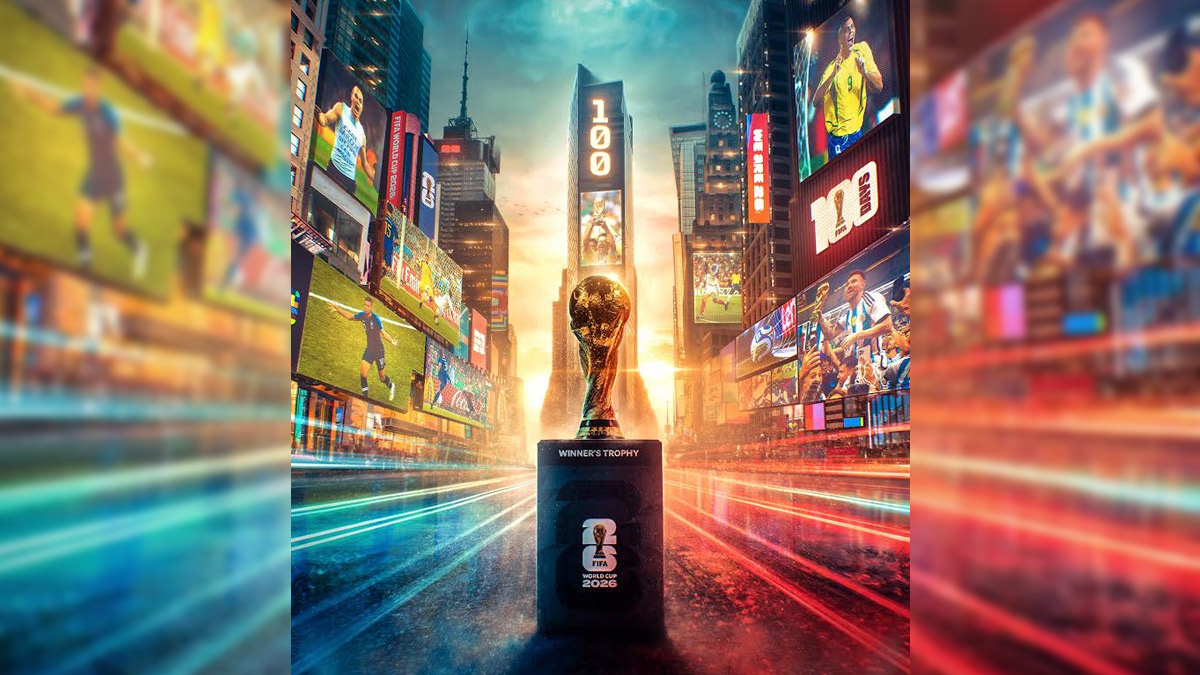
MUMBAI: The world’s biggest sporting event cannot find a single taker in the world’s most sports-mad nation. Fifa’s television rights for the 2026 World Cup remain unsold in India, and the clock is ticking loudly.
To shift the property, world football’s governing body has already swallowed hard and cut its asking price from $100m to $35m, bundling in the 2030 edition as a sweetener. It has not worked. Indian broadcasters have looked at the offer, done the sums and quietly walked away.
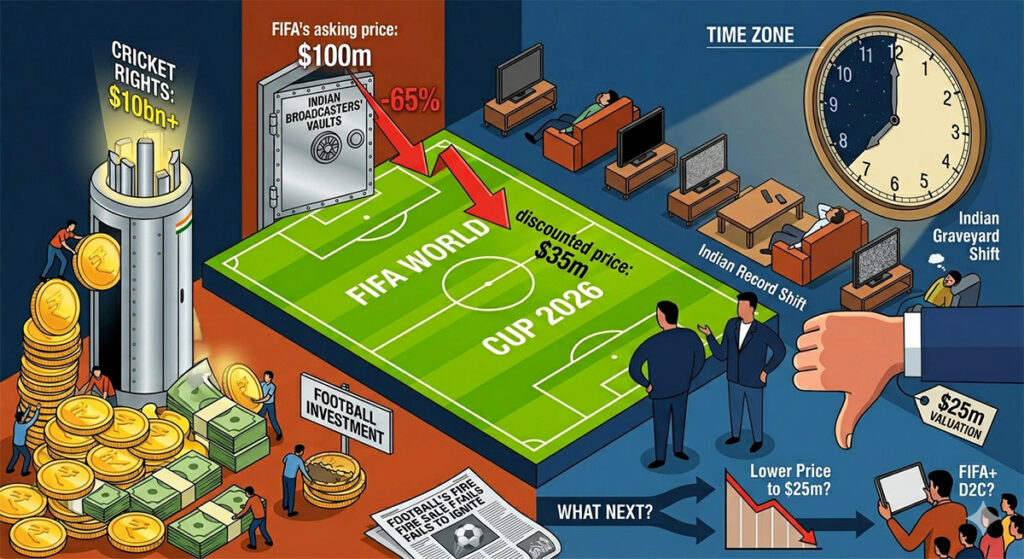
The reasons are brutally simple. The 2026 tournament, co-hosted by the United States, Canada and Mexico, kicks off in a time zone that turns India’s primetime into a graveyard shift. Most matches will air between midnight and 7am IST, a scheduling catastrophe for advertisers chasing mass reach. The 2022 Qatar edition was a gift by comparison, with matches dropping neatly into Indian evenings. North America offers no such luxury.
The market itself has also changed beyond recognition. The merger of Star India and Viacom18 into JioStar has gutted the competitive tension that once sent sports rights prices soaring. Where rival bidders once slugged it out, there is now a single dominant buyer, and it is in no hurry. JioStar has valued the rights at roughly $25m, a full $10m below Fifa’s already-discounted floor price. That gap has so far proved unbridgeable.
Broadcasters are also nursing a ferocious cricket hangover. Between 2022 and 2023, Indian media houses committed well over $10bn to cricket rights alone, covering IPL, ICC events and BCCI domestic fixtures combined. After a binge of that scale, appetite for a football package that delivers a fraction of the ratings, in the dead of night, is close to zero.
The economics of football broadcasting make the maths even harder. Cricket, with its natural breaks every few overs, is an advertiser’s paradise. Football offers a 15-minute halftime and precious little else. Recovering a nine-figure rights fee from a single half-hour ad window is a stretch at the best of times. These are not the best of times: the Indian government’s tightening grip on real-money gaming and gambling advertising has vaporised a category that once underwrote the economics of big sporting events.
Nor is the World Cup an anomaly. Indian Super League valuations have cratered. English Premier League rights have softened across successive cycles. The cooling of football as a broadcast commodity in India is structural, not cyclical.
With the tournament opening on 11th June, Fifa is running out of road. It may yet blink and meet JioStar at $25m. Or it may go direct, streaming the entire tournament on its own platform, Fifa+, or cutting a digital deal with YouTube, and hoping that a generation of Indian football fans finds its way there without a broadcaster to guide them.
Either way, the beautiful game’s Indian chapter is looking decidedly ugly.







