Cable TV
Sun, Adlabs surrender frequencies, commonality on 4 stations


MUMBAI: The Sun TV network-backed South Asia FM and Anil Ambani-controlled Adlabs Films Ltd have surrendered 27 and 12 FM radio frequencies respectively to adhere to a government mandated national cap of 15 per cent per bidding company.
Adlabs surrendered worth Rs 124.55 million for 12 frequencies, while South Asia FM handed over worth Rs 79.82 million for 27 stations.
Interestingly, there is commonality in some frequencies that the two companies have surrendered and these include Imphal, Gorakhpur, Itanagar and Muzzaffarpur. South Asia FM had won about 15 stations in the east region, of which they have surrendered six. Adlabs had bagged 15 stations in the region and has given up eight.

Another point of note is that South Asia FM was the only radio company that bagged the ‘Sagar’ frequency and has surrendered the same.
The other stations that South Asia FM has given up include Agartala, Ahmednagar, Ajmer, Akola, Aligarh, Bikaner, Bilaspur, Daman, Dhule, Gorakhpur, Gwalior, Imphal, Itanagar, Jalgaon, Jhansi, Kohima, Kota, Muzzaffarpur, Nanded, Port Blair, Rourkela, Sagar, Sangli, Sholapur, Surat and Udaipur.
Adlabs Films has surrendered the 12 frequencies in Aizawl, Bilaspur, Kochi, Gangtok, Gorakhpur, Imphal, Itanagar, Kohima, Muzzaffarpur, Port Blair, Shillong and Tirunelveli.
During the second phase of FM radio licencing, which concluded early February, on a national level South Asia FM had successfully bid for 52 licences in as many cities, while Adlabs had bagged 57 frequencies.
According to a government mandate, no company can have more than 15 per cent of the total licences put up for sale all over India.
Though the government had put on the block 338 licences in 91 cities, for calculation purposes a benchmark of 300 has been taken. Based on this number South Asia FM and Adlabs have surrendered their excess baggage. Besides the new stations that would come up now, there are already 21 private FM radio stations operating in the bigger cities of India.
The government will hold another round of bidding for the unsold and surrendered licences. According to the rules, every permission under the Phase II policy is to be valid for a period for ten years from the date of operationalisation of the channel. There is no provision for its extension and the permission is to automatically lapse at the end of the period. The government at the appropriate time will determine the procedure for issue of fresh permissions.







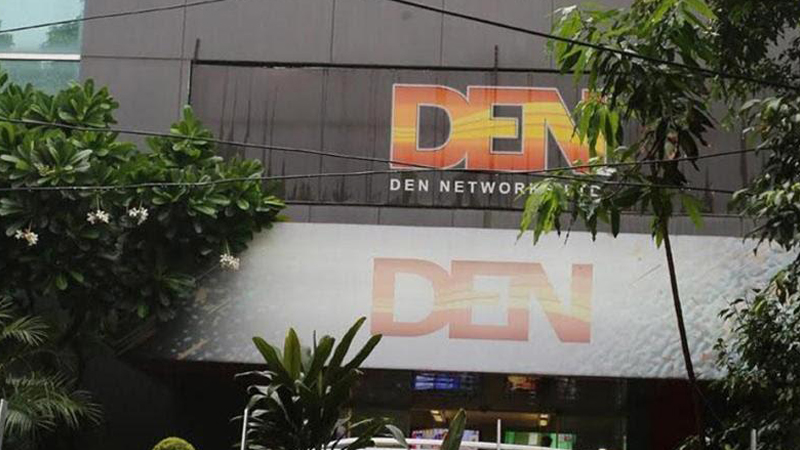
MUMBAI: When margins wobble, liquidity talks and in Q3 FY25-26, cash did most of the talking. Den Networks Limited closed the December quarter with consolidated revenue of Rs.251 crore, marginally higher than the previous quarter but down 4 per cent year-on-year, even as profitability stayed resilient on the back of strong cash reserves and disciplined cost control.
Subscription income softened to Rs.98 crore, slipping 3 per cent sequentially and 14 per cent from last year, while placement and marketing income offered some cheer, rising 15 per cent quarter-on-quarter to Rs.148 crore. Total costs climbed faster than revenue, up 7 per cent QoQ to Rs.238 crore, driven largely by higher content costs and operating expenses. As a result, EBITDA dropped sharply to Rs.13 crore from Rs.19 crore in Q2 and Rs.28 crore a year ago, pulling margins down to 5 per cent.
Yet, the bottom line refused to blink. Profit after tax stood at Rs.40 crore, up 15 per cent sequentially and only marginally lower than last year’s Rs.42 crore. A healthy Rs.57 crore in other income helped cushion operating pressure, keeping profit before tax at Rs.48 crore, broadly stable quarter-on-quarter despite the tougher cost environment.
The real headline-grabber, however, sits on the balance sheet. The company remains debt-free, with cash and cash equivalents swelling to Rs.3,279 crore as of December 31, 2025. Net worth rose to Rs.3,748 crore, while online collections accounted for 97 per cent of total receipts, underscoring strong cash discipline across operations, including subsidiaries.
In short, while Q3 showed signs of operating strain, the financial backbone remains solid. With zero gross debt, steady profits and a formidable cash war chest, the company enters the next quarter with flexibility firmly on its side proving that in uncertain markets, balance sheet strength can be the best growth strategy.






