News Headline
Subscription is biggest contributor to TV industry revenues: TRAI

MUMBAI: India is one of the most profitable and growing markets when it comes to the television ecosystem. In terms of the broadcasting sector consisting of television and radio, India has the world’s third largest TV market after China and USA.
The annual report of Telecom Regulatory Authority of India (TRAI) for the year 2013-14 has detailed out activities of the Authority, which was presented in the Lok Sabha and the Rajya Sabha in March this year.

According to the annual report, as on March 2014, of the 270 million households, around 169 million have been projected to have television sets catered to by cable TV systems, DTH services, IPTV services and the terrestrial TV network of Doordarshan, put together.
While DTH has 64.5 million registered subscribers (37.2 million active subscribers), IPTV caters to around half a million subscribers. On the other hand, cable TV is estimated to have around 99 million subscribers, whereas the terrestrial TV network of Doordarshan covers about 92 per cent of population of the country through a vast network of terrestrial transmitters. The broadcasting and cable television services sector consists of 55 pay broadcasters, an estimated 60,000 cable operators, 6000 multi system operators (MSOs) (including 144 MSOs registered in DAS), six pay DTH operators, apart from pubcaster – Doordarshan, having free-to-air DTH service.
There were 793 TV channels registered with the Ministry of Information and Broadcasting at the end of financial year 2013-14 out of which 187 were SD pay TV channels and 34 HD Pay TV channels. India’s TV industry grew from Rs 37,010 crore in the year 2012 to Rs 41,720 crore in the year 2013, thereby registering a growth of around 12.7 per cent.
“The subscription revenue accounts for the major share of the overall revenue of the TV industry. The subscription revenue grew from Rs 24,500 crore in the year 2012 to Rs 28,100 crore in the year 2013. The advertisement revenue in the TV sector in India grew up from Rs 12,500 crore in the year 2012 to Rs 13,600 crore in the year 2013,” states the report.
The last decade has significantly changed the dynamics of the Cable and Satellite (C&S) TV market. One of the most significant developments has been the digitisation of the cable TV sector in India. The process of digitisation is underway, in a phased manner. By the March 2014, more than 22 million Set Top Boxes were deployed. While implementation of digitization with addressability is going to be a game changer and would drive the growth of the broadcasting and cable TV services in the country, the DTH sector is registering a growth of around one million subscribers per month. This clearly indicates the growing popularity and acceptability of digital addressable platforms, which have a lot more to offer to all the stakeholders.
Stakeholders in cable and satellite TV service sector
As of March 2014, the total number of TV channels registered with the Ministry of Information and Broadcasting was 793, which include 187 SD pay channels, 34 HD pay channels and four advertisement free pay channels. These channels are owned by around 350 broadcasters (content owners), out of which 55 are the pay TV broadcasters.
Satellite TV channels
The number of satellite channels permitted by MIB has grown from 449 in 2009 to 793 in 2014. The number of pay SD channels has grown from 130 in 2009 to 187 in 2014. The report states that there are total 33 operational HD channels in India till 2013.
DTH Services
Since its inception in 2003, DTH operators have been adding new subscribers at a rate of around one million per month, attaining a registered subscriber base of around 64.82 million subscribers of pay DTH services catered by the six DTH operators by March 2014. This is besides the viewership of the free DTH services of Doordarshan. In March 2009, there were a total of 13.09 million DTH subscribers. This number grew to 21.30 million, 35.56 million, 46.25 million, 56.48 million to 64.82 million subscribers for the years 2010, 2011, 2012, 2013 and 2014 respectively.
Cable TV Services
Cable TV service is the largest television service sector with an estimated subscriber base of around 99 million subscribers. From 52 million subscribers in March 2004 it has risen by 58 million, 66 million, 72.5 million, 80 million, 84 million, 88 million, 92 million, 94 million and 99 million cable TV subscribers from 2005 – 2013 respectively.
Digital addressable Cable TV systems
As per data provided by various MSOs, there were around 85 lakh STBs deployed in the first phase areas of DAS implementation covering four metros namely Delhi, Mumbai, Kolkata and Chennai. In the second phase of DAS implementation, covering 38 cities, approximately 142 lakhs STBs were deployed as on March 2014.
Trends in the tariff in the Broadcasting sector
In order to provide cost effective broadcasting services to the consumer, TRAI has laid down regulatory framework, from time to time, in the form of tariff orders. The tariffs for areas served through non-addressable systems, notified DAS areas, and that for the addressable systems such as DTH, HITS and IPTV etc are governed by respective tariff orders issued by TRAI.
Further, the wholesale pricing has been prescribed with a certain cap, linked to non-addressable platforms tariff ceilings. With these provisions at the wholesale and retail levels, a trend is likely to emerge where the subscription pattern is consumer specific rather than defined by the service providers.






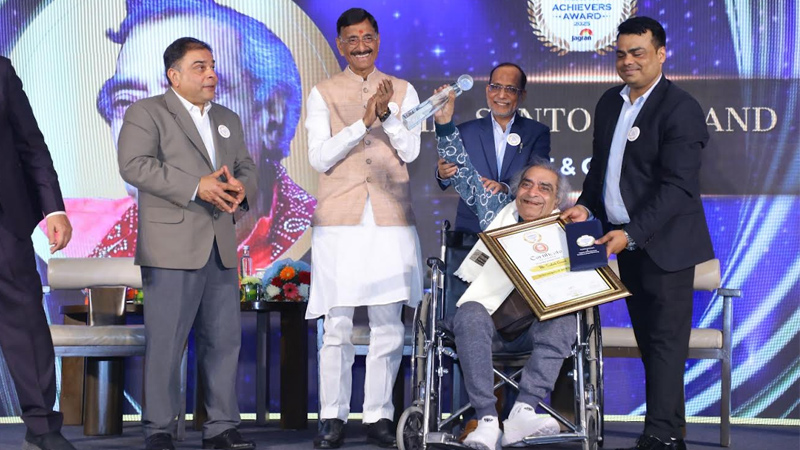
NEW DELHI: Hamdard Laboratories gathered a cross-section of India’s achievers in New Delhi on Friday, handing out the Hakeem Abdul Hameed Excellence Awards to figures who have left their mark across healthcare, education, sport, public service and the arts.
The ceremony, attended by minister of state for defence Sanjay Seth and senior officials from the ministry of Ayush, celebrated individuals whose work blends professional success with a sense of public purpose. It was as much a roll call of achievement as it was a reminder that influence is not measured only in profits or podiums, but in people reached and lives improved.
Among the headline awardees was Alakh Pandey, founder and chief executive of PhysicsWallah, recognised for turning affordable digital learning into a mass movement. On the sporting front, Arjuna Awardee and kabaddi player Sakshi Puniya was honoured for her contribution to the game and for pushing women’s participation onto bigger stages.
The cultural spotlight fell on veteran lyricist and poet Santosh Anand, whose songs have echoed across generations of Hindi cinema. At 97, Anand accepted the honour with characteristic humility, reflecting on a life shaped by perseverance and hope.
Healthcare honours spanned both modern and traditional systems. Manoj N. Nesari was recognised for strengthening Ayurveda’s place in national and global health frameworks. Padma shri Mohammed Abdul Waheed was honoured for his research-backed work in Unani medicine, while padma shri Mohsin Wali received recognition for his long-standing contribution to patient-centred care.
Education and social development also featured prominently. Padma shri Zahir Ishaq Kazi was honoured for decades of work in education, while former Meghalaya superintendent of Police T. C. Chacko was recognised for public service. Goonj founder Anshu Gupta received an award for his dignity-centred rural development initiatives, and the Hunar Shakti Foundation was honoured for empowering women and young girls through skill development.
The Lifetime Achievement Award went to former IAS officer Shailaja Chandra for her long career in public healthcare and governance, particularly in the traditional systems under Ayush.
Speaking at the event, Hamdard chairman Abdul Majeed said the awards were a tribute to those who combine excellence with empathy. “These awardees reflect Hakeem Sahib’s belief that healthcare, education and public service must ultimately serve humanity,” he said.
Minister Seth struck a forward-looking note, saying India’s young population gives the country a unique opportunity to become a global destination for learning, health and wellness by 2047.
The ceremony also featured the trailer launch of Unani Ki Kahaani, an upcoming documentary starring actor Jim Sarbh, set to premiere on Discovery on 11 February.
Instituted in memory of Unani scholar and educationist Hakeem Abdul Hameed, the awards have grown into a national platform that celebrates those building a more inclusive and resilient India. For one evening at least, the spotlight was not just on success, but on service with substance.







