iWorld
Stream and steady wins the race as OTTs chase hybrid money magic

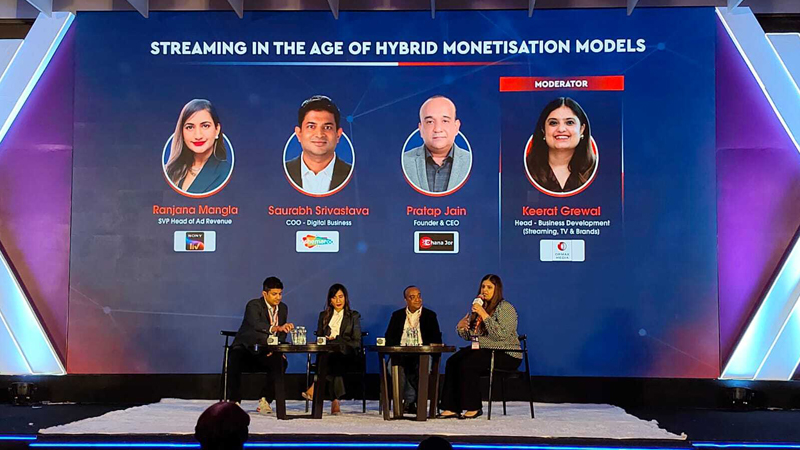
MUMBAI: If streaming once felt like a sprint in India, 2025 has turned it into a marathon, one where platforms keep changing tactics mid-stride. At the 9th edition of the Vidnet Summit, the panel on “Streaming in the Age of Hybrid Monetisation Models” offered a free-flowing, occasionally chaotic but deeply revealing look at how AVOD, SVOD, FAST, TVOD and Pay-Per-View now coexist in an industry hurtling towards hybrid futures.
Moderated by Keerat Grewal, head of business development (streaming, TV & brands), Ormax World, the panel brought together Ranjana Mangla (SVP, Ad revenue head, Sony Liv), Saurabh Srivastava (COO for digital media, Shemaroo Entertainment) and Pratap Jain (founder, Chana Jor). Between candid confessions, colourful metaphors and hard numbers, the speakers mapped the pressures and opportunities shaping India’s streaming economy.
Grewal opened with a statistic that set the stakes, “As of 2025, India has 625 million people consuming online streaming content, and 73 per cent watch free content.”
Free, clearly, is the national habit and free forces platforms to innovate.

Grewal noted that OTT models today cannot be built in isolation. Platforms constantly weigh where to place content premium tiers, YouTube, ad-supported feeds or subscription bundles. Premium users, she said, must feel their annual spend is “worth their time”, while AVOD and SVOD require very different content and pricing philosophies.
For Sony LIV’s Mangla, the answer lies in finding a platform’s core uniqueness.“Sports is tactical,” she said. “We’ve invested in tennis for a long time. We use sports very uniquely, and we make sure it stays profitable at all times.”
Sports, she emphasised, demands long-term investment, strategic placement and ruthless clarity on returns.
Mangla also spotlighted Connected TV (CTV), calling the last 18 months transformative. “CTV is now an unskippable part of every advertiser’s plan—traditional brands, new-age companies, retailers, everyone.” Inventory remains limited, she noted, but demand has skyrocketed, pushing OTT players to build more high-quality, large-screen experiences.
Shemaroo’s Srivastava delivered one of the session’s sharpest insights, “This is the year when video advertising on digital will surpass video advertising on television.”
The shift, he said, is driven by digital’s vast inventory and the ability to test, learn and refine campaigns in real time, something TV cannot match.
Advertisers, Mangla added, now scrutinise digital data with unprecedented detail. “There is a lot of inventory available for advertisers to understand what works and what does not, and they are using it.” But she warned against complacency, “Every 18 months, you have to revisit your strategy. The world changes too fast.”
The conversation pivoted to premium content, with Mangla noting that not every show must appeal to hundreds of advertisers. “If a show appeals to 100 advertisers with clarity, that is enough. You will eventually convert only about 15 per cent anyway.” High-quality content, contextual placements and associative value, participants agreed, remain the backbone of sustainable monetisation.
Chana Jor’s Pratap Jain distilled his philosophy into a single line, “Content should reach every corner of the world, that is the perfect way of making money. Reach is the key.” He argued that user-generated platforms and big-tech ecosystems have natural advantages, pushing traditional broadcasters-turned-OTTs to stay nimble, experimental and audience-obsessed.
Pay-Per-View (PPV), meanwhile, emerged as a quiet but intriguing model. With India’s appetite for special events from sports to concerts to reality finales PPV may yet evolve into a meaningful premium layer for high-value content.
Despite the colourful tangents touching on prasad, prayers, sugar cane and even yoga tablets, the underlying consensus was unmistakable: hybrid monetisation is not a trend but a necessity.
AVOD brings reach, SVOD brings loyalty, FAST brings frequency, TVOD brings spikes, PPV brings exclusivity and CTV brings premium advertisers. Success lies in balancing them all without losing sight of content quality.
India’s streaming landscape, with 625 million users, is vast, diverse and deeply cost-conscious. With 73 per cent choosing free content, platforms have no option but to experiment aggressively with hybrid strategies, premium positioning and context-rich advertising.
As the panel wrapped, one message echoed through the hall: this decade belongs to platforms that evolve quickly, choose clarity over chaos, and understand that in India’s streaming race, stream and steady wins it.






iWorld
Asha Bhosle, the unforgettable voice that sang a thousand emotions
The melody that defined generations has fallen silent, but her songs will echo forever.
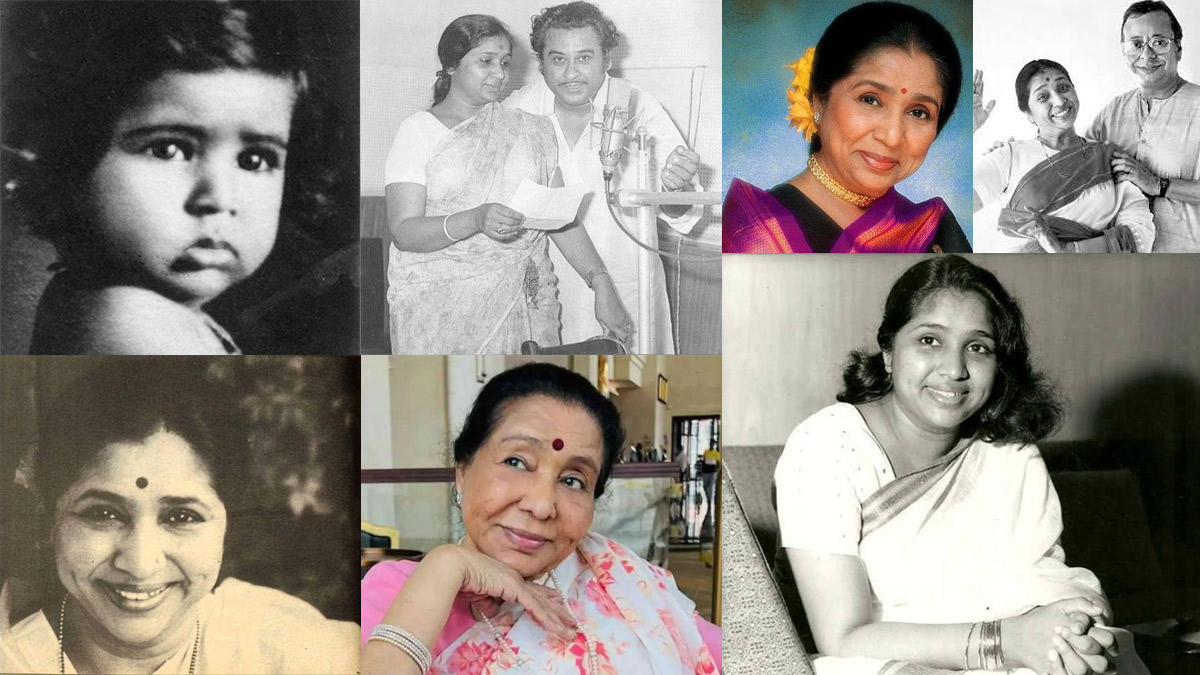
MUMBAI: The voice that once lit up countless silver screens and brought rhythm to millions of hearts has stilled. Legendary singer Asha Bhosle, one of the most versatile and prolific vocalists in Indian film music, passed away at the age of 92 in Mumbai on Sunday. She was admitted to Breach Candy Hospital on Saturday night after suffering cardiac and respiratory issues and had reportedly been unwell for several months.
Her son, Anand Bhosle, confirmed the news on Sunday afternoon. The last rites will be performed on Monday.
Born in 1933 into the illustrious Mangeshkar musical family, Asha began her journey in the golden era of Hindi cinema. She recorded her first film song at the age of nine in 1943 and, by the 1950s, had already carved a distinct space for herself in Bollywood. While her elder sister Lata Mangeshkar often took the more melodic, heroine-centric numbers, Asha quickly became the go-to voice for energetic cabaret tracks, dance numbers, and later, the full spectrum of emotional expression.
The 1950s–60s: Rise of the Cabaret Queen In the early decades, Asha was frequently typecast for “item songs” and Western-style numbers. Yet even within those constraints, she delivered unforgettable hits such as “Aaja Aaja” from Teesri Manzil and “O Haseena Zulfon Wali” from the same film. Her playful, sassy delivery gave these tracks a magnetic energy that still feels fresh today.
The 1970s: Peak Versatility This was the decade that cemented her legendary status. Songs like “Dum Maro Dum” (Hare Rama Hare Krishna), “Piya Tu Ab To Aaja” (Caravan), “Chura Liya Hai Tumne” (Yaadon Ki Baaraat), and “Yeh Mera Dil” (Don) became cultural touchstones. Asha proved she could swing from seductive to soulful with equal ease, working with almost every major composer of the era.
The 1980s: Emotional Depth and Ghazals After marrying composer R.D. Burman in 1980, Asha explored more nuanced, introspective territory. Her National Award-winning performances in Umrao Jaan (“Dil Cheez Kya Hai”) and Ijaazat (“Mera Kuch Saamaan”) showcased a matured, velvety voice capable of profound emotion. These tracks remain among the most cherished ghazals in Indian cinema.
The 1990s–2000s: Global Collaborations and Reinvention Even as newer voices emerged, Asha refused to fade. She collaborated internationally with the Kronos Quartet and released experimental albums. Later in her career, she lent her voice to younger composers and continued performing live, often sharing the stage with her granddaughter Zanai Bhosle.
A Life Beyond the Microphone Asha’s personal journey was as dramatic as her filmography. At 16, she eloped with Ganpatrao Bhosle, her personal secretary. The marriage ended in separation in 1960 after they had three children. In 1980, she married R.D. Burman in a union that faced family opposition but brought creative synergy. RD passed away in 1994.
Throughout her life, Asha remained grounded, often crediting classical music and ghazals for keeping her voice sharp. In a 2023 interview, she admitted she rarely listened to contemporary film songs, preferring the timeless works of Bhimsen Joshi and classic ghazals to stay inspired.
Her seven Filmfare Awards and two National Film Awards are merely numbers; the true measure of her legacy lies in the thousands of songs that still play in homes, cars, and hearts across generations. From the foot-tapping energy of “Dum Maro Dum” to the haunting beauty of “Mera Kuch Saamaan”, Asha Bhosle gave Indian cinema a voice that was simultaneously bold, tender, playful, and profound.
The golden era has lost one of its brightest stars, but the music she created will continue to refresh souls for decades to come. As the final notes of her extraordinary journey fade, India bids farewell to a voice that truly defined an era.







