English Entertainment
Startup reality series ‘Meet the Drapers’ premiering on Sony in the US

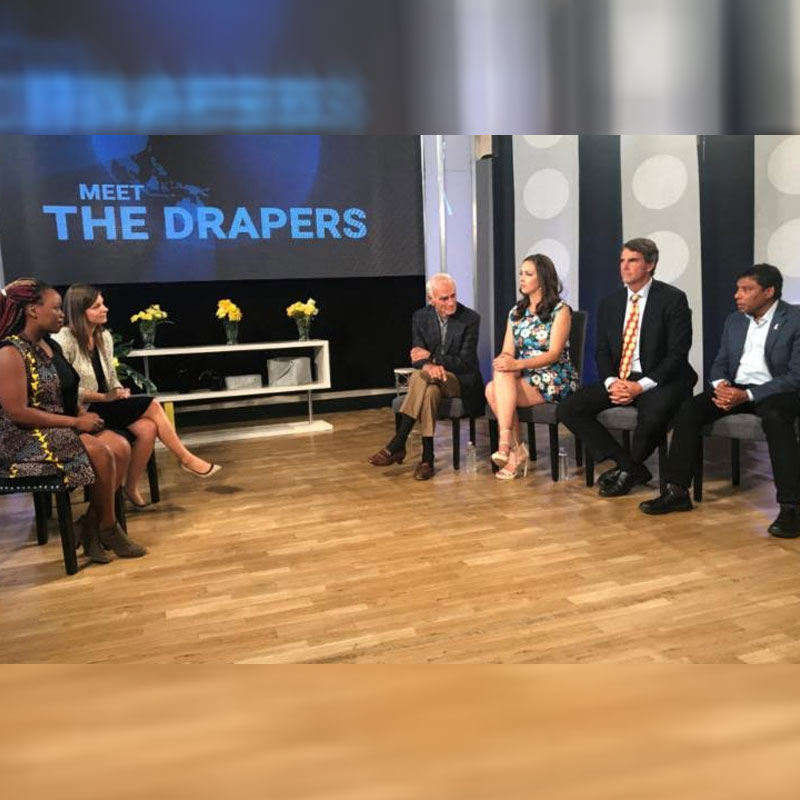
NEW DELHI: “Meet the Drapers”, a crowdfunding-based reality series produced and directed by Sarika Batra is premiering across the United States on 19 November 2017 on Sony Entertainment Television.
According to a Sony Pictures Networks announcement, this innovative show will be on air at 6pm ET.
The programme shows new up-and-coming startups pitch their ideas before three generations of venture capitalists from one of the most prominent families in Silicon Valley: Bill Draper, Tim Draper, and Jesse Draper.

Each episode will feature three exciting startups trying to convince the Drapers to invest in their company and simultaneously convince millions of viewers to fund them through their crowdfunding page on the Republic platform.
Episodes will also feature a guest judge, who is a legendary success in his/her respective field.
Bill Draper began his venture capital career in 1959 and is one of America’s first venture capitalists. Currently, he is Managing Director of Draper Richards LP and Draper International. He serves as the co-chairman of the Draper Richards Kaplan Foundation. Draper is also author of the book, The Startup Game: Inside the Partnership between Venture Capitalists and Entrepreneurs.
His son Tim Draper has been named one of Worth Magazine’s 100 Most Powerful People in finance and is the founding partner of Draper Associates and DFJ. His original suggestion to use viral marketing as a method for spreading a software application from customer to customer was instrumental to the success of Hotmail, Skype and others. Tim also received the World Entrepreneurship Forum’s “Entrepreneur for the World” in 2015.
Tim’s daughter Jesse Draper is helping female founded and led companies through her new venture capital fund Halogen Ventures. Through Halogen Ventures, Jesse spearheads early stage seed investing in female founded consumer technology startups; some of her portfolio companies include: Laurel & Wolf, Move Loot, Carbon38, BlockCypher, Beautycon & Sugarfina.
Tim Draper said: “It is finally possible for the individual investor to participate in the funding of exciting young ventures. ‘Meet the Drapers’ allows viewers to watch us interview entrepreneurs and then, invest in companies that have the potential to change the world. We are thrilled to have created a unique show, that invites viewers to become investors in exciting new startups. We’ve been blown away by the entrepreneurs we’ve met so far, and believe viewers will be too.”
The guest judges for “Meet the Drapers” include business executive, entrepreneur and the founder and former CEO of InfoSpace Naveen Jain; founder and former CEO of TIBCO, a multimillion-dollar real-time computing company Vivek Ranadive, and Jyoti Bansal who founded and was former CEO of AppDynamics, which he sold to Cisco for $3.7 billion.
“South Asians are a vibrant part of the Silicon Valley startup culture,” said Jaideep Janakiram, Head of the Americas at Sony Pictures Networks. “We created this show to showcase these trailblazing entrepreneurs, VCs and angels, and to allow SET viewers to participate in their ventures.
Pitching companies will be accepting investments via Republic – a leading equity crowdfunding platform that makes startup investing available to anyone. Republic is the easiest way to become an investor in breakout early-stage startups for as little as $10.


English Entertainment
ZEE5 UK partners Narrative Entertainment to add UK channels
Six FAST channels added as platform sharpens hybrid play in Britain

LONDON: ZEE5 UK struck a first-of-its-kind deal with Narrative Entertainment, bringing mainstream UK television channels onto an Indian streaming platform as it pushes to deepen its footprint in a crowded, mature market.
The partnership adds six of Narrative’s FAST channels to the service, including Great! Movies, Great! Romance, Great! Mystery and kids brands POP, Tiny Pop and POP UP, widening ZEE5 UK’s appeal across genres and age groups.
The move reflects a clear shift in strategy. ZEE5 UK is betting on a hybrid model that blends on-demand content with curated, always-on channels to drive discovery and increase time spent on the platform.
“This partnership represents a meaningful evolution in how we serve audiences in mature markets like the UK, where viewers are defined by habits, convenience and choice rather than geography or language alone,” said Parul Goel, territory head, Europe, Zee Entertainment. “By bringing trusted mainstream UK channels together with our premium originals, movies and kids’ content, we are building a more consumer-centric platform that simplifies viewing while increasing depth and relevance.”
Fateha Begum, commercial director, Narrative Entertainment, said the tie-up would fuel growth for both sides. “Our portfolio of quality programming, with such wide and enduring appeal, is a perfect complement to ZEE5 UK. This is a strong partnership that will support growth for both parties, and we share Zee Entertainment’s vision of an increasingly partnership-led future for the industry.”
ZEE5’s global library spans over 4,000 films and more than 500 originals, with over 130 new titles added annually. The addition of Narrative’s channels strengthens its kids offering and introduces genre-led linear experiences alongside its on-demand catalogue.
The deal also gives Narrative access to ZEE5 UK’s fast-growing user base, extending reach without diluting brand identity, while reinforcing ZEE5 UK’s network of more than 40 live channels.
As streaming wars intensify, ZEE5 UK is widening its playbook, blending content, convenience and partnerships in a bid to win screen time in one of the world’s toughest markets.







