GECs
Star Plus ups stakes; extends early prime time with new show at 5.30 pm


MUMBAI: Doing away with traditional time bands, Star Plus is upping the stakes as it looks to change the rules of the game yet again. Time bands have played a crucial role for Hindi general entertainment channels (GECs) in targeting different audience groups.
Though, the main prime time band (8 – 10 pm) continues to be of primary interest, in order to bring about freshness in their overall programming and strategy Hindi GECs have many a times experimented with different slots like early prime time, late prime and the afternoon slot.

To comprehend the development nature of early prime-time slot, Star Plus has now opened up a ‘silent’ slot by extending its early prime time from 5.30 pm.
To target the untapped potential, the channel is launching a one-hour daily fiction called Mere Angne Mein at 5.30 pm, which will be aired from Monday to Saturday. With this development, the channel will now churn out seven hours of original programming i.e. from 5.30 to 11.30 pm (keeping in mind that Ye Hai Mohabbatein occupies the dual time slot).
Produced by Sphere Origins, the new show will hit television screens from 15 June and replace the repeat telecast of Iss Pyaar Ko Kya Naam Doon… Ek Baar Phir, which is also produced by the same company.
Concept: Clashes between two ideologies
Mere Angne Mein will find resonance with small town India where the joint family system dominates society. With an ensemble cast featuring some of the best-known names of Indian television, Star Plus and Sphere Origins will offer an entertaining peak into the Indian hinterland.
Every household is governed by a certain set of rules, thoughts, values and one all-encompassing philosophy. While some believe that families need to adapt to changing times, there are some who resist any deviation from the tried and tested. Mere Angne Mein showcases the clash of ideology between two such people – on the one hand is Shanti Devi (played by veteran Krutika Desai), the dominating matriarch of the Shrivastav family who believes in autocracy and running the family on her terms; on the other hand is Riya Saxena (essayed by Ekta Kaul), Shanti Devi’s granddaughter-in-law who believes in running a democratic household.
The show depicts the interesting chemistry as a clash occurs between these two ideologies. Joining Desai and Kaul are actors like Varun Badola, Sucheta Trivedi, Ananya Khare and Karam Rajpal.
What’s more, the show rides high on technology as for the first time ever it will be achieved through a revolutionary production method involving a multi-camera set up, and pre-shoot scene rehearsals with all actors.
Sphere Origins producer Sunjoy Waddhwa says that churning out a one hour episode daily is a tough job. “As compared to other daily fiction shows, we are producing double content. So in order to churn those hours, we thought of using a multi-camera set up. Most of the times, considering the nature of the show, we also use four-five cameras simultaneously,” he informs.
Waddhwa is of the opinion that every time slot has a hidden opportunity and is unperturbed about viewership.
With the set located at Madh Island, Waddhwa reveals that it takes more than a day to shoot one single episode and tries to churn minimum 30-35 minutes of content out of the single episode.
Moreover, the production house also does the live editing on the set, which is then sent to the master for the edit.
While refusing to divulge the financials of producing a show like this, Waddhwa says that efficiencies are required and a lot of infrastructure cost is put in to deliver the desired results.
As is known, a daily fiction show demands anywhere between Rs 6-8 lakh per episode, and sources indicate that considering the show’s high involvement on technology, it must be ranging from Rs 10-12 lakh per episode.
Speaking to Indiantelevision.com, a media planner opines that prime time rates at Star range from Rs 1 -1.5 lakh for 10 seconds and if the 5.30 pm slot delivers, it could easily demand a 10-sec rate of at least Rs 60,000 – 65,000, opening up a whole new band for other GECs as well.
The media planning fraternity believes that the placement of a show largely depends on the content and target audiences. “If the show appeals to a younger set of audience, it will be put on an early time slot. Whereas if the content is more aggressive and caters to more matured audience, it will be suitable for late prime slot,” said a planner.
Another media expert believes that while early prime time is a viable band for smaller towns, the late prime time band is more conducive to urban programming and Star Plus aims to reach out to every mass possible, matching to the lifestyle of people from the respective strata of towns.







GECs
EPIC Company unifies all brands under single EPIC identity
IN10 Media rebrand aligns TV, digital and films into one ecosystem
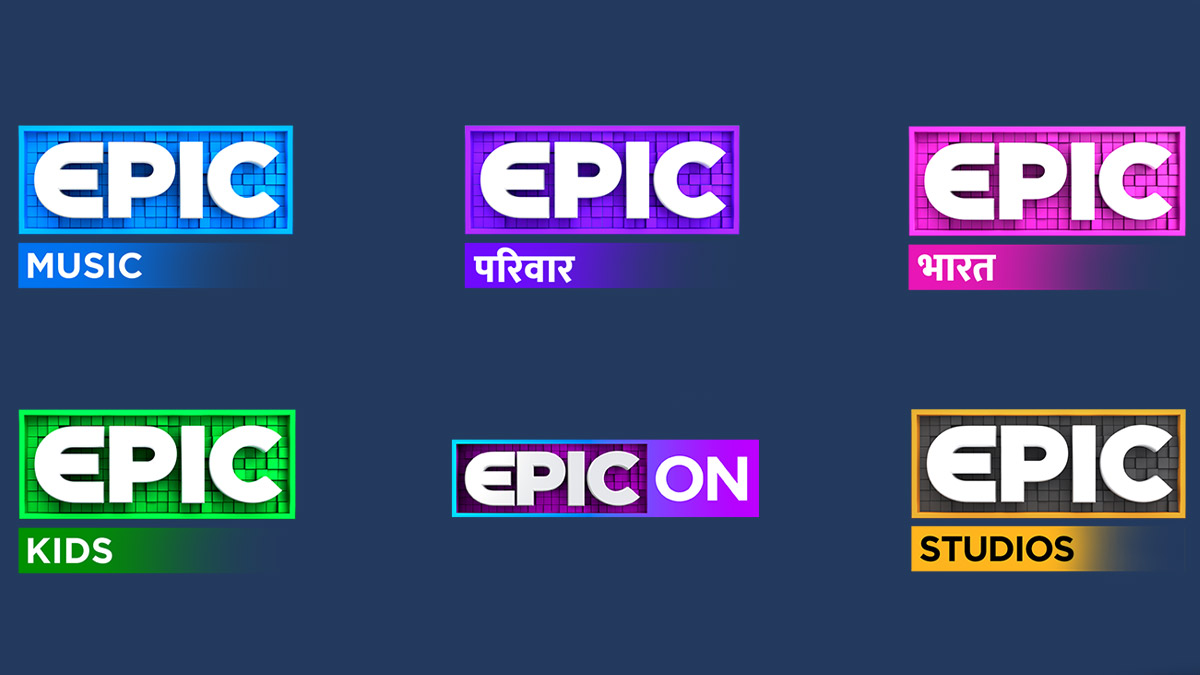
MUMBAI: The EPIC Company, formerly known as IN10 Media Network, has announced a sweeping brand consolidation, bringing its television channels, digital platforms and content IPs under a single identity, EPIC.
The move is aimed at simplifying the company’s structure while creating a more connected content ecosystem spanning television, digital and films. By aligning multiple verticals under one umbrella, the company is looking to present a sharper, more cohesive face to both audiences and partners.
As part of the transition, several channels have been rebranded to align with the EPIC identity. EPIC will now operate as EPIC TV, while Nazara becomes EPIC Bharat, Filamchi is now EPIC Bhojpuri, Gubbare transitions to EPIC Kids, and ShowBox is reintroduced as EPIC Music. Ishara will continue under the identity EPIC Parivaar, maintaining its core positioning.
The company has also refreshed EPICON, its streaming platform, to reflect a more unified and modern brand experience. The overhaul is designed to improve content discovery and create a seamless experience across platforms.
This consolidation follows the recent launch of EPIC Studio, a unified production arm that brings together Juggernaut Productions and MovieVerse Studio, as the company expands its footprint across films, OTT and television.
The EPIC Company managing director Aditya Pittie said, “As our scale has grown, it has become important to simplify how we operate and how we present ourselves to the ecosystem. This consolidation gives us a clearer, more future-ready structure to partner, invest, and build at scale, while ensuring that for viewers, the experience is more seamless and intuitive.”
With the rebrand, The EPIC Company is positioning itself as a platform-agnostic content network, focused on scale, simplicity and integrated storytelling. By bringing everything under one banner, it is aiming to make its content universe easier to navigate and harder to ignore.






