News Broadcasting
Star drops rates – but the riders are crucial


MUMBAI: Star India may have announced a 25 per cent drop in subscription rates per subscriber from the current Rs 40 to Rs 30, but cable operators are not exactly euphoric. The reason: The new pricing is only applicable to those who show a 100 per cent or more increase in declarations.
When Star India CEO Peter Mukerjea had spoken to indiantelevision.com last week regarding the plan to actually lower rates, the point that he made was that Star was willing to reduce its rates but expected the cable operators to reciprocate as far as declarations were concerned.
What Star has instituted is a slab system, a detailed examination of which shows in more cases than not, rather than reducing rates, the lead broadcaster has held the price line at current levels. However, it has managed public perceptions in such a way (by declaring a drop in rates) that it may actually be able to increase revenues from the ground. Which has been its declared aim all along.

As mentioned, it is only where there is an increase of a minimum of 100 per cent in declarations under which this rate is applicable. For example, if a cable operator is currently declaring 3,000 subscribers in a particular area, he will have to increase declarations to at least 6,000. However, the operator will have to pay at the current Rs 40 if declarations go up by 50 per cent or less.
According to information available with indiantelevision.com, Star’s pricing has been linked to declaration under the following slab system:
*If the cable op increases existing declaration of subscriber base by 100 per cent, then Star bouquet will come at Rs 30/month/subscriber.
*If the declaration is increased by 85 per cent, then the price is Rs 33.
*If the declaration is increased by 60 per cent, then Rs 39.
*If declaration is increased by 50 per cent or less, then the price remains the same at Rs 40.
A closer look at the above rate structure points to one fact. That there will be few takers among cable operators for any of the new slabs except for an increase in connectivity of 50 per cent and lower.
This is because the cable operator who ups connectivity by 100 per cent for example would actually end up having a significantly higher outgo than one increasing his paid connectivity by anything less than 50 per cent. This needs further elucidation. It works thus:
An operator having 100 declared subscribers would have a Rs 4,000 (at Rs 40 per subscriber today) monthly outflow to Star. If he were to fall in line and actually increase his declaration by 100 per cent (to take advantage of the lower price of Rs 30 per sub), he does not really benefit as his payout for 200 subscribers would be Rs 6,000 at the lowered rates – 50 per cent increase in revenue outgoings. That means he would effectively be paying at Rs 60 per subscriber at current declaration levels.
Therefore, cutting through all the hyperbole surrounding this rather convoluted rate structure, what in actual fact has happened is that Star has by and large held its rates (as Mukerjea had first indicated to the media was the idea) with an almost guaranteed increase in declarations.
The question really is what is the possible scenario where an operator refuses to increase connectivity? Well, there is a good chance that for the recalcitrant lot, there might be switch-offs. Star’s public stance in this would probably be that it has called the bluff of the cable operators and shown how hollow is the line of argument that underdeclaration was a fallout of frequent and arbitrary subscription increases.
It’s not just to the public that this message will be going out. There is the government (read the I&B ministry), which is currently grappling with how to get the Conditional Access Bill through Parliament’s Rajya Sabha (Upper House).
At the end of the day though it is all about increasing declarations and in turn revenues from the ground. And if Star manages that successfully, it will make it that much more difficult for Sony Entertainment and Zee Telefilms to increase their own accruals. For Sony especially, the issue is extremely crucial as it has the cost paid for acquiring the ICC World Cup rights hanging over its head.
The fear among the cable trade is that Star’s move could be a googly that works against them in the long run. “Star is indexing prices against declarations to prod cable ops to declare more subs. Once they do so, Star will hold prices for the short to medium term. But don’t be surprised if in the not too distant future, Star TV actually starts demanding a higher per sub fee for the increased declarations as well,” says an industry observer.
“This will hit cable ops hard. It’s a clever, clever tactic…but the important question is will it work strategically in Star’s favour? Don’t be surprised if rival bouquets urge cable ops to go and finger Star and not fall in line with its plan.”






News Broadcasting
CNN-News18 to host Fury in the Gulf conclave on West Asia crisis
Three-hour summit to unpack geopolitical fallout and impact on India
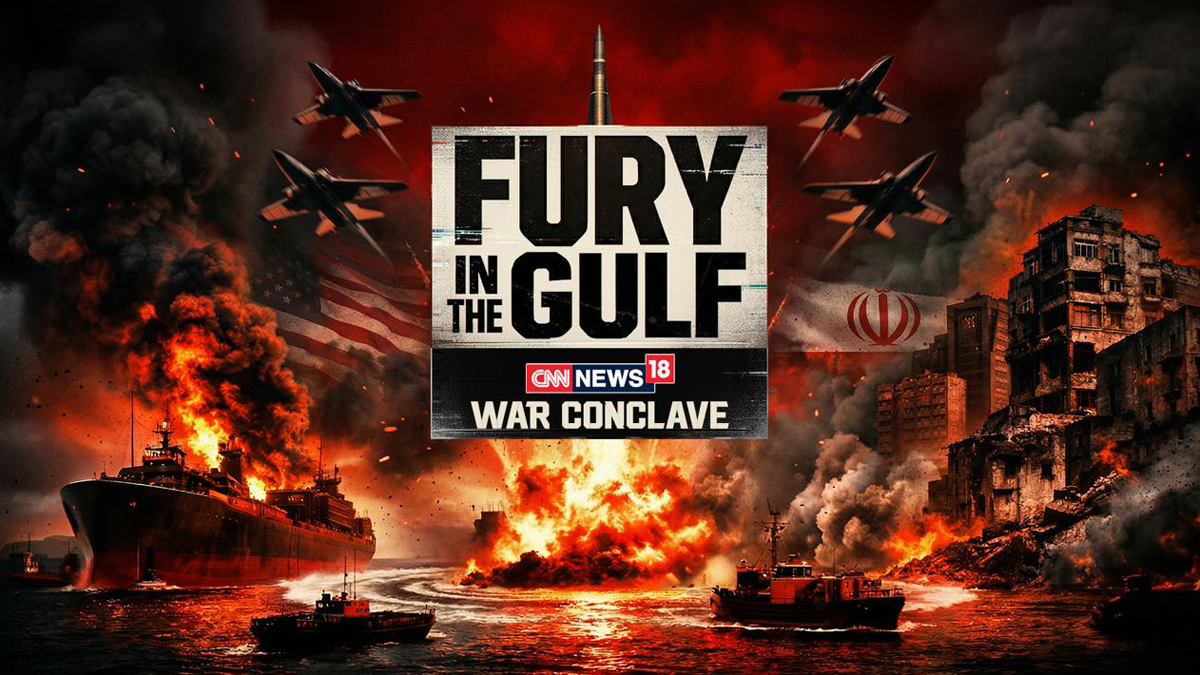
MUMBAI: CNN-News18 is set to host a special three-hour broadcast, Fury in the Gulf – War Conclave, on April 7, aiming to decode the escalating West Asia crisis and its far-reaching implications for India.
Scheduled from 4:00 PM to 7:00 PM, the conclave comes at a time when tensions between Iran and the United States are reshaping global geopolitics and triggering economic uncertainty. With India’s deep energy ties, trade links and large diaspora in the Gulf, the developments carry significant domestic relevance.
Built around the theme ‘Conflict, Consequences, and The Future,’ the programme will feature six curated sessions combining one-on-one interviews and panel discussions. The focus is to cut through the clutter and offer viewers a clearer understanding of the fast-evolving situation.
Key sessions include ‘Diplomacy in Times of War’ featuring Shashi Tharoor, and ‘World After the Iran Conflict’ with voices such as Ram Madhav, Reuven Azar, representatives from the European Union and the Iranian Deputy Envoy. Another session titled ‘Another Dunkirk?’ will bring together K. J. S. Dhillon and Jitin Prasada among others.
CNN-News18 editorial affairs director Rahul Shivshankar said, “In times of war, clarity becomes the most powerful tool. Fury in the Gulf – War Conclave brings together credible voices to address the questions and confusion that arise amid an overwhelming influx of information.”
He added that the initiative is aimed at delivering “facts, perspective, and insight” at a time when misinformation can easily cloud public understanding.
Echoing the sentiment, CNN-News18 CEO– English and business news Smriti Mehra said the conflict marks a defining global moment, with consequences that extend well beyond the region. She noted that the conclave seeks to present the crisis with “depth, nuance and responsibility” so audiences can better grasp its real-world impact.
As geopolitical tensions continue to dominate headlines, the conclave positions itself as an attempt to bring order to the noise, offering viewers a structured, insight-led look at a complex and rapidly shifting global situation.






