News Headline
Sports, IPL and the game of advertising

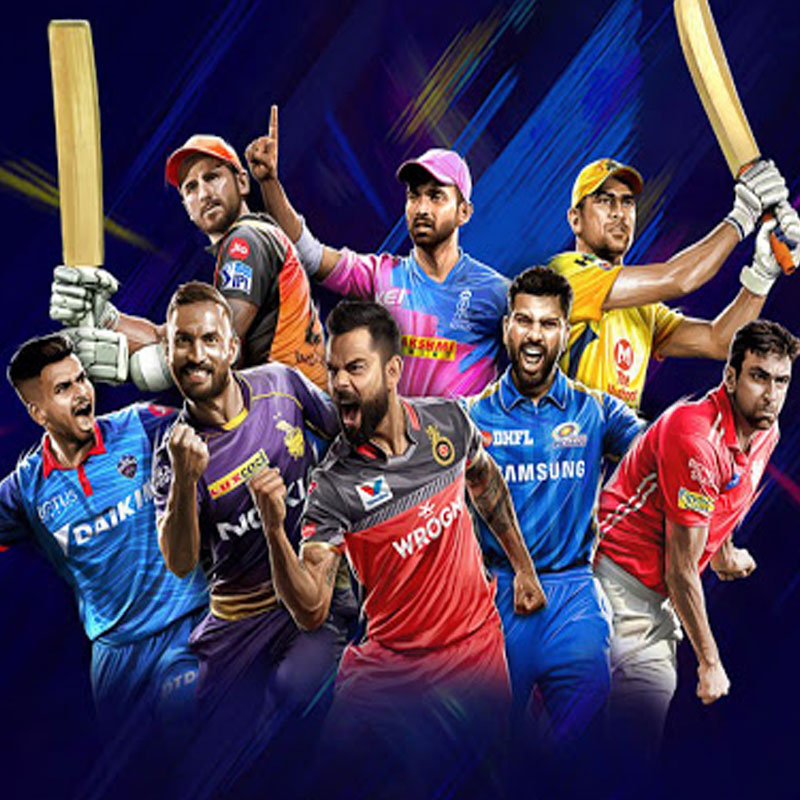
MUMBAI: Follow social conversations and you will be led to believe that it is politicians, Bollywood stars, movies, Indian fictional television shows and characters that create the most buzz online and offline. Clearly, fans are in abundance, and many go as far as to imitate their heroes and heroines on screen and TV. But that’s only on the surface.
Dig deeper and you will discover that there’s another genre that draws as many conversations as all of them combined, and that is sports. Yes, arguments can be varied that we are not a sports-loving country; look at our decades-long abysmal performance in most competitive running sports the world over. Look at how we go overboard and celebrate when we win just a bronze medal at the Olympics by showering all kinds of national awards on the medal winner!
And in sports, there’s one segment that occupies around 90 per cent of all social media chatter. And that is cricket. Love the game or not, you are instantly prompted to the online noise; there’s so much of it out there. Ignore it at your own peril.

It is difficult to deny that sports properties are extremely vital for advertisers. Media spend in sports has bloomed over the years, having been boosted by major cricket tournaments. IPL undoubtedly has transformed the business forever. On the other hand, non-cricket tournaments like Pro Kabaddi League, ISL, and Premier Badminton League are also witnessing slow but steady change.
According to a report from ESP properties, over the three years from 2015 to 2018, advertising spends on TV have more than doubled on sports properties, from Rs crore ($270 million) to Rs crore ($556 million), at a CAGR of 29 percent. Although numbers are not available for 2019, industry experts have stated ad spends on sports grew thanks to ICC Cricket World Cup and the IPL.
The report also added that 85 per cent of all adex in sports happened on TV in 2018. Hence, the winning combination of TV and live sports is prompting media planners to prefer sports compared to GEC, movie or news. One of the prime reasons here is definitely the high reach and the immediate impact. Although sports as a segment is an expensive proposition, the high viewership attracts the brands. Special product launches and brand campaigns around sport events are also critical for them. Multiple brand associations during IPL indicate advertisers’ love for premium sports events.
For IPL 2020, a large array of brands such as Vivo, Altroz, fbb, Dream11, Paytm, PhonePe, Amazon Prime, CocaCola, Asian Paints, Fortune, Maruti Suzuki, CEAT, KAMLA PASAND and Royal Challenge have jumped on the ‘brand wagon’. The variety in various categories of brands also breaks the myth that only deep-pocket players afford to buy premium sporting properties. Depending on their budget, brands can place their ads either on television or digital media platforms and associate in several ways.
According to Pitch Madison Advertising Report 2020, total Adex is expected to move up to Rs 74,650 crore, an increase of Rs 7,048 crore. The report reaffirms the ability of pole events to attract advertisers even during a “not-so-high growth” year. The report expects IPL and ICC T20 World Cup to pull in substantial monies this year, too.
Uncertainties still remain at the ecosystem level given the changes in new tariff order, overall economic condition which is likely to pick up in H2. The report adds as pole properties like the IPL, ICC T20 Cricket World Cup and Hindi GECs’ premium shows are likely to get a fair amount of advertiser attention even in difficult times; these programmes will command higher rates than last year.
It may intrigue us why the industry is being so bullish on sports. For most of the Indians, sports, especially cricket events, bring the entire family and peer groups together in front of TV. The battle of remote within the family stops when an exciting match comes live on TV. There may be ten GEC channels with a number of shows and a large number of movie channels offering exciting content, making the risk of audience fragmentation higher. The audience is much more cluttered for premium sports events like IPL which unifies the fragmented demographic of the country.
“In India, around 80 to 85 percent of money spent on sports is spent on cricket while many other leagues have come in a larger scheme that adds up to the other 15 per cent. So, their relevance is less. Therefore, in India when you say sports, unfortunately even now everything equals to cricket. And that’s a very high engagement medium which has got very huge involvement of the audience making it a great platform,” Dentsu Aegis Network APAC CEO and India chairman Ashish Bhasin says.
With turns and twists in scripts, change in characters, the audience retention may become a challenge in the case of long-running shows on GEC. But live sports concentrates attention on exciting twists happening during a match in a limited time. During a long-running cricket match, as the audience are less diverted to elsewhere, brands are provided with more integration opportunities, a luxury no other sport event can offer. The 45-second, but frequent, breaks are bonanzas for brands as viewers don’t skip channels typically.
“In India, sports, fortunately or unfortunately, is almost equal to cricket. Something like IPL stays with the nation for 40 days. It is probably the biggest property on Indian television. Brands that do great are those who manage to integrate various touch points with consumers together. It is not only about putting ad spots on television but having a digital strategy. You cannot expect people to have activities only on pubs or restaurants or bars. So, whoever does it in a well-synchronised manner sells best,” Bhasin adds. One of the senior executives from a leading brand also comments that awareness, audience engagement and brand recall go up immediately after IPL match.
Asked about the properties they plan to buy in 2020, a media planner from a well-known media agency names IPL. While he mentions about a few reality shows like Big Boss and KBC, he also talks about other sporting tournaments such as ICC Women's T20 World Cup and Pro Kabaddi League. According to him, there is another reason to look at the sports genre than others. He asserts that media planners prefer sports for male target group as it garners higher men’s viewership compared to other genres. In addition to that, he adds, TV will be preferred while buying a sports property.
Another executive from a leading advertising agency also mentions ICC T20 World Cup and ICC Women's T20 World Cup while talking about the properties they are looking at for 2020. He also adds that other niche games like badminton and Kabaddi are emerging but cricket takes up most of the advertisers’ budget till now.
“IPL particularly is a format which gets audiences across age groups, geographies and sectors. Earlier, sports mainly used to be male-dominated fiefdom. Now, IPL, because of its entertainment factor, has converted itself as a family programme. So, it is a great way for a brand to get national recognition overnight. That is why it is a good platform if you want a quick reach,” Bhasin adds.
The year 2020 looks more exciting for marketers looking at sports. Cricket tournaments like IPL, Asia Cup, Women's World Cup and T20 Men's World Cup are leading the chart along with Olympics and Pro Kabaddi.




NEW DELHI: Hamdard Laboratories gathered a cross-section of India’s achievers in New Delhi on Friday, handing out the Hakeem Abdul Hameed Excellence Awards to figures who have left their mark across healthcare, education, sport, public service and the arts.
The ceremony, attended by minister of state for defence Sanjay Seth and senior officials from the ministry of Ayush, celebrated individuals whose work blends professional success with a sense of public purpose. It was as much a roll call of achievement as it was a reminder that influence is not measured only in profits or podiums, but in people reached and lives improved.
Among the headline awardees was Alakh Pandey, founder and chief executive of PhysicsWallah, recognised for turning affordable digital learning into a mass movement. On the sporting front, Arjuna Awardee and kabaddi player Sakshi Puniya was honoured for her contribution to the game and for pushing women’s participation onto bigger stages.
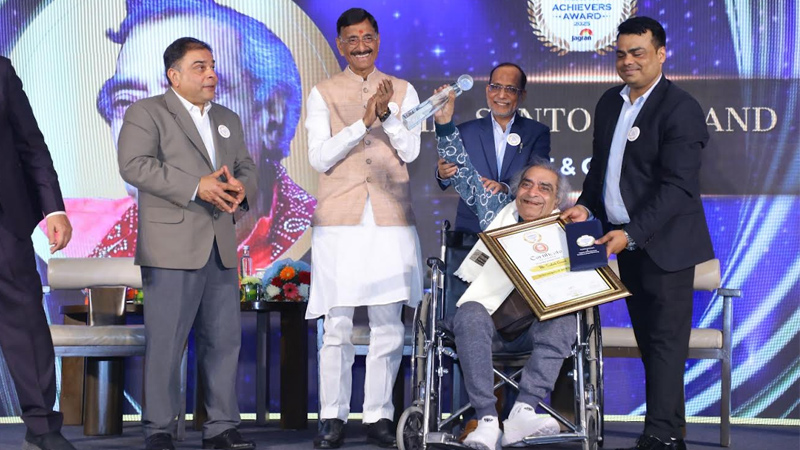
The cultural spotlight fell on veteran lyricist and poet Santosh Anand, whose songs have echoed across generations of Hindi cinema. At 97, Anand accepted the honour with characteristic humility, reflecting on a life shaped by perseverance and hope.
Healthcare honours spanned both modern and traditional systems. Manoj N. Nesari was recognised for strengthening Ayurveda’s place in national and global health frameworks. Padma shri Mohammed Abdul Waheed was honoured for his research-backed work in Unani medicine, while padma shri Mohsin Wali received recognition for his long-standing contribution to patient-centred care.
Education and social development also featured prominently. Padma shri Zahir Ishaq Kazi was honoured for decades of work in education, while former Meghalaya superintendent of Police T. C. Chacko was recognised for public service. Goonj founder Anshu Gupta received an award for his dignity-centred rural development initiatives, and the Hunar Shakti Foundation was honoured for empowering women and young girls through skill development.
The Lifetime Achievement Award went to former IAS officer Shailaja Chandra for her long career in public healthcare and governance, particularly in the traditional systems under Ayush.
Speaking at the event, Hamdard chairman Abdul Majeed said the awards were a tribute to those who combine excellence with empathy. “These awardees reflect Hakeem Sahib’s belief that healthcare, education and public service must ultimately serve humanity,” he said.
Minister Seth struck a forward-looking note, saying India’s young population gives the country a unique opportunity to become a global destination for learning, health and wellness by 2047.
The ceremony also featured the trailer launch of Unani Ki Kahaani, an upcoming documentary starring actor Jim Sarbh, set to premiere on Discovery on 11 February.
Instituted in memory of Unani scholar and educationist Hakeem Abdul Hameed, the awards have grown into a national platform that celebrates those building a more inclusive and resilient India. For one evening at least, the spotlight was not just on success, but on service with substance.