I&B Ministry
Spectrum auctions to be done in timely, fair & transparent way: Ravi Shankar Prasad

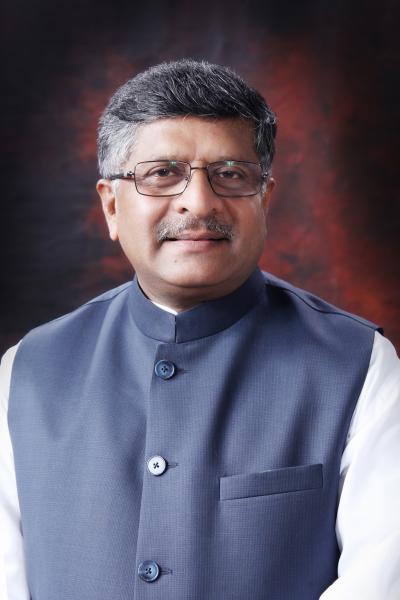
NEW DELHI: Communications and Information Technology Minister Ravi Shankar Prasad has assured the industry that the auction of spectrum in the future too would be conducted in a timely, fair and transparent manner.
The hallmark will be good governance and “the road map will be fully disclosed in advance so that industry can put its act together in a planned manner,” he said.

Inaugurating ‘Digital Bharat 2015,’ the first edition of FICCI’s platform for having transformative exchanges and deliberations, organized jointly with the Department of Telecommunications, Ministry of Communications & IT, Prasad said that the ‘Digital India’ programme was party-neutral, ideology-neutral and Centre-State-neutral. “It aims at bridging the urban-rural divide and is committed to ensure digital inclusion. I would like to see every mason and carpenter in the country using his smart phone to enhance his business and income,” he added.
The last spectrum auction, the biggest so far, that ended in March this year fetched about Rs 1.10 lakh crore to the government.
The Minister also launched the FICCI-EY report titled ‘Speeding Ahead on the Telecom and Digital Economy Highway.’
Telecom secretary Rakesh Garg said that the three ambitious and visionary programmes – Make in India, Digital India and Smart Cities – have opened up huge opportunities for the industry. The economy, he said, would stand to benefit immensely through higher productivity that the vast number of talented Indians will usher in.
He said that the government was committed to doing everything possible to make the environment conducive for industry and the consumer, the success of which will depend upon industry and government working together.
The Indian Express whole-time director and head, new media Anant Goenka pointed out that the importance of digital technology could be gleaned from the success stories of the young multi-billionaires who have used digital platforms innovatively. “The question that remains is how ‘Digital Bharat’ is achieved in a fair and sustainable way,” he said.
USIBC Digital Economy Industry Group chairman Joseph Alhadeff spoke of the need to achieve global standards in manufacturing and integration into the global supply chains. He also called for more enhanced cooperation amongst the stakeholders so that there was no duplication of effort.
FICCI president Jyotsna Suri, in her welcome address, said that it was encouraging that the Indian government is prioritizing technology as an enabler for the transformation and development of the country. “However, to reach the desired goals, it is extremely important to develop an environment, which nurtures Government-Industry dialogue and partnerships,” she emphasized and added, “We need to understand the nature of the opportunities being offered by the government programs like Digital India and Make in India and therefore FICCI has initiated the Digital Bharat series as a platform for having transformative exchanges and deliberations.”
FICCI communications and digital economy committee chairman Virat Bhatia, who moderated the inaugural session and delivered a vote of thanks, stated, “The digital revolution now stands at the cusp of a transformation, with the government having laid out its vision of a digitally enabled India over the last one year. The success of both “Digital India” and “Make in India”, will ride on the back of strong telecom ecosystem, digital infrastructure and industry’s link in the value chain. Some important issues on policy and regulatory front will need continued attention.”
EY global telecommunications leader Prashant Singhal presented the highlights and recommendations of the FICCI-EY report.
The key takeaways of the report are as follows:
·Recommends to bring handsets under provisions of “Goods of Special Importance” under the Central Excise Tax Act, 1956; thus, capping the maximum VAT levied by states at five per cent.
·Endorses a ten-year tax holiday on a block of 15 years on all profits and gains for manufacturing in the mobile phone industry.
·Endorses to incorporate the DoT guidelines on installation of mobile tower in the statutory framework and rules in line with the 53rd Parliamentary Committee report.
·Recommends to have minimum interest subsidy of five per cent on all fixed capital investments for entire Electronic System Design and Manufacturing sector in the lines of benefits given under Technology Upgradation Fund Scheme.
·Recommends to eliminate or reduce Universal Service Obligation Fund (USOF) to one – three per cent.
Commenting on these findings, Singhal said, “A favourable and stable regulatory environment, coupled with increased transparency, is critical for attracting investments to the sector. An empathetic perspective of challenges faced by service providers is also important for restoring its vitality. Our report highlights that the country will speed ahead on the Digital Highway only with the provision of a clear spectrum roadmap, reducing USOF levy, rationalizing taxes and providing a policy push to boost manufacturing ecosystem. The resultant benefits transcend sectors. Moreover, telecom should be considered a critical infrastructure sector and its financing needs should be addressed accordingly.”





I&B Ministry
Government sets up AI governance group to steer policy
AIGEG to align ministries, assess jobs impact, guide AI deployment.
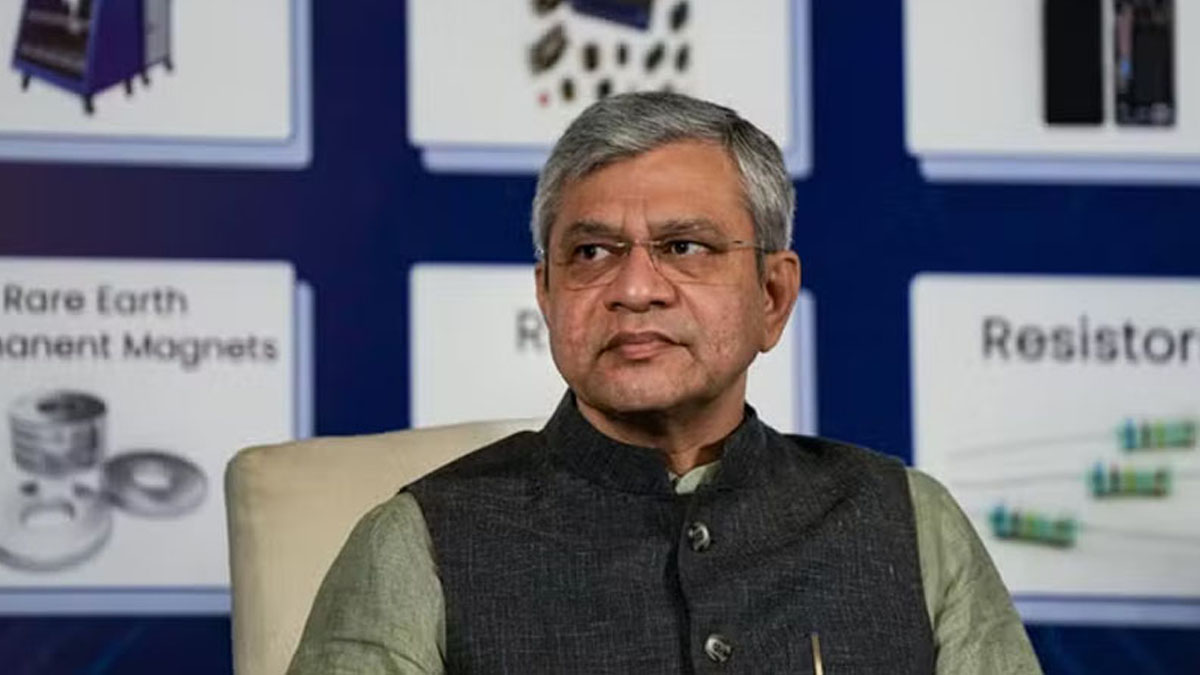
MUMBAI: If artificial intelligence is the engine, the government is now building the dashboard and making sure everyone reads from the same screen. The Centre has constituted a new inter-ministerial body to coordinate India’s approach to AI, formalising a key recommendation from its governance framework and the Economic Survey. The AI Governance and Economic Group (AIGEG), set up by the Ministry of Electronics and Information Technology, will act as the central platform to align AI-related policy across ministries, regulators and departments, an attempt to bring coherence to what has so far been a fragmented and fast-evolving landscape.
The group will be chaired by union minister Ashwini Vaishnaw, with minister of state Jitin Prasada as vice chairperson. Its composition reflects both technological and economic priorities, bringing together the principal scientific adviser, the chief economic adviser, and the CEO of NITI Aayog, alongside key secretaries from telecommunications, economic affairs and science and technology. A representative from the National Security Council Secretariat is also part of the group, while the MeitY secretary will serve as member convenor.
At its core, AIGEG is designed to do two things: coordinate and anticipate. On the policy front, it will review existing regulatory mechanisms, issue guidance across sectors and ensure companies remain compliant with evolving legal frameworks. Beyond that, it will oversee national initiatives on AI governance, with a focus on enabling responsible innovation rather than merely regulating it.
The economic dimension is equally central. The group has been tasked with assessing how AI-driven automation could reshape jobs identifying which roles are most at risk, where those impacts may be geographically concentrated, and whether technology will augment or replace human labour. Based on these assessments, it will develop mitigation strategies and transition plans, signalling a more proactive stance on workforce disruption.
In parallel, AIGEG will work with industry stakeholders to chart a long-term roadmap for AI adoption, categorising use cases into “deploy”, “pilot” or “defer” buckets depending on readiness factors such as data availability, skill levels and regulatory clarity. The aim is to move from broad ambition to structured execution deciding not just what can be built, but what should be built now.
The group will function as the apex layer in India’s AI governance architecture, supported by a Technology and Policy Expert Committee that will track global developments, emerging risks and regulatory priorities. Together, the two bodies are expected to shape both the pace and direction of AI adoption in the country.
In a landscape where technology often outruns policy, the creation of AIGEG signals an attempt to close that gap ensuring that India’s AI journey is not just rapid, but also coordinated, accountable and economically grounded.