I&B Ministry
Space TV: I&B readies note for Reddy’s approval

MUMBAI: Finally in sight, it seems, at least for Space TV, the Tata Sons and Star group, 80:20 joint venture for a DTH service in India.
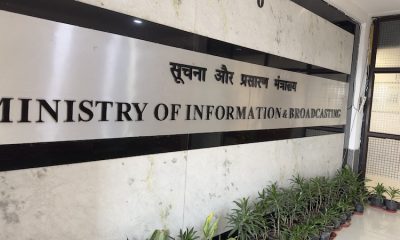
According to sources close to the government and DTH developments, the information and broadcasting ministry has prepared a note for the approval of minister Jaipal Reddy.
Reddy’s ok would pave the way for issuance of a letter of intent (LoI) to Space TV. The ministerial approval is expected to come through in 10 days or so, barring unforeseen hitches.

However, even after the letter of intent is issued, it would be a while before the final letter of approval and an actual DTH license is handed to Space TV. The sources say that the last set of clarifications, sought by the government, came in from Space TV yesterday.
This is likely to end a long wait for Space TV, and Star in particular, which has been in quest of a DTH licence since 2002. In between, the application of Space had to be made afresh in 2003 as the government felt that in the earlier version of Space TV, the Indian partnership was more of a dummy.
The government had announced a set of DTH guidelines towards the end of 2001 by which time quite a few interested players had already got frustrated and abandoned their plans to make forays into the DTH segment.
This included the Malaysia-based Measat, which had a memorandum of understanding with Doordarshan for a DTH venture in the mid-1990s.
In January 2004, Tata Sons announced the formation of a joint venture with the Star Group for launching a DTH television platform in India.
The announcement had stated that the Tata Group and Star Group looked forward to building India’s largest digital television platform and offering a range of channels including exclusive channels, with interactive features and services.
The project cost is estimated to be Rs 16 billion ($1= Rs 43.75).
Information collated by indiantelevision.com indicates that the I&B ministry had raised a series of objections on the Space TV application even after the Tatas joined hands with the Rupert Murdoch-controlled Star for a JV.
One of the many issues raised by the I&B ministry was that in the Space TV project, cleared by other ministires, including finance and home, the shareholders’ agreement was in favour of Star, which amounted to foreign control.
A government official told indiantelevision.com late this evening that Space TV has written to them saying that “changes have been made” in the company set-up in the line with the I&B ministry’s suggestions.
“Before a final clearance is given, it needs to be seen whether Space TV has actually carried out those changes in letter and spirit of the guidelines,” the official added.
The Space TV case became so controversial that 37-odd questions on the company has been asked to the present government by Members of Parliament on the floor of the House, while recently about nine MPs had written to the PMO on the issue.



I&B Ministry
AIDCF moves TDSAT over Waves plan to stream linear TV channels
Industry body flags regulatory gap as OTT push sparks broadcast turf war
NEW DELHI: The battle between traditional television distributors and digital platforms has found its way to the courts, with the All India Digital Cable Federation (AIDCF) moving the Telecom Disputes Settlement and Appellate Tribunal (TDSAT) against Prasar Bharati’s latest OTT play.
At the heart of the dispute is Waves, Prasar Bharati’s OTT platform, which has invited applications to onboard linear satellite TV channels. Aidcf, which represents multi-system operators (msos), argues that this move sidesteps existing broadcasting rules and risks tilting the playing field in favour of digital platforms.
The federation’s petition hinges on a key provision in the Uplinking and Downlinking Guidelines, 2022. Clause 11(3)(f) allows broadcasters to downlink channels only if they provide signal decoders to recognised distribution platforms such as MSOS, DTH operators, hits operators and iptv platforms. OTT platforms, aidcf points out, do not feature on that list.
In simple terms, AIDCF’s argument is this: if OTT platforms are not officially recognised distributors, they should not be receiving broadcast signals in the first place. By inviting channels onto Waves, the federation claims, Prasar Bharati is opening a backdoor that lets broadcasters bypass long-standing rules.
The concern goes beyond legal interpretation. Aidcf says OTT platforms currently operate without a clear regulatory framework, allowing them to expand into traditional broadcasting territory without the compliance burden that cable and satellite operators must carry. That, it argues, creates an uneven contest.
There is also a warning for broadcasters. If they provide signal decoders to an OTT platform like Waves, they could risk breaching the very conditions under which their downlinking permissions were granted.
For its part, Prasar Bharati’s Waves initiative is positioned as a step towards wider access and digital reach, bringing linear television into the streaming era. But critics say the move blurs the line between regulated broadcasting and largely unregulated streaming.
The matter is expected to come up before tdsat next week. The outcome could do more than settle a single dispute. It may help define how India regulates the fast-merging worlds of television and OTT, where the lines are getting fuzzier by the day and the stakes, sharper than ever.