News Headline
Sony to bring Indian version of ‘Big Brother’: report

MUMBAI: “We will not buy a Big Brother, which will not at all work in India.” So said Sony Entertainment Television (SET) India CEO Kunal Dasgupta in an interview to Indiantelevision.com in May 2005.
Obviously the think tank at India’s Number Two Hindi entertainment network thinks differently today. A news report published by Biz Asia quotes officials in Sony Entertainment Television Asia as confirming that it will be telecasting a localised version of the risque reality TV show Big Brother.
However, when contacted, Sony officials as well as Endemol India managing director Rajesh Kamat refused any comment on the development.
The Indian version of Big Brother will be Sony’s fourth Endemol acquisition after Indian Idol, Fame Gurukul and Fear Factor India. From the looks of it, reality does seem to be the tent pole of Sony’s 2006 programming strategy.
The channel is already running the second season of Indian Idol and will also be rolling out Fear Factor India, Extreme Makeover (Buena Vista International Television) and Paisa Bhari Padeja (FBC Media Pvt. Ltd) this year. Apart from these, the second season of Fame Gurukul is also expected to roll out.
As for Endemol, it will also be in the spotlight this year on Indian television. Apart from the shows on Sony, the production house also has the localised versions of The Match (called The Cricket Match in the Indian version) and Heartbeat, which are likely to be rolled out on the Star network.
Dasgupta’s initial reservations on acquiring format rights of Big Brother, rose from the bold concept of the show, which required 10 – 12 contestants living in a house rigged with cameras recording every moment of their lives.
The contestants are deprived of contact with the outside world except those allowed by the editorial team. Every week there are tasks to perform, which test their community spirit and team-work. Throughout the series, the contestants are required to nominate two of their number to be voted out of the house.
The audience at home decides, which of the two must leave. The format is centered around four elements:
The environment in which the contestants live – it’s stripped – back to basics;
The knock-out system by which the contestants are voted out of the house by the audience at home;
The tasks, set by the editorial team, which the contestants must complete on a weekly basis; and
The diary room, in which the contestants are required to record their feelings, frustrations, thoughts and their nominations.
Big Brother is a format with a wide range of applications including internet exploitation and programme spin-offs. What remains to be seen is how the channel spins off the show keeping in mind the Indian mindset.







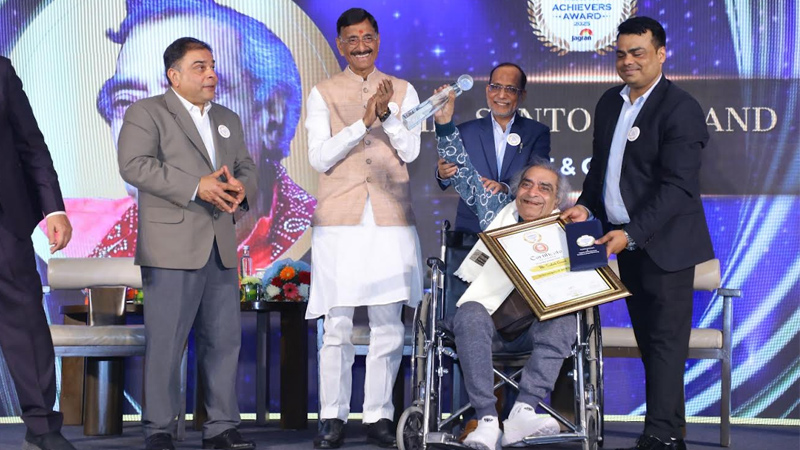
NEW DELHI: Hamdard Laboratories gathered a cross-section of India’s achievers in New Delhi on Friday, handing out the Hakeem Abdul Hameed Excellence Awards to figures who have left their mark across healthcare, education, sport, public service and the arts.
The ceremony, attended by minister of state for defence Sanjay Seth and senior officials from the ministry of Ayush, celebrated individuals whose work blends professional success with a sense of public purpose. It was as much a roll call of achievement as it was a reminder that influence is not measured only in profits or podiums, but in people reached and lives improved.
Among the headline awardees was Alakh Pandey, founder and chief executive of PhysicsWallah, recognised for turning affordable digital learning into a mass movement. On the sporting front, Arjuna Awardee and kabaddi player Sakshi Puniya was honoured for her contribution to the game and for pushing women’s participation onto bigger stages.

The cultural spotlight fell on veteran lyricist and poet Santosh Anand, whose songs have echoed across generations of Hindi cinema. At 97, Anand accepted the honour with characteristic humility, reflecting on a life shaped by perseverance and hope.
Healthcare honours spanned both modern and traditional systems. Manoj N. Nesari was recognised for strengthening Ayurveda’s place in national and global health frameworks. Padma shri Mohammed Abdul Waheed was honoured for his research-backed work in Unani medicine, while padma shri Mohsin Wali received recognition for his long-standing contribution to patient-centred care.
Education and social development also featured prominently. Padma shri Zahir Ishaq Kazi was honoured for decades of work in education, while former Meghalaya superintendent of Police T. C. Chacko was recognised for public service. Goonj founder Anshu Gupta received an award for his dignity-centred rural development initiatives, and the Hunar Shakti Foundation was honoured for empowering women and young girls through skill development.
The Lifetime Achievement Award went to former IAS officer Shailaja Chandra for her long career in public healthcare and governance, particularly in the traditional systems under Ayush.
Speaking at the event, Hamdard chairman Abdul Majeed said the awards were a tribute to those who combine excellence with empathy. “These awardees reflect Hakeem Sahib’s belief that healthcare, education and public service must ultimately serve humanity,” he said.
Minister Seth struck a forward-looking note, saying India’s young population gives the country a unique opportunity to become a global destination for learning, health and wellness by 2047.
The ceremony also featured the trailer launch of Unani Ki Kahaani, an upcoming documentary starring actor Jim Sarbh, set to premiere on Discovery on 11 February.
Instituted in memory of Unani scholar and educationist Hakeem Abdul Hameed, the awards have grown into a national platform that celebrates those building a more inclusive and resilient India. For one evening at least, the spotlight was not just on success, but on service with substance.