News Headline
Some people’s misdoings cannot put BARC under spotlight: Shashi Sinha

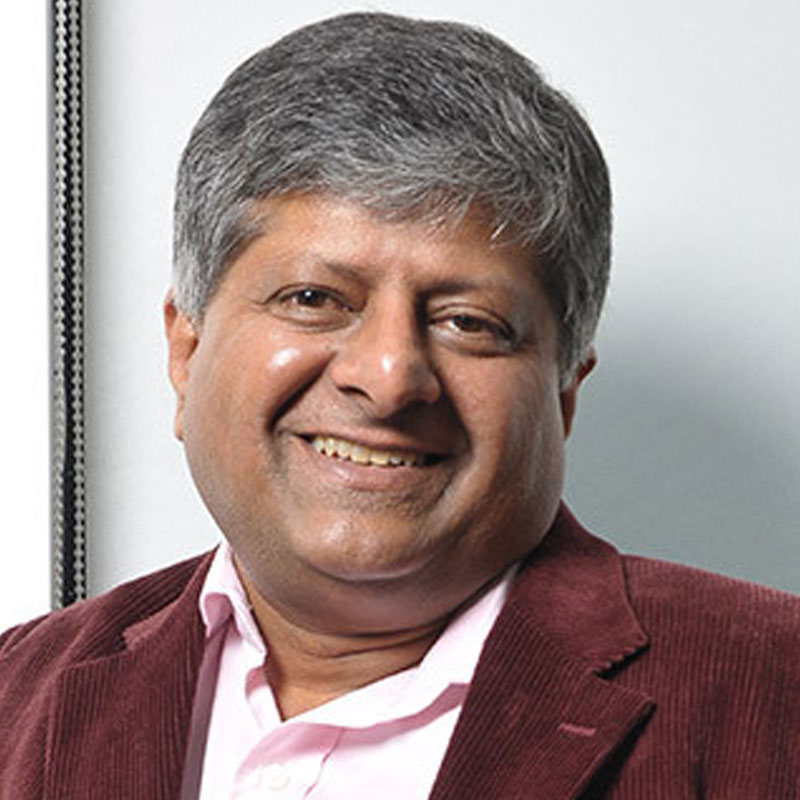
NEW DELHI: Ever since it was unearthed, the TRP gaming racket has caused a lot of upheaval and drawn broadcasters, regulators and research agencies into its web. The incident has raised a big question mark on the functioning and standing of the industry. Now, chairperson of BARC’s technical committee Shashi Sinha has come on record to slam the parties involved in the case, without mentioning them by name.
“Rating is all about egos and keeping their masters happy… What they don’t play is that they are number 1 of 0.1 per cent or one per cent ratings. Some people’s misdoings cannot put BARC under spotlight. They have done undue damage,” said Sinha in a webcast with Governance Now MD Kailashnath Adhikari during the Visionary Talk series.
Speaking in defense of BARC, the media veteran called it “one of the best systems in the world.” The problem, in Sinha’s view, is its getting into controversy with news genres.

“News is a niche genre and not bought on ratings. At any given time one per cent people watch English prime time news. So one per cent of 44,000 homes is 440 homes that watch the 16 news channels and the average is 20-25 homes. The ratings are rounded off to 0.2, 0.3 or 0.01 etc,” he explained, adding that the level of rating error is very high and a channel with high ratings may not get best rates.
Sinha, who is also the CEO of IPG Media Brands India, claimed that since there is a lack of self-regulation in the industry, people have started blaming the ratings agency, which is not right. He stated that BARC is already working to plug the gaps in its system.
“BARC will do course correction. We are working to ensure sample sizes do not misrepresent. In the next few weeks we will find a solution. I think all big newscasters are realising we should not hurt the body,” he said.
He went on to say that an industry body like BARC, where the board is governed by stakeholders including agencies, clients and broadcasters coming together to run it, exists only in France and some other countries worldwide. “I think BARC is a strong currency… Very basic things are right about it. The marking technology in place is more advanced than many other markets and the panel of 45,000 is the largest and more than double of China, a country more advanced than India. The funders i.e. the big networks and broadcasters are credible people.”
The Mumbai police had on 8 October alleged that three channels — Republic TV, Box Cinema and Marathi channel Fakt Marathi — were rigging TRP ratings to increase their advertisement revenue.
The TRP scam came to light when BARC filed a complaint through Hansa Research Group, alleging that certain television channels were rigging TRP numbers.
In the meantime, BARC has hit the pause button on the weekly measurement of TRP for news channels for three months.WWWSWSAA





NEW DELHI: Hamdard Laboratories gathered a cross-section of India’s achievers in New Delhi on Friday, handing out the Hakeem Abdul Hameed Excellence Awards to figures who have left their mark across healthcare, education, sport, public service and the arts.
The ceremony, attended by minister of state for defence Sanjay Seth and senior officials from the ministry of Ayush, celebrated individuals whose work blends professional success with a sense of public purpose. It was as much a roll call of achievement as it was a reminder that influence is not measured only in profits or podiums, but in people reached and lives improved.
Among the headline awardees was Alakh Pandey, founder and chief executive of PhysicsWallah, recognised for turning affordable digital learning into a mass movement. On the sporting front, Arjuna Awardee and kabaddi player Sakshi Puniya was honoured for her contribution to the game and for pushing women’s participation onto bigger stages.
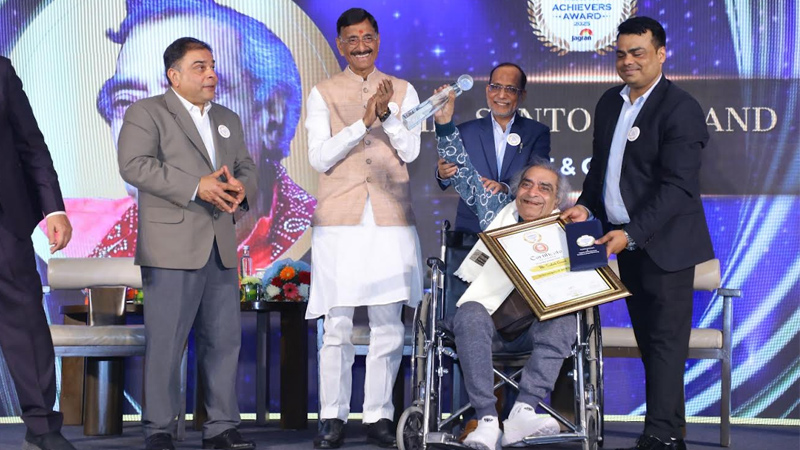
The cultural spotlight fell on veteran lyricist and poet Santosh Anand, whose songs have echoed across generations of Hindi cinema. At 97, Anand accepted the honour with characteristic humility, reflecting on a life shaped by perseverance and hope.
Healthcare honours spanned both modern and traditional systems. Manoj N. Nesari was recognised for strengthening Ayurveda’s place in national and global health frameworks. Padma shri Mohammed Abdul Waheed was honoured for his research-backed work in Unani medicine, while padma shri Mohsin Wali received recognition for his long-standing contribution to patient-centred care.
Education and social development also featured prominently. Padma shri Zahir Ishaq Kazi was honoured for decades of work in education, while former Meghalaya superintendent of Police T. C. Chacko was recognised for public service. Goonj founder Anshu Gupta received an award for his dignity-centred rural development initiatives, and the Hunar Shakti Foundation was honoured for empowering women and young girls through skill development.
The Lifetime Achievement Award went to former IAS officer Shailaja Chandra for her long career in public healthcare and governance, particularly in the traditional systems under Ayush.
Speaking at the event, Hamdard chairman Abdul Majeed said the awards were a tribute to those who combine excellence with empathy. “These awardees reflect Hakeem Sahib’s belief that healthcare, education and public service must ultimately serve humanity,” he said.
Minister Seth struck a forward-looking note, saying India’s young population gives the country a unique opportunity to become a global destination for learning, health and wellness by 2047.
The ceremony also featured the trailer launch of Unani Ki Kahaani, an upcoming documentary starring actor Jim Sarbh, set to premiere on Discovery on 11 February.
Instituted in memory of Unani scholar and educationist Hakeem Abdul Hameed, the awards have grown into a national platform that celebrates those building a more inclusive and resilient India. For one evening at least, the spotlight was not just on success, but on service with substance.






