Event Coverage
Smarter data and innovations in news selling should go hand in hand

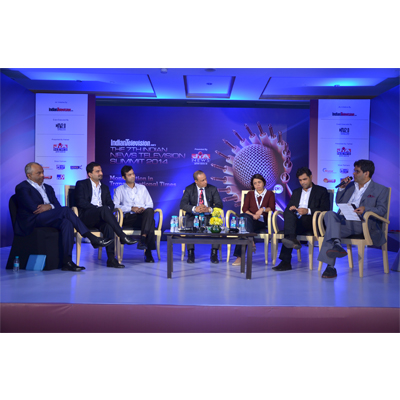
MUMBAI: At the Seventh Indian News Television Summit, a panel comprising Zee Sangam national sales head Harsha Vardhan Dwivedi, IndiaTV senior VP and country head ad sales Sudipto Chowdhuri, CNN IBN and IBN 7 national revenue head Vishal Bhatnagar, Times Television Network senior VP business head branded content Hemant Arora, GroupM south Asia CEO CVL Srinivas and IPG Mediabrands Initiatives CEO Anamika Mehta discussed the various means for ‘Innovation in news selling’.
The session moderated by Provocateur Advisory principal Paritosh Joshi revolved around how media agencies can increase brands’ ROI from news channels.

Joshi began by saying that one expects the sales and strategy team in a news channel to show more interesting numbers but what one gets is a rehash of an existing standard rating currency. According to Arora, the right clients, revenue and ROI comes when he and his team turns the big data into smart data.
“It is not just about the data but one has to be able to effectively show how it can impact the marketing objectives. But the matrix system that is currently in use does not really allow sellers and buyers to go beyond it. Eventually it comes down to CPR, slot rates etc and the value that is being offered. Times Now, for example, does not need to be a news channel, it is part of life. It’s the hue we create with our brand and then we pass on the benefit to the brand which wants to be a part of the ecosystem,” said Arora.
Dwivedi then speaking about the revenue of regional channels said that of the total business that regional channels have been making, only 40 per cent comes from corporate and thus, 60 per cent is supported by government and SMEs. “If it was not for the government and SME, the regional channels would not have been able to survive,” he said adding that two years ago there were 14 news channels in Bihar, Jharkhand and Uttarakhand, while today out of that only four are operating while others have shut down.
Joshi, addressing Mehta, recalled the days when he sold ad inventories. “Those days, agencies worked towards “de-selling brands”, because they had a personal grouse against a particular brand or they simply ignored them and therefore, sometimes broadcasters did approach the client directly to bring them on to their media plan. Now, how healthy is the entire ecosystem?” he questioned.
Mehta agreed to the fact that personal biases could exist in the industry. Credibility of content is what matters and we don’t often see channels coming to us and sharing insights beyond just a channel share, rating etc. She illustrated her point by giving an example. “We have brands like Dettol, which as a pure FMCG typically would be on the GEC platform, Hindi movies and not on a English news channel. However, taking from the national agenda of the Prime Minister which is Swatch India, we tied the brand with it in terms of sanitation,” she said. Integrating the brand and creating custom solutions gave far greater ROI.
Bhatnagar joined the conversation and said that the most important thing is how well one understands the product. “There is a huge responsibility on us to understand what business we are in. Are we in the business of just farming inventory and off loading the inventory?” he asked. He then mentioned that today a lot innovation depends on the kind of discussion news channels have with the agencies or clients. “For example, we tried to do something innovative with Microsoft during elections. And Microsoft of all things wanted to talk about analytics which on news channels does initially snicker people. But then we sat down with the agency, Lodestar, and discussed the various possibilities before pitching for it,” he added. The initiative got Microsoft a lot of feedback globally in terms of how to engage with audiences.
According to Chowdhuri innovation has to be like the topping on a pizza but it can’t be the pizza. “Some news channels may have done deals like 20 L bands a day for 365 days a year into two years adding up to Rs 5 crore. So, while your content is on screen, the advertisement too comes on screen. Hence, if you have ‘X’ million viewership for a programme then you have the same number of viewers for the ad as well,” he said.
Srinivasan had the last word in the discussion when he was asked if agencies and news channels were ahead of time when it comes to digital. “I think we are a bit late because while digital might be eight per cent of the total adex in India, it occupies 80 per cent of the time with conversation with clients. Today every campaign that is conceptualised, you end up spending a little on digital but the whole thought of promoting and creating the buzz is steeped towards digital. There are huge opportunities to win from digital,” he concluded.





Event Coverage
Anime India announces Amazon MX Player as co-presenting partner for Anime India Kolkata 2026
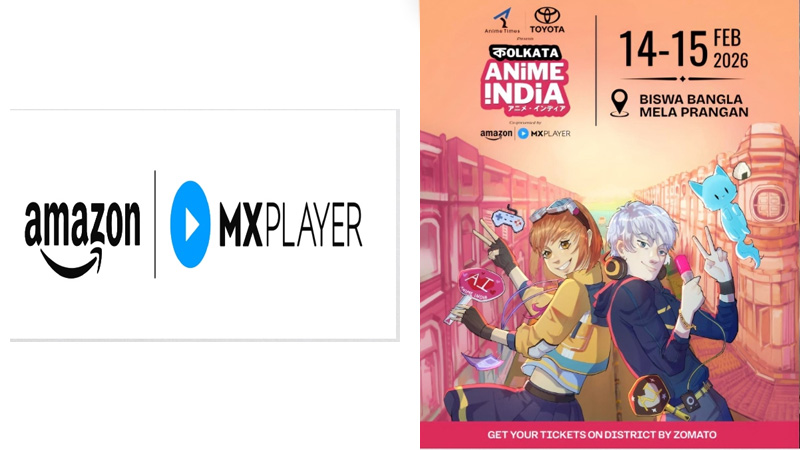
MUMBAI: Riding high on the success of its blockbuster Mumbai debut, Anime India is accelerating its nationwide expansion with the announcement of Amazon MX Player as the co-presenting partner for Anime India Kolkata. The partnership marks a significant step forward in the festival’s mission to deliver large-scale, accessible, and fan-first anime experiences across the country.
Scheduled for 14 and 15 February 2026 at the iconic Biswa Bangla Mela Prangan, Anime India Kolkata will launch the first regional chapter of what is set to be a year-long, multi-city tour. As the curtain-raiser for the 2026 circuit, the Kolkata edition aims to fuse the energy of global Japanese pop culture with India’s fast-growing community of anime, manga, and pop-culture fans.
A household name in digital entertainment, Amazon MX Player brings unmatched reach and cultural relevance to the Anime India platform. With its expanding focus on anime and youth-driven content, Amazon MX Player’s involvement as co-presenting partner reinforces Anime India’s vision of making anime culture more inclusive breaking barriers of language, geography, and accessibility to connect with fans nationwide.
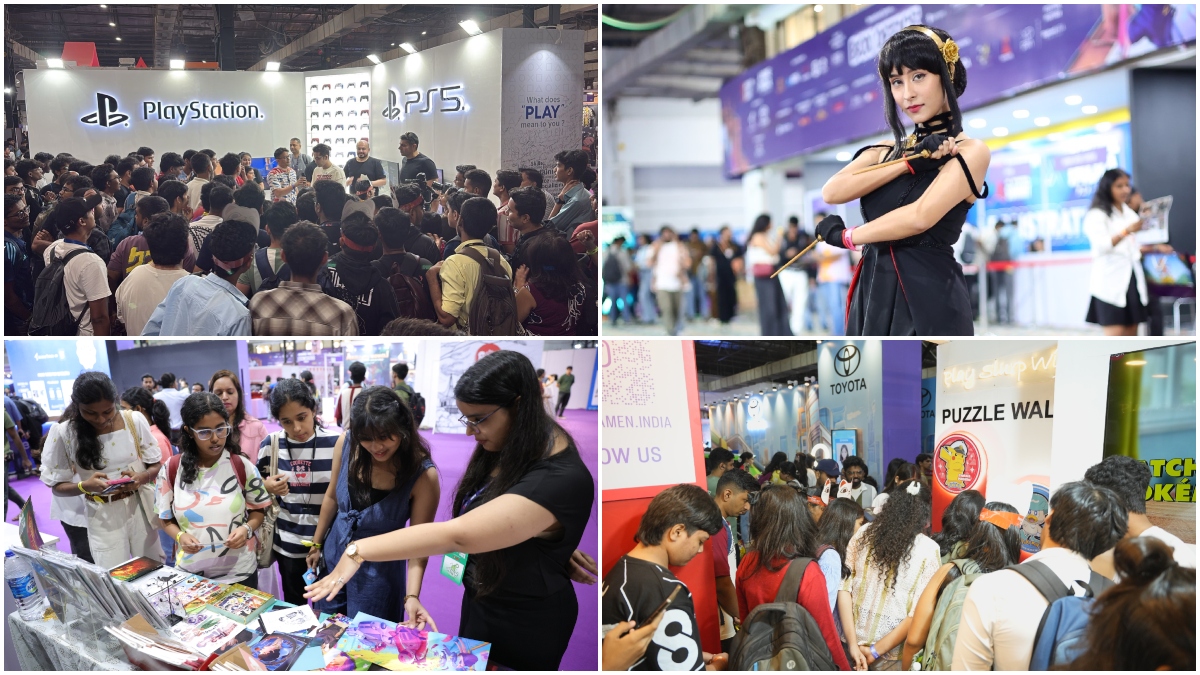
Anime India Kolkata 2026 will showcase cosplay competitions, interactive zones led by the Indian Gunpla Community, India-39 Vocaloid Community, The Japan Curry, and Adda-o-Otaku by The Otaku Guild. Fans can join tournaments across fighting games, Pokémon VGC, and more. Acclaimed Japanese director Susumu Mitsunaka (Haikyu!!) will attend as guest of honour, appearing in panels and live sessions. Positioned as an immersive celebration of fan culture and industry collaboration, the Kolkata edition marks the beginning of Anime India’s nationwide expansion.
Sharing their perspective on the partnership, Amazon MX Player director Aruna Daryanani expressed, “Anime in India has evolved from a niche interest into a mainstream cultural movement, driven by an increasingly engaged and passionate fanbase. At Amazon MX Player, our focus is on expanding access by bringing anime to audiences across the country for free and in multiple local languages. Our association with Anime India reflects our commitment to supporting the growth of anime in India and deepening connections with fans, while continuing to build Amazon MX Player as a trusted destination for free, high-quality entertainment.”
“Anime India Kolkata is a celebration of how anime has grown beyond entertainment into a powerful cultural and creative force. By bringing fans, creators, and industry leaders onto one shared platform, the festival is helping define the future of pop culture in India,” said Anime India co-founder and director Neha Mehta.
The debut edition of Anime India 2025 in Mumbai attracted over 29,000 fans, quickly cementing its status as a landmark celebration of anime and Japanese pop culture. Riding on this overwhelming response, the Kolkata chapter is projected to draw more than 40,000 visitors across two days, positioning it as one of the biggest anime conventions ever held in eastern India.
Anime India is focused on bringing together fans from across the country to create a truly pan-India celebration of anime, manga, cosplay, gaming, and Japanese culture. With plans to expand into four key metropolitan hubs in 2026—east (Kolkata), north (Delhi), west (Mumbai), and south (Hyderabad)—the festival seeks to deliver globally benchmarked experiences while supporting and uplifting creators, artists, and fan communities throughout India.