Cable TV
Skill training course for Maharashtra LMOs


MUMBAI: As the digitisation process moves to a new stage kick starting of phases III and IV and the billing process beginning in phases I and II, the consumers are set to adapt to newer methods as well. Digitisation is going to change the way the industry functions and in the best interest of the last mile owners (LMO), who often lag behind because of lesser knowledge, a skill training programme is being launched for them.
The Telecom Sector Skill Council of India (TSSCI) and Mumbai based Druv Tech Systems is launching a course that would equip the cable operators with latest technologies in the digitised world and bring them at par with the Multi System Operator (MSO).

The two companies entered into a Memorandum of Understanding (MOU) to work together on re-skilling broadband cable TV operators and their employees on nuances of sales, marketing, deployment and customer management. The MoU was signed between TSSCI CEO Lt. Gen. S.P. Kochhar (Retd) and Druv Tech Systems managing director Ravindra Deshmukh.
“In this digitised world, where technology is changing fast, cable operators need to equip themselves well. While there is an element of customer care with the coming in of channel packaging, the operator has to deal with billing also. Things are no longer what it used to be couple of years back for the LMOs. And the course readies them for this change,” informs Deshmukh.
An initiative by the government of India managed by private players, the 60-hour course will commence from the first week of March in Mumbai and Pune.
Deshmukh says, “The idea of the course is to inculcate amongst operators soft skills which will help them learn the art to speak to customers, register complaints, market different services like content and broadband plan etc,” he adds.
Deshmukh thinks that cable operators now need to be trained in all aspects of operations: cable TV and broadband. “The idea is to ensure that both the LMO and MSO are on the same page,” he says. Also while earlier the LMOs were not accountable to anyone, now everything needs to be reported. “For the player to become a mainstream player, this course is a must,” he adds.
“Also, consumers will soon move towards electronic mode of payment. The LMO needs to understand how to accept online and card payment. The aim of the course is to bring uniformity in the industry operating standard,” he informs.
To ensure maximum participation, the course has been designed such that the LMO can choose from a weekend course which is a full day course on Saturday and Sunday or an alternate day course which will be held every Monday, Wednesday and Friday in the evening. “The course aims at rescaling the operator,” he says.
The batch will comprise 25 operators who will be assessed independently by TSSCI appointed professionals. The study material provided will be in English. “But there is also a provision wherein, a translated version of the study material will be available. And for the start, we are giving study material translated in Marathi for Maharashtra,” informs Deshmukh.
The fee that comprises sessions of one-and-a-half hour each is Rs 10,000. “But if one successfully clears the exam will get an immediate cash return from the government of India, making it free of cost for the operator,” he says.
It’s a part of corporate social responsibility of the company and is a way for them to connect better with their operators. The course will cover areas like broadband services, CPE and devices management, marketing, back office and customer care, to name a few.
Druv Tech has partnered with the Maharashtra Institute of Technology School of Telecom Management (MITSOT) in Pune for the course. “People from Hathway Cable & Datacom, IndusInd Media Communication Ltd, Tata Communications, UPASS and telecom will form the part of teaching faculty,” he informs.
Deshmukh thinks that the MoU is the most important initiative undertaken by Druv Tech. “This will equip the ecosystem to play a significant role in the transformation of broadband and cable TV sector through unique combination of technology and skill development training,” he concludes.
The first batch for the course has been fully booked by Maharashtra Cable Operators Federation (MCOF) as a part of its member empowerment initiative.


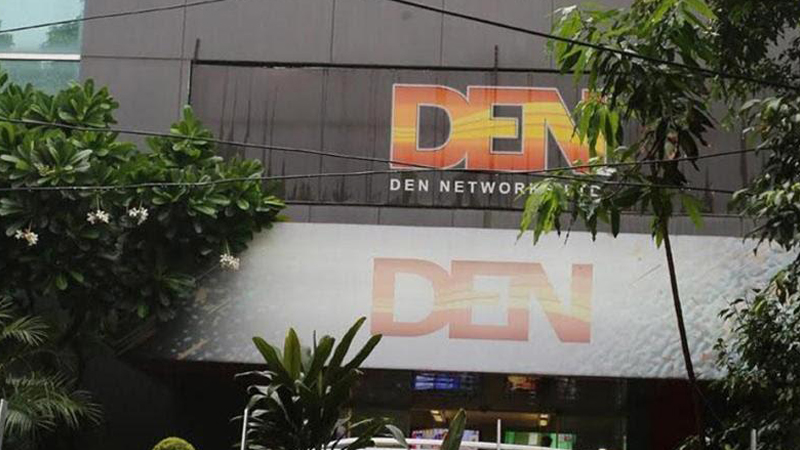
MUMBAI: When margins wobble, liquidity talks and in Q3 FY25-26, cash did most of the talking. Den Networks Limited closed the December quarter with consolidated revenue of Rs.251 crore, marginally higher than the previous quarter but down 4 per cent year-on-year, even as profitability stayed resilient on the back of strong cash reserves and disciplined cost control.
Subscription income softened to Rs.98 crore, slipping 3 per cent sequentially and 14 per cent from last year, while placement and marketing income offered some cheer, rising 15 per cent quarter-on-quarter to Rs.148 crore. Total costs climbed faster than revenue, up 7 per cent QoQ to Rs.238 crore, driven largely by higher content costs and operating expenses. As a result, EBITDA dropped sharply to Rs.13 crore from Rs.19 crore in Q2 and Rs.28 crore a year ago, pulling margins down to 5 per cent.
Yet, the bottom line refused to blink. Profit after tax stood at Rs.40 crore, up 15 per cent sequentially and only marginally lower than last year’s Rs.42 crore. A healthy Rs.57 crore in other income helped cushion operating pressure, keeping profit before tax at Rs.48 crore, broadly stable quarter-on-quarter despite the tougher cost environment.
The real headline-grabber, however, sits on the balance sheet. The company remains debt-free, with cash and cash equivalents swelling to Rs.3,279 crore as of December 31, 2025. Net worth rose to Rs.3,748 crore, while online collections accounted for 97 per cent of total receipts, underscoring strong cash discipline across operations, including subsidiaries.
In short, while Q3 showed signs of operating strain, the financial backbone remains solid. With zero gross debt, steady profits and a formidable cash war chest, the company enters the next quarter with flexibility firmly on its side proving that in uncertain markets, balance sheet strength can be the best growth strategy.






