Cable TV
Siti Cable convention to start in Delhi


NEW DELHI: Zee Telefilms has always loved to set the cat amongst the pigeons. Over two years back, when conditional access was a relatively unknown word, Zee Telefilms CMD Subhash Chandra had supported it, much to the chagrin of the likes of Star and Sony.
At a time when the annual hike in subscription rates of TV channels (under the watchful eyes of the sector regulator) draws near, Siti Cable is attempting to educate its franchisee cable ops that new channels would mean a substantial hike for MSOs, which would have to be passed down to the operators.
Citing the examples of Zoom, Star One, Hungama, MTV, Nick, etc., Siti Cable in an invitation to its franchisees or joint venture partners has said that the total financial impact of these new pay channels, launched in the last few months, is about Rs 70 (approximately $ 1.6) per month.

“Availing these channels entails the realisation of extra amount from subscribers to the extent of their prices,” Siti cable has conveyed to its franchisees, urging them to come together to discuss various such issues. The first of this proposed series is being flagged off in Delhi today.
The invitation, signed by a senior Siti executive, Tapas Roy, also points to the fact that in the “absence of realisation of these additional amounts from the ground,” the industry, already reeling under severe operating losses, would further bleed.
What is slightly worrisome is that Siti and other MSOs have stated in private that though new TV channels were being priced individually, broadcasters have been allegedly insisting the cable industry enter into subscription agreements as a part of their existing bouquet itself, based on prevailing connectivity irrespective of the fact whether these new channels were being subscribed by customers or not.
Other issues that are slated to be discussed in today’s cable ops meet, organised by Siti Cable, include that relating to the service tax @ 10.02 per cent and the draft interconnection regulation issued by the Telecom Regulatory Authority of India (Trai).
According to Siti Cable, cable ops need to pay service tax to the MSO (in this case Siti Cable) on the bills raised on them by Siti. However, the cable ops can claim credit of the service tax so paid to the MSO and, in turn, pay the government the balance tax after setting off the amount paid to the MSO.
In other words, cable ops need to pay only the net service tax to the government and as such it is not double taxation as is being misunderstood in various circles, Siti has said.
But it seems this education campaign’s success would depend on the fact how the Delhi meet shapes up.







Cable TV
Hathway Cable appoints Gurjeev Singh Kapoor as CEO
Leadership change comes as cable TV faces shrinking subscriber base and modest earnings pressure
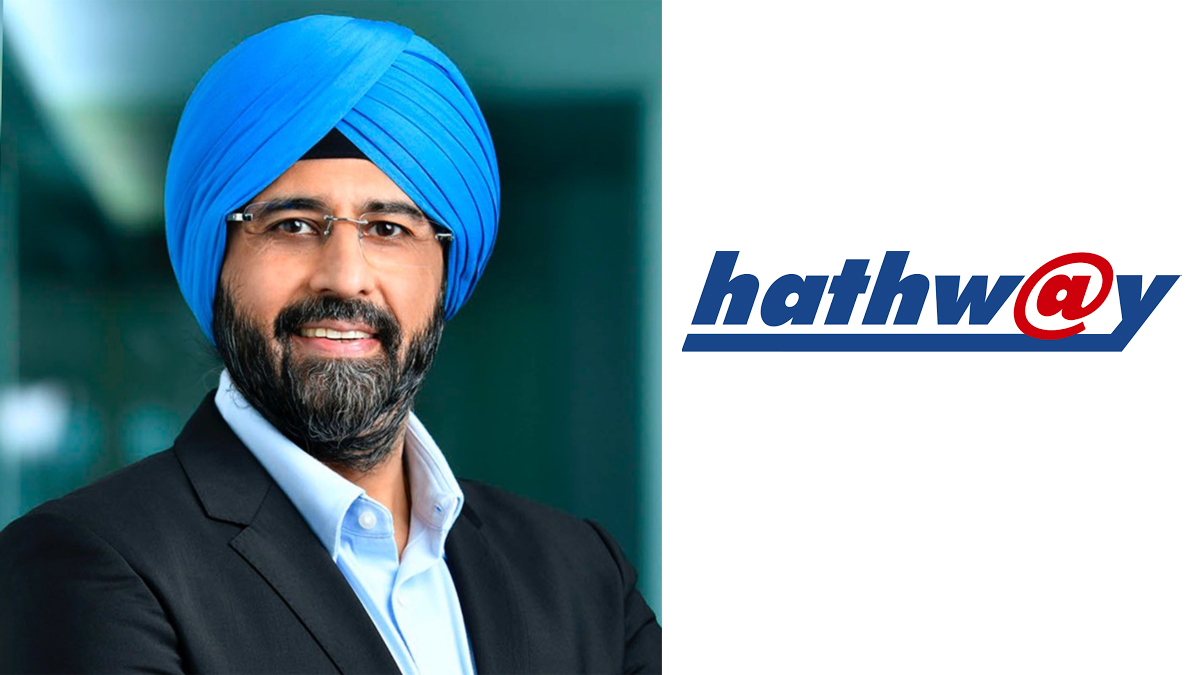
MUMBAI: Hathway Cable and Datacom has tapped industry veteran Gurjeev Singh Kapoor as chief executive officer, marking a leadership pivot at a time when India’s cable television business is under mounting strain.
Kapoor will take over from Tavinderjit Singh Panesar, who is set to retire in August after a long innings with the company. Panesar, chief executive since 2023, has held multiple leadership roles at Hathway, including his latest stint beginning in 2022.
Kapoor brings more than three decades of experience in media and entertainment. He most recently led distribution at The Walt Disney Company’s Star India business, now part of JioStar. His career spans television distribution and affiliate partnerships, with stints at Sony Pictures Networks India, Discovery Communications and Zee Entertainment.
Panesar, with over three decades in the industry, has worked across strategic planning, distribution and business development in media, broadcasting and manufacturing. His past associations include ESPN Star Sports, Star India, Apollo Tyres and JK Industries.
The transition lands as the cable sector grapples with structural disruption. Traditional operators are losing ground to streaming platforms, while telecom and broadband players tighten the squeeze with bundled offerings.
An EY report estimates India’s pay-TV base could shrink by a further 30 to 40 million households by 2030, taking the total down to 71 to 81 million. The slide follows a loss of nearly 40 million homes between 2018 and 2024, a contraction that has already wiped out more than 37,000 jobs in the local cable operator ecosystem.
Hathway’s numbers reflect the strain. The company reported a consolidated net profit of Rs 93 crore for FY25, down from Rs 99 crore a year earlier. Revenue inched up to Rs 2,040 crore from Rs 1,981 crore. As of December 2025, it had about 4.7 million cable TV subscribers and roughly 1.02 million broadband users.
Kapoor steps in with a familiar brief but a shrinking playbook. In a market where viewers are cutting cords faster than companies can reinvent them, the new chief executive inherits a business fighting to stay plugged in.






