News Broadcasting
Sharp analysis, credibility: Need of the hour for news channels


NEW DELHI: In a special ongoing training workshop organised by the Jagran group of newspapers proposed news channel, Channel 7, the consensus was clearly in favour of more authentic reportage backed by a razor sharp analysis of news.
Well known personalities from various walks of society such as Dr Sanjaya Baru, media advisor to the Prime Minister; former police commissioner Arun Bhagat, noted media personality Madhu Trehan, MPs Sachin Pilot and Navjot Singh Sidhu in their special address stressed on the need for news channels to act as credible guiding forces for the viewers.
Highlighting the importance of organising a training session, Jagran TV director Siddhartha Gupta said, “With a slew of television channels around media professionals are churned out at an unbelievable speed. Unlike a decade ago, the media scene, especially that of television has become exceedingly cut throat. Quality training is as important to the continued growth of the television industry as development funding, production investment and marketing.”

Finer details of television journalism will be imparted by experts to the team of Channel 7 at this forum. Most importantly though, this workshop is not about learning what or how “television news is done,” but about how Channel 7 aims to do it. The “learning workshop” is at present going on.
In the course of the next few days, the workshop will focus on coverage related to law and media by minister of state of science and tech and lawyer Kapil Sibal, international coverage by Saeed Naqvi and right wing Journalism by former deputy editor of India Today Swapan Dasgupta.
To provide a snapshot of some of the opinions expressed during the course of the discussions so far:
DR Sanjaya Baru: Television journalism should move beyond mere news reporting to in-depth analysis of news. Todays journalists should become the flag bearers of change and bring about a transformation in journalism.
Arun Bhagat: News channels need to be more sensitive in their reportage and should present the facts in a new format. Reporting must not be restricted to only crime related stories and all stories ought to be thoroughly investigated.
Madhu Trehan: News anchors need to be more persistent while following a story idea. Sensitivity should reflect in coverage especially in news related to accidents and other calamities.
Sachin Pilot: Television in India has not yet reached a mature stage. The youth of this country has always bought about change and has the potential to do so even in the television industry.
Channel 7 will be launched in March and is being distributed by Jagran TV Pvt. Limited.




News Broadcasting
News18 India launches Command Centre war explainer with Arya
New show shifts from debates to decoding global conflicts and impacts
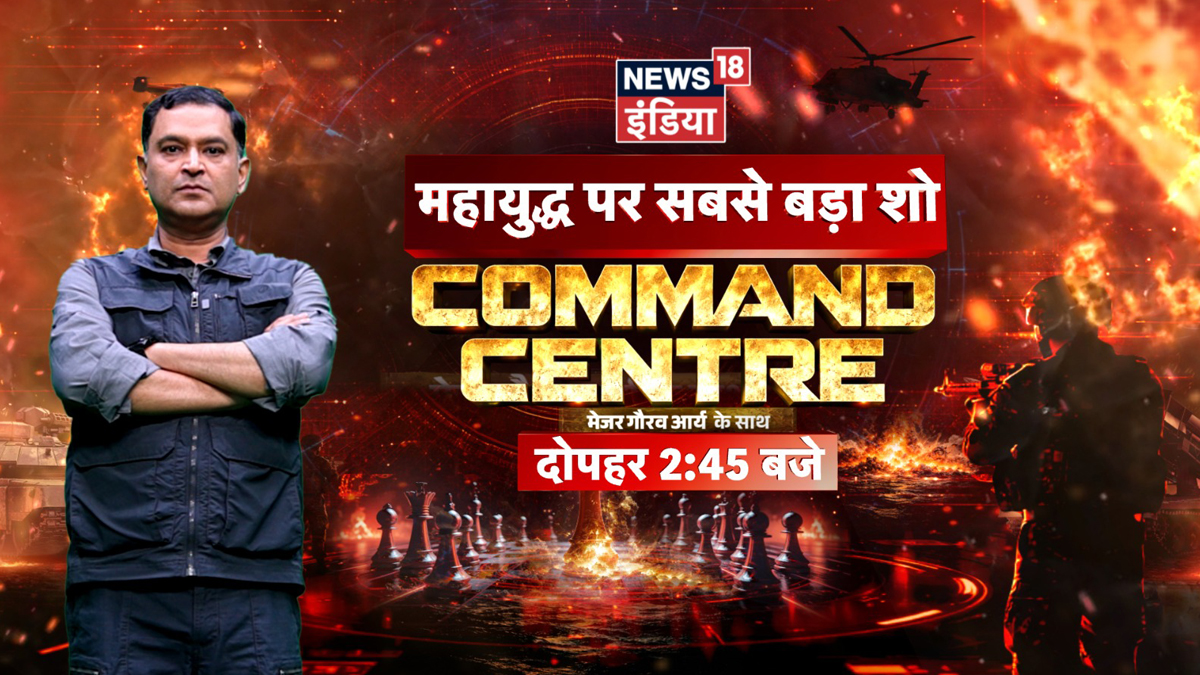
MUMBAI: News18 India has rolled out a new war-focused programme, Command Centre, featuring Gaurav Arya, as it looks to offer viewers a sharper, more grounded take on global conflicts amid rising tensions in West Asia.
Positioned as an “insider war room”, the show moves away from conventional panel debates and instead focuses on explaining military developments, decoding strategy and connecting global events to their everyday impact, from fuel prices to economic shifts.
The format leans heavily on visuals and data. The studio has been designed like a command hub, complete with large LED war maps, real-time graphics and an alert system to track developments as they unfold.
At the centre of it all is Arya, who brings his military background to simplify complex war strategies for viewers. His signature line, “Seedhi baat samjhiye”, anchors the show’s promise of clarity over noise.
News18 India managing editor Jyoti Kamal said, “Command Centre, featuring Major Gaurav Arya is designed to deliver accurate insights and a clear perspective on how evolving conflicts impact everyday life, from household budgets to national security. With expert voices analysing every development in real time, the show goes beyond headlines to decode what’s happening now, what it means, and what could come next.”
Echoing the intent, Gaurav Arya added, “In times of war, confusion is the biggest threat. With News18 India’s Command Centre, we are bringing viewers inside the war room, decoding strategies, tracking every escalation, and explaining, in the simplest terms, what it means for India and for every household. Seedhi baat samjhiye, this is where you understand not just what is happening, but what happens next.”
The weekday show will air in the afternoon slot and will also feature Gaurav Shukla, adding to its editorial depth.
With its mix of analysis, visuals and a clear focus on impact, the show reflects a broader shift in news consumption. Viewers are no longer just watching events unfold, they are looking to understand what those events mean for them.






