News Headline
Shark Tank India Season 5: From Ebitda banter to business revolution

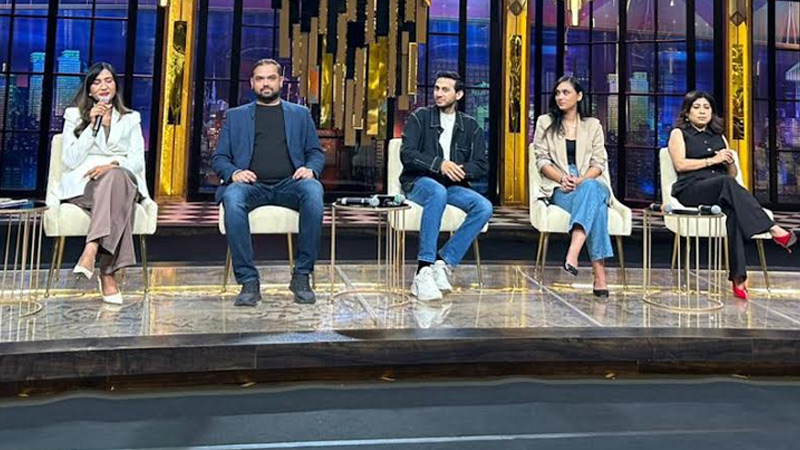
MUMBAI: When a hopeful entrepreneur approaches you at Lucknow airport declaring their “Ebitda has hit Rs 2 crores,” you know something fundamental has shifted in India’s business conversation. This is the Shark Tank India effect, according to Oyo founder and CEO Ritesh Aggarwal, and it captures how a once intimidating financial term has become everyday vocabulary. As the show marks its fifth season, its cultural impact now far outweighs traditional television metrics.
At a recent industry roundtable in Mumbai, the show’s key stakeholders came together to reflect on how Shark Tank India evolved from an experimental format into a nationwide movement. Sony LIV EVP and head of ad revenue Ranjana Mangala, traced the journey back to a time when there was no clear precedent for a business reality show in India.
“Five years ago, there wasn’t really a benchmark,” Mangala said. “But we believed that if new India wants to build brands and products, Sony should be the platform enabling that ambition.”

For Aggarwal, the show’s success lies in how deeply it has penetrated public consciousness. He describes Shark Tank India as “the nation’s business classroom,” one that has normalised conversations around revenue, margins, and scale. “Ten or fifteen years ago, the shows young Indians watched were very different,” he noted. “Today, the young Indian wants to create an enterprise.”
That aspiration has translated into strong brand interest. Partners are lining up to associate with the show, attracted by what Oppo India head of communications Goldee Patnaik, calls a “marriage of shared values.” For Oppo, the alignment feels organic. Shark Tank India celebrates fearless storytelling and ambition, while Oppo’s brand philosophy centres on empowering people to capture and celebrate everyday moments.
Canva’s India brand lead Shubhika Jain echoed that sentiment, calling the show a natural ally to the platform’s mission of democratising design. By spotlighting creators, small businesses and first-time founders, Shark Tank India has made innovation feel less elite and far more achievable.
From the founder’s side of the table, Fixderma India CEO Shaily Mehrotra, highlighted the show’s role in shifting middle class perceptions around entrepreneurship. “There was a time when business was viewed with suspicion, as if profit margins were just easy windfalls,” she said. “Shark Tank gave confidence to middle class kids. It showed that building a business takes rigour, patience, and purpose, not just profit.”
Season five reflects how far that mindset has progressed. Entrepreneurs as young as fifteen are now pitching ideas with striking polish, often leveraging AI tools and mobile technology that have dramatically lowered barriers to entry. What once required capital and connections can now begin with a smartphone and a sharp idea.
After experimenting with a digital only format last season, Shark Tank India returns to a simultaneous television and Sony LIV broadcast. Mangala defended the strategy as part of the show’s broader learning curve. “Until you experiment, you’re never going to know,” she said.
Perhaps the clearest marker of the show’s influence lies in how deeply it has entered everyday conversations. In just five years, Shark Tank India has moved from a niche television format to a widely recognised platform for entrepreneurial thinking, shaping how a new generation talks about ambition, risk, and business building.







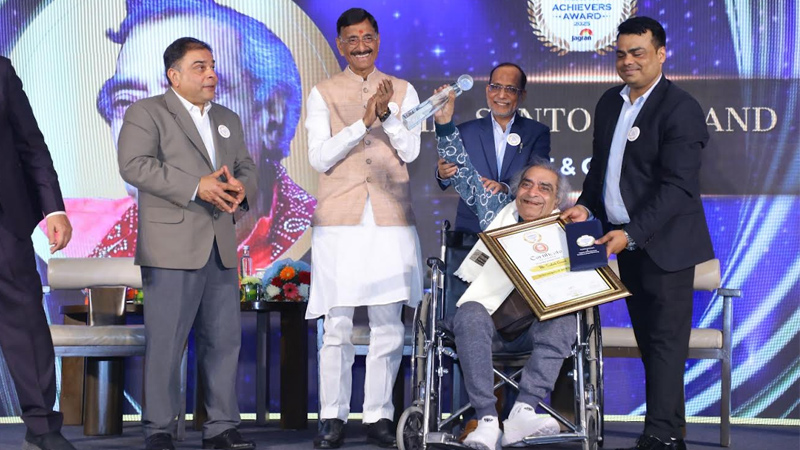
NEW DELHI: Hamdard Laboratories gathered a cross-section of India’s achievers in New Delhi on Friday, handing out the Hakeem Abdul Hameed Excellence Awards to figures who have left their mark across healthcare, education, sport, public service and the arts.
The ceremony, attended by minister of state for defence Sanjay Seth and senior officials from the ministry of Ayush, celebrated individuals whose work blends professional success with a sense of public purpose. It was as much a roll call of achievement as it was a reminder that influence is not measured only in profits or podiums, but in people reached and lives improved.
Among the headline awardees was Alakh Pandey, founder and chief executive of PhysicsWallah, recognised for turning affordable digital learning into a mass movement. On the sporting front, Arjuna Awardee and kabaddi player Sakshi Puniya was honoured for her contribution to the game and for pushing women’s participation onto bigger stages.
The cultural spotlight fell on veteran lyricist and poet Santosh Anand, whose songs have echoed across generations of Hindi cinema. At 97, Anand accepted the honour with characteristic humility, reflecting on a life shaped by perseverance and hope.
Healthcare honours spanned both modern and traditional systems. Manoj N. Nesari was recognised for strengthening Ayurveda’s place in national and global health frameworks. Padma shri Mohammed Abdul Waheed was honoured for his research-backed work in Unani medicine, while padma shri Mohsin Wali received recognition for his long-standing contribution to patient-centred care.
Education and social development also featured prominently. Padma shri Zahir Ishaq Kazi was honoured for decades of work in education, while former Meghalaya superintendent of Police T. C. Chacko was recognised for public service. Goonj founder Anshu Gupta received an award for his dignity-centred rural development initiatives, and the Hunar Shakti Foundation was honoured for empowering women and young girls through skill development.
The Lifetime Achievement Award went to former IAS officer Shailaja Chandra for her long career in public healthcare and governance, particularly in the traditional systems under Ayush.
Speaking at the event, Hamdard chairman Abdul Majeed said the awards were a tribute to those who combine excellence with empathy. “These awardees reflect Hakeem Sahib’s belief that healthcare, education and public service must ultimately serve humanity,” he said.
Minister Seth struck a forward-looking note, saying India’s young population gives the country a unique opportunity to become a global destination for learning, health and wellness by 2047.
The ceremony also featured the trailer launch of Unani Ki Kahaani, an upcoming documentary starring actor Jim Sarbh, set to premiere on Discovery on 11 February.
Instituted in memory of Unani scholar and educationist Hakeem Abdul Hameed, the awards have grown into a national platform that celebrates those building a more inclusive and resilient India. For one evening at least, the spotlight was not just on success, but on service with substance.






