iWorld
Sesame Workshop India premieres animated videos on Covid2019

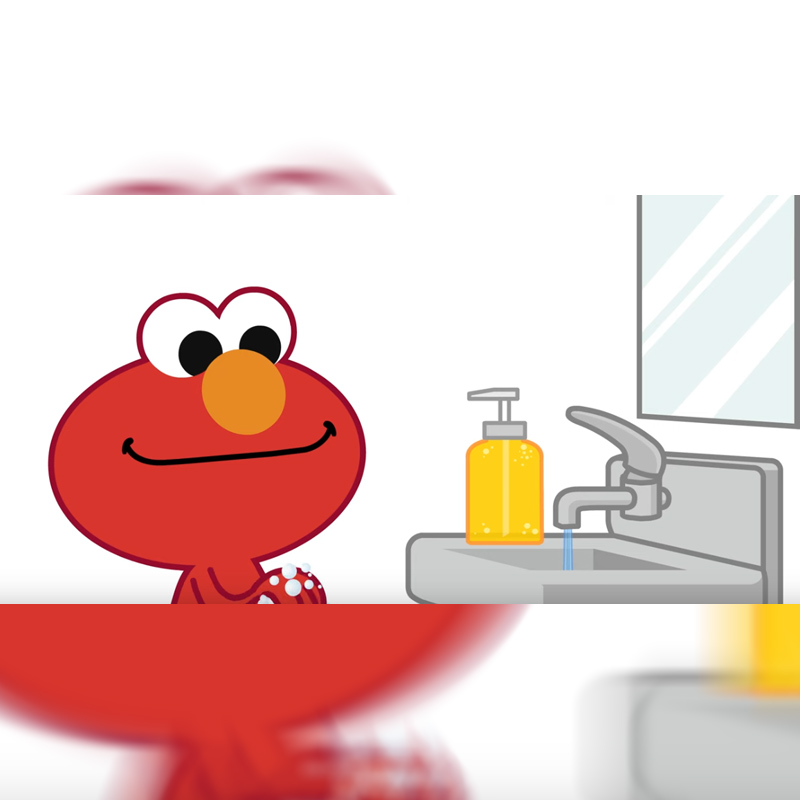
MUMBAI: Sesame Workshop in India, the non-profit educational organization behind Sesame Street, has premiered new animated public service announcements to help families across India stay physically and emotionally healthy as the unprecedented Covid2019 pandemic continues.
The audio and video content are available in English and 11 Indian languages -Hindi, Tamil, Telugu, Malayalam, Kannada, Kashmiri, Bengali, Odia, Assamese, Gujarati, Marathi and include Elmo’s new “Washy Wash” song as well as Sesame Muppets learning how to sneeze properly and how caring for yourself means caring for each other. And with children currently out of school, Sesame content also provides early learning to children at home. Both audio and video content are available across TV, radio and digital platforms operated by Govt of India as well as private media houses. Govt. of Uttar Pradesh will be distributing content over TV, radio, DIKSHA app, WhatsApp and in Maharashtra the content will be available on DD Sahyadri. Some of the new content premiering today includes the following videos:
Washy Wash with Elmo: Families can sing along with Elmo as he washes his hands for 20 seconds – washing the germs away and helping everyone stay healthy.

Learning how to sneeze and cough safely with Grover: Grover helps children remember that when they feel a tickle in their noses or throats, they should remember to sneeze or cough into their upper sleeve or elbow—that helps keep the germs off their hands and away from other people. It’s as easy as 1, 2, 3!
Time to Wash Your Hands! Sesame Muppets demonstrate different situations where children and families should wash hands—after coughs and sneezes, before eating, after playing, after using the bathroom, and more.
Caring for Myself, Caring for Others: Sesame Muppets help children understand that when you take good care of yourself, you’re taking good care of others, too.
“As families across India adjust to their new realities, our Sesame programme is there to support them in staying healthy and fostering learning at home while children are out of school,” said Sesame Workshop India MD Sonali Khan. “With a little help from the funny and furry muppets, together we can help children and families, especially the vulnerable, learn healthy habits and take care of each other during this crisis.”
Sesame Workshop India, through its muppets has always been at the forefront in promoting healthy habits for life through its various programmes in India, as it believes that children can indeed be agents of change. Through its YouTube channel Galli Galli Sim Sim it has reached ~4.2Mn children and caregivers in the last one month.
The emotional, social and physical development of children has a direct impact on the overall development of the country and this assumes greater significance, as children 0-14 years comprise ~ 30 percent or approx. 37 crores of the total population of India as per the census 2011 figures.
In India, Sesame Workshop’s community engagement programmes such as Radiophone and mobile community viewings have successfully proven that children who are exposed to its content are twice as ready for school, have higher awareness of healthy foods, hygiene and show increased signs of inclusion. The programmes equip children and their caregivers, with the necessary tools required to transform every day moments into playful learning experiences, helping to set children on the right path to life.
In addition to the new videos, Sesame Workshop India offers free materials such as e-books, audio episodes, video episodes and digital games for parents and children. The new videos are part of Sesame Workshop’s Caring for Each Other initiative, which provides a rich array of Sesame content designed to comfort, educate, and entertain parents and children during the unprecedented uncertainty facing young children and families around the world. Free resources are available for families at sesameworkshopindia.org/caring/
Sesame Workshop resources are easy to use and are designed to help parents provide comfort and manage anxiety, as well as help with creating routines, fostering playful learning at home, including staying physically and mentally healthy. Mindful that the adults who care for children need support too, the resources are intended to help caregivers as well as children. Sesame Workshop is offering the content free of cost for families around the world who are struggling to adjust, adapt, and keep each other safe.
Sesame Workshop is also developing new content including animations on healthy habits, resources providing comfort, and learn-at-home activities on topics including reading, math, and science, that will be available in English, Hindi and other regional languages such as Kannada, Tamil, Telegu, Malayalam, Marathi, Gujarati, Bengali, Odia, Assamese and Kashmiri.
Washy Wash with Elmo:
Learning how to sneeze and cough safely with Grover:
Time to Wash Your Hands!:
Caring for Myself, Caring for Others:







iWorld
Micro-Dramas Surge in India, Redefining Mobile Content Habits
Meta-Ormax study maps rapid rise of short-form storytelling among 18–44 audiences.
MUMBAI: Micro-dramas aren’t just short, they’re the snack that ate Indian entertainment, and now everyone’s bingeing between the sofa cushions. Meta, in partnership with Ormax Media, has released ‘Micro Dramas: The India Story’, a comprehensive study unveiled at the inaugural Meta Marketing Summit: Micro-Drama Edition. The report maps how the vertical, bite-sized format is reshaping content consumption for mobile-first audiences aged 18–44 across 14 states.
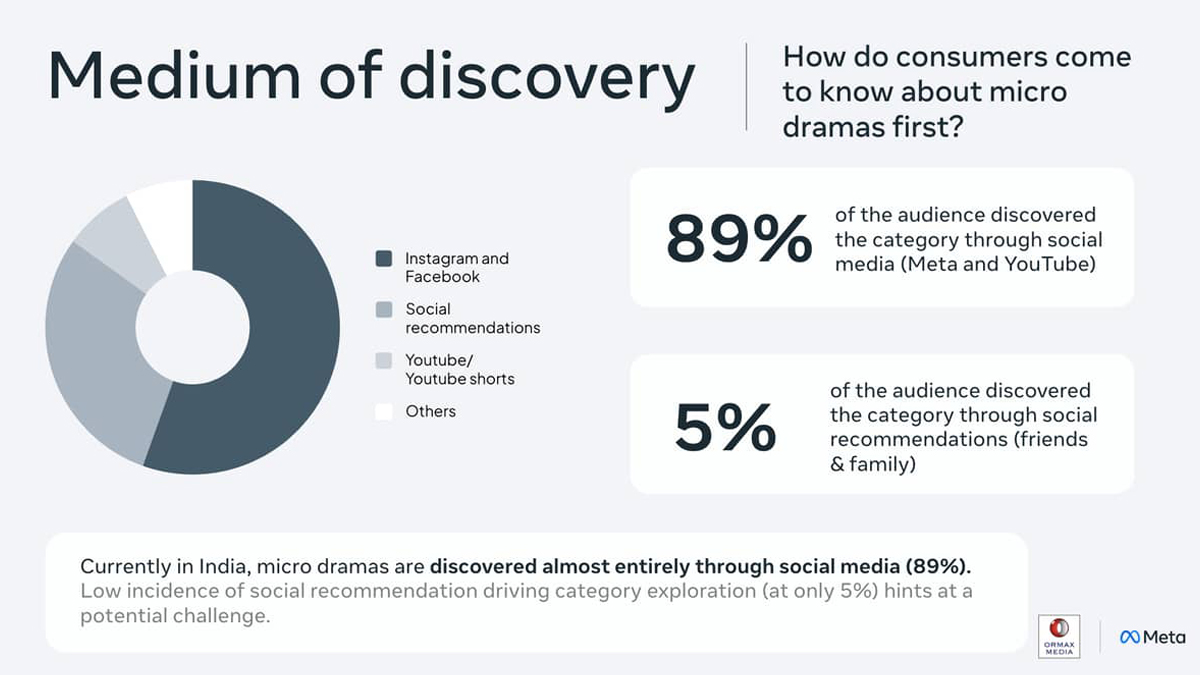
Conducted between November 2025 and January 2026 through 50 in-depth interviews and 2,000 personal surveys, the research reveals that 65 per cent of viewers discovered micro-dramas within the last year proof of explosive adoption. Nearly 89 per cent encounter the format through social feeds and recommendations, making algorithm-driven discovery the primary engine rather than active search.
Key viewing patterns show a median of 3.5 hours per week (about 30 minutes daily) spread across 7–8 short sessions. Consumption peaks between 8 pm and midnight, with additional spikes during commutes and work breaks classic “in-between moments” that the format fills perfectly. Around 57 per cent of viewing happens in ambient mode (while doing something else), and 90 per cent is solo, enabling more intimate, personal storytelling.
Romance, family drama and comedy lead genre preferences. Audiences show growing openness to AI-generated content, 47 per cent find it unique and creative, while only 6 per cent say they would avoid it entirely. Regional languages are surging after Hindi and English, Tamil, Telugu and Kannada dominate consumption.
Meta, director, media & entertainment (India) Shweta Bajpai said, “Micro-drama isn’t a passing trend, it’s rewriting the rules of Indian entertainment. In under a year, an entirely new category of platforms has emerged, built audience habits from scratch, and created a business vertical that is scaling fast.”
Ormax Media founder-CEO Shailesh Kapoor added, “Micro-dramas are beginning to show the early signs of becoming a distinct content category in India’s digital entertainment landscape. When a format aligns closely with how audiences naturally engage with their devices, it has the potential to scale very quickly.”
The study proposes ecosystem-wide responsibility, universal signposting of commercial intent, shared accountability among advertisers, platforms, creators, schools and parents, built-in safeguards, and formal media literacy in schools.
In a feed that never sleeps and a day that never stops, micro-dramas have slipped into the cracks of every spare minute turning 30-second stories into the new national pastime, one vertical swipe at a time.







