News Broadcasting
Sensex plunges 213 points on poll predictions

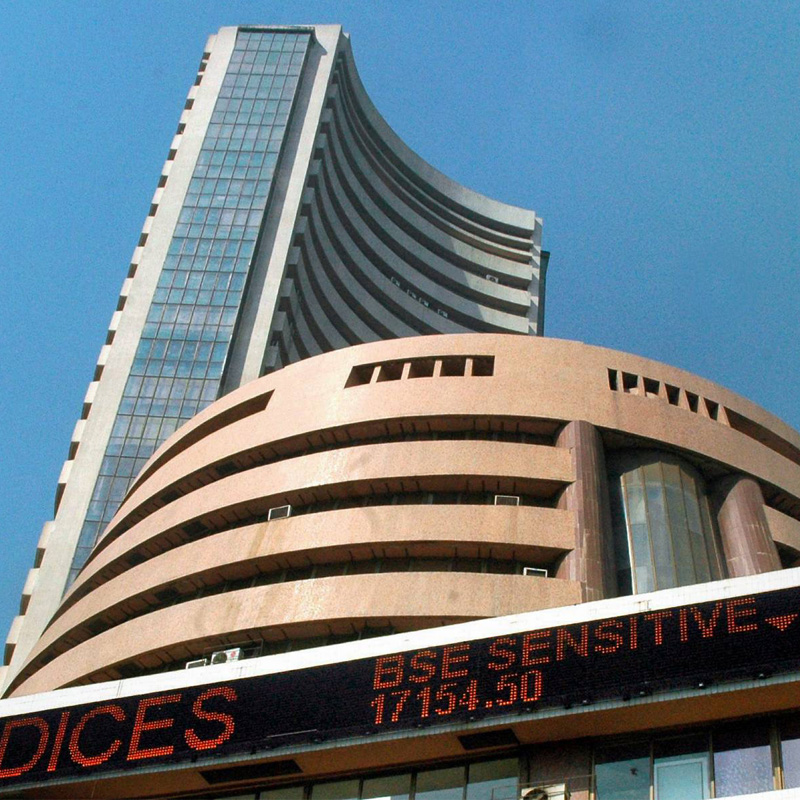
MUMBAI: The politicians may dismiss them but the stock markets seem to have reacted and how to the latest opinion and exit polls that all the news channels released following the completion of the third round of polling yesterday.
Indian stocks plunged 3.6 per cent today posting their sharpest fall in over three years most polls predicted that the country was headed for another hung Parliament triggering negative sentiments in the markets on fears that economic reforms might get stalled or delayed.
The Sensex swimming in the red zone was down a whopping 213.30 points to finally close at 5,712.28, a loss of more than $12 billion. The S&P CNX Nifty tanked 75 points or 3.9 per cent to 1,817.25.

An idea of just how severe the bleed at the bourses was can be gauged by the fact that today’s haemorrhage is the sharpest since the stock market scam of March 2001 that was linked to big-time broker Ketan Parekh.
Speaking of media scrips it was a red day all round with almost all stocks on the casualty list. The effects of the exit polls were clearly seen here too.
The major loser of the day was Crest Communication down a whopping 12.19 per cent at Rs 41.05.
Others to follow suit were Saregama and Galaxy Entertainment with a massive loss of over nine per cent ending the day at Rs 49.00 and Rs 27.35 respectively.
Sri Adhikari Brothers, Cinevistaas and Padmalaya Telefilms also lost over seven per cent each closing the day at Rs 59.65, 27.45 and Rs 59.10 respectively.
Amongst other prominent losers were Creative Eye, BAG Films Ltd, Adlabs Films, Balaji Telefilms, TV Today, Pritish Nandy Communications and Zee Telefilms.
So just what were these polls all talking about anyway. Given below are their predictions.
NDTV gave the NDA 235-255 seats, with the Congress and its allies might tipped to get between 190-210 with 100-120 going to others.
Aaj Tak projected the Congress-led camp would get 177 seats, while the NDA tally would be 262 and others would get 104.
Star News predicted that the NDA would get between 267 and 279 parliamentary seats, the Congress and its allies 160-172 and gave 97-109 to others, including the Samajwadi Party and the Bahujan Samaj Party.
Sahara News, which covered the 282 seats that have gone to the polls so far, projected 155 seats for the NDA, 99 for the Congress and the rest for others.







News Broadcasting
Network18 channels lead YouTube news viewership in March 2026
CNN-News18, News18 India and CNBC channels top categories with record views
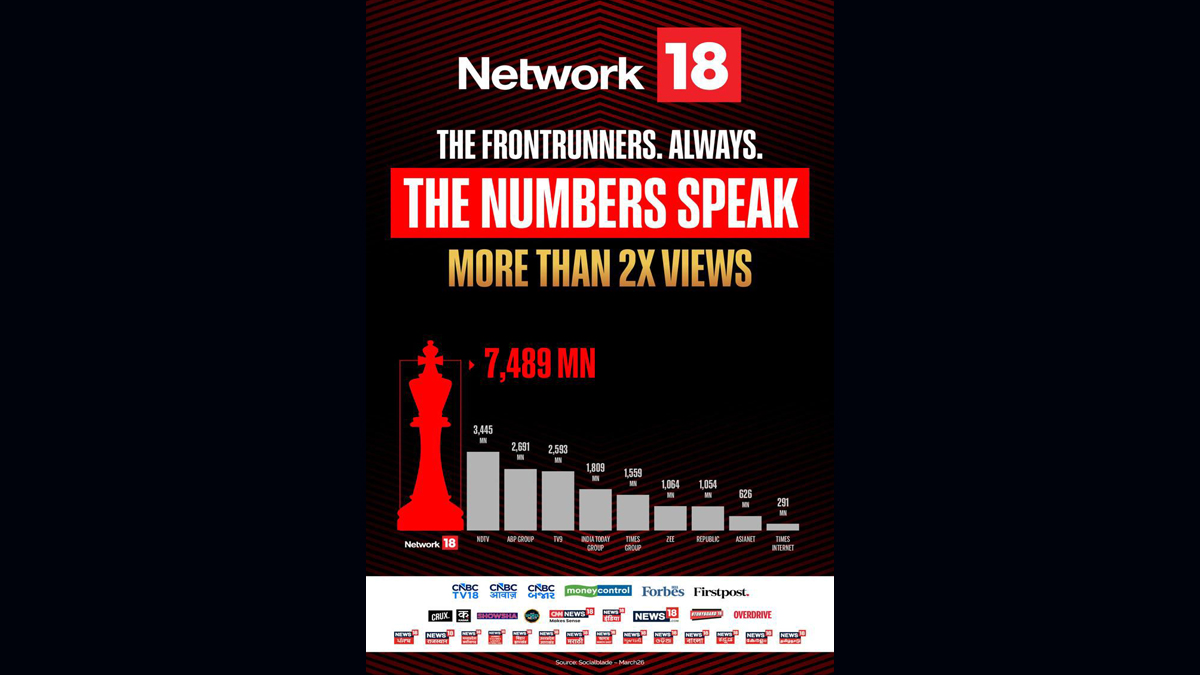
MUMBAI: When the world hit refresh on breaking news, Network18’s channels were already streaming ahead. As geopolitical tensions and war-driven headlines fuelled a surge in global news consumption, the network’s digital playbook delivered big clocking record Youtube viewership across English, Hindi and business news categories in March 2026.
At the forefront was CNN-News18, which emerged as the clear leader in the English news segment with 130 million live and video-on-demand views. The channel edged past competitors such as Times of India (126.5 million), Times Now (101.1 million), India Today (88.2 million) and NDTV (77.5 million), according to Databeings data for March.
In the Hindi news arena, News18 India delivered a commanding performance, racking up a staggering 3,297 million views on YouTube. The channel comfortably outpaced NDTV India, which recorded 3,119 million views, underlining its deep reach and consistent engagement with mass audiences, as per Playboard data.
The network’s dominance wasn’t confined to general news. In the Hindi business segment, CNBC Awaaz topped the charts with 92 million views, narrowly ahead of Zee Business (90 million) and well ahead of ET Now Swadesh (57 million). Meanwhile, its English counterpart CNBC-TV18 posted a strong 58 million views, reinforcing the network’s cross-category strength.
The spike in viewership reflects a broader shift in audience behaviour, with viewers increasingly turning to digital platforms particularly Youtube for real-time updates and in-depth coverage during high-intensity news cycles. For Network18, the numbers signal more than just scale; they underline the effectiveness of a multi-platform strategy that blends speed, credibility and continuous coverage.
In a month where the news never paused, it seems viewers chose to stay tuned where the stream never stopped.






