GECs
Section 377: Films, TV, Online and LGBT content

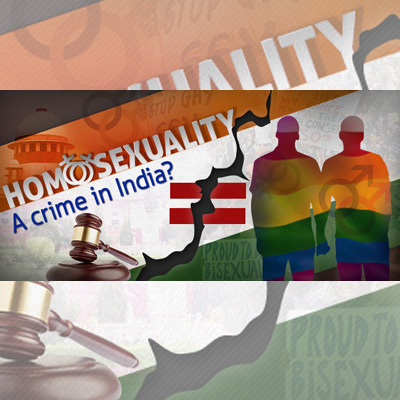
MUMBAI: Ten years ago most Indians probably did not know what Section 377 of the Indian Penal Code was all about. But the lobbing around that it has received since then has made it a common-as-garden word in the country today.
It dates back to 1860 and it criminalises “voluntarily carnal intercourse against the order of nature (by) any man, woman or animal.” Under it, any member of the already marginalised lesbian, gay, bisexual, transgender (LGBT) community could be sent to jail.
In 2009, in keeping with the rising LGBT voices, it was declared unconstitutional by the Delhi High Court. Four years later, that decision was overturned by the Supreme Court, which said that its amendment or annulment should be the prerogative of the parliament, not the judiciary. Then on 2 February, 2016, a three-member bench of the Supreme Court said that a five-member bench would review afresh all the petitions that had been filed with it. A decision that was met with resounding applause by an estimated three million publicly declared Indian LGBTs (the number would be higher if one were to consider those who prefer to keep their sexual preferences private).

Indiantelevision.com decided to take a dekko at how TV channels and other audiovisual media have dealt with those who prefer the same gender.
Indian news channels have on the whole been objective, giving both sides – those favouring gay and bisexual rights and those against – an equal platform to air their views. Some English news channels have however taken an advocacy position for them. India’s first transgender news anchor Padmini Prakash made her debut on Tamil television recently. A few years ago, India’s first transgender television talk show hostess Rose Venkatesh was seen on Ipapdikku Rose on Star Vijay.
Hindi GECs on the whole have caricatured and forced stereotypes on audiences – whether it was ‘Maddy’ in Jassi Jaisi Koi Nahi or characters in Pyaar Kii Yeh Ek Kahani. On the unscripted front, cross dressing male actors on various comedy shows have parodied the third gender. Recently, MTV India was bold enough to air an episode of The Big F titled ‘I Kissed A Girl,’ which featured two young girls’ desire for each other and also the first lesbian kiss on Indian television.
TV audiences either did not watch the episode or thought it was okay for girls to make out and fall in love with each other because no complaints to the Broadcasting Content Complaints Council (BCCC) were announced at least till the time of writing this story. However, a few months back viewers objected to an episode of Grey’s Anatomy featuring a homosexual encounter and complained against the broadcaster Star World to the BCCC. They however have kept mum when episodes of American series like Orange is the New Black, Lost Girl, Orphan Black, Faking It, and How to Get Away with Murder aired, featuring steamy and risqué scenes between members of the same sex.
“Though TV has tried to experiment with LGBT content, shows like Maryada… Lekin Kab Tak, which dealt with matured relationship between two married gay men, need to come back to the idiot box,” says Sridhar Rangayan, who directed many a Hindi TV series before setting up Solaris Pictures, which makes films with a special focus on queer subjects.
Rangayan has also been the festival director of the Kashish Mumbai-International Queer Film Festival. This year’s edition, which is to be held from 25 to 29 May 2016, will take a look at the LGBT community in a larger way. “Love is not just romantic love but is also different shades of love. We are bringing in more regional and Indian films this year. We are going to encourage more parents, friends and colleagues to attend this festival,” adds Rangayan.
Talking about the representation that the community gets in today’s society in India he further adds, “There is a need for happy, affirmative and positive stories or at least a normal portrayal of them. What bothers me and is sickening is this entire image of them taken as caricatures. Shows like Comedy Circus or Comedy Nights with Kapil (now off air) ridicule them and the way they are conceptualised is gross. I don’t know why they can’t have actual transgender actors coming in which can make it look more real for people to watch them.”
“I don’t think a subject or work or genre works independently. It goes hand-in-hand. In such a scenario, producers need to be sensitive about not using the characters in the show as caricatures just for the sake of it,” expresses Monozygotic co-founder Rajiv Ram. “I also believe that we should watch our sense of humour. Jokes are being cracked on other communities as well, which is not a problem. The problem is the lack of acceptance, knowledge, sensitivity and the mindset of the people in the society.”
Rangayan believes that Indian TV production houses have been progressive and have been open to deal with stories around various subjects (including those targeting the LGBT community) but the fear of governmental, legal and societal retribution has made them tread cautiously. “The same applies to actors, broadcasters and the entire TV fraternity. We all are just waiting for that spark from the government,” he adds.
Whether there will be a backlash or not will be tested in the not too distant future. If the gossip rags are to be believed, veteran actor Anil Kapoor has expressed his interest to adapt the American sitcom Modern Family (featuring gay characters as two of the main protagonists) for Indian television.
“We look for great stories wherever they come from. I believe there are great stories within the gay and lesbian community just like any other and we do seek to tell them within the confines of what is permitted by broadcasting regulations and sensibility. In our youth series Kaisi Yeh Yaarian, we explored stories in this space and told them well and were also well received,” says BBC Worldwide India MD and creative head Myleeta Aga.
Industry professionals say shows will pass muster as long as certain criterion are kept in mind.
“The content should comply with the internal decency standards of the regulatory board and the government,” says AXN and Sony Pix business head Saurabh Yagnik.
“The characters need to be interesting and universal, and the stories need not be written from the western mindset. They need to have an Indian context,” says Sunshine Productions founder Sudhir Sharma. “If you are creating something, which is not relevant to the Indian audiences or from the Indian culture’s point of view, such content will be difficult to digest. I think the government will have an issue only if we get into some edgy controversial topics.”
Media and creative professionals say the winds of change have been blowing in other mediums and will continue to do so. Hindi cinema, for instance. Films like Margarita with a Straw and Aligarh have gone an inch forward in spreading the right message about the community. Other films like Dostana, Fire, Bomgay, My Brother Nikhil, Honeymoon Travels Pvt Ltd, etc, have portrayed characters partially related to those preferring same sex or from the third gender.
Online is one medium, which is going to see a flood of LGBT content flowing. Badmshiyaan director recently shared the promo of his soon to be launched series titled All About Section 377. The web series consists of eight episodes produced by Weirdoze and The Creative Gypsy. It features Gulshan Nain, Ankit Bhatia, Mustafa Shaikh and Amit Khanna himself.
Yash Raj Films’ youth banner Y-Films has also got into the fray when it launched the music video of India’s first transgender band named 6-pack band. The video features its first song titled as ‘Hum Hai Happy,’ which is a cover version of Pharell Williams’ song, ‘Happy.’
ALT Entertainment – a Balaji Telefilms company – is believed to be incubating ambitions to launch many a web series targeting LGBT subjects for its soon to be launched OTT platform.
Khanna echoed many an Indian’s thought at the launch of his web series promo when he said, “The existence of Section 377 itself is frightening. How does someone else get to decide how, when and who, one should love? Basically the right of ‘freedom of choice’ isn’t legal anymore…”
That is something the five member Supreme Court bench will have to really ponder on.




GECs
Sahara One reports financial results, notes director exit and business realignment
Muted revenues, steady expenses and strategic adjustments shape company’s current phase
MUMBAI: In a tale where the sands seem to be slipping faster than they can be gathered, Sahara One Media and Entertainment Limited has reported another quarter of wafer-thin income and widening losses, even as a boardroom exit adds to the unease.
The company informed the Bombay Stock Exchange that its board, in a meeting held on April 4, approved its unaudited financial results for the quarter ended September 30, 2025. The numbers paint a stark picture. Total income for the quarter stood at just Rs 0.13 lakh, unchanged sequentially and sharply down from Rs 0.26 lakh a year earlier.
Losses, meanwhile, deepened. The company posted a net loss of Rs 24.16 lakh for the quarter, compared to Rs 18.81 lakh in the June quarter and Rs 39.69 lakh in the same period last year. For the six months ended September 2025, the cumulative loss stood at Rs 39.69 lakh, while the full-year loss for FY25 was reported at Rs 60.72 lakh.
Expenses continued to outweigh income by a wide margin. Total expenses for the quarter came in at Rs 24.30 lakh, led by employee benefit costs of Rs 6.51 lakh and other expenses of Rs 17.78 lakh. Earnings per share remained in the red at Rs (0.11) for the quarter.
The balance sheet reflects a company with significant assets on paper but limited operational momentum. Total assets stood at Rs 23,065.57 lakh as of September 30, 2025, broadly unchanged from March 2025. Equity share capital remained steady at Rs 2,152.50 lakh, while total equity was reported at Rs 18,004.85 lakh.
Cash and cash equivalents saw a modest uptick to Rs 6.75 lakh from Rs 4.68 lakh earlier, supported by a positive operating cash flow of Rs 180.01 lakh for the period.
Yet, beneath these numbers lies a more complex narrative. The company’s auditors flagged their inability to obtain sufficient evidence to form a conclusion on the financial statements, citing lack of access to records. They also raised concerns over the company’s ability to continue as a going concern, pointing to insufficient funds, delayed recoveries, and stalled content investments.
Adding to the governance overhang, the company disclosed that Rana Zia has resigned as whole-time director, effective October 16, 2025, citing other professional commitments. The resignation, noted and accepted by the board, also brings an end to her role across company committees.
Regulatory pressures continue to loom large. The Securities and Exchange Board of India has already initiated penal actions for non-compliance with listing norms, with trading in the company’s shares remaining suspended. There is also a risk of promoter demat accounts being frozen.
Legacy legal issues remain unresolved. A substantial deposit of Rs 694,027.88 thousand linked to the long-running OFCD dispute involving Sahara group entities is still under the purview of the Supreme Court of India. Restrictions on asset disposal continue to weigh on the company’s financial flexibility.
Operationally, challenges persist across multiple fronts. Advances worth Rs 1,92,916 thousand given for film content remain stuck, with delays in project completion and uncertain recoverability. The company’s YouTube channel, despite being operational, has generated no revenue for over three years due to compliance lapses. In a further twist, management has indicated that revenues may have been fraudulently diverted through unauthorised changes to its AdSense account, with a police complaint in the works.
There are also missed revenue opportunities. Television content rights continue to be used by a related party despite the expiry of the licence agreement, with fresh negotiations still underway.
For now, Sahara One Media and Entertainment Limited appears caught between legacy disputes and present-day operational hurdles. As losses linger and governance questions mount, the road to recovery looks less like a sprint and more like a slow trudge through shifting sands.






