Hindi
Saheb Biwi Aur Gangster Returns: A sequel that doesn’t disappoint

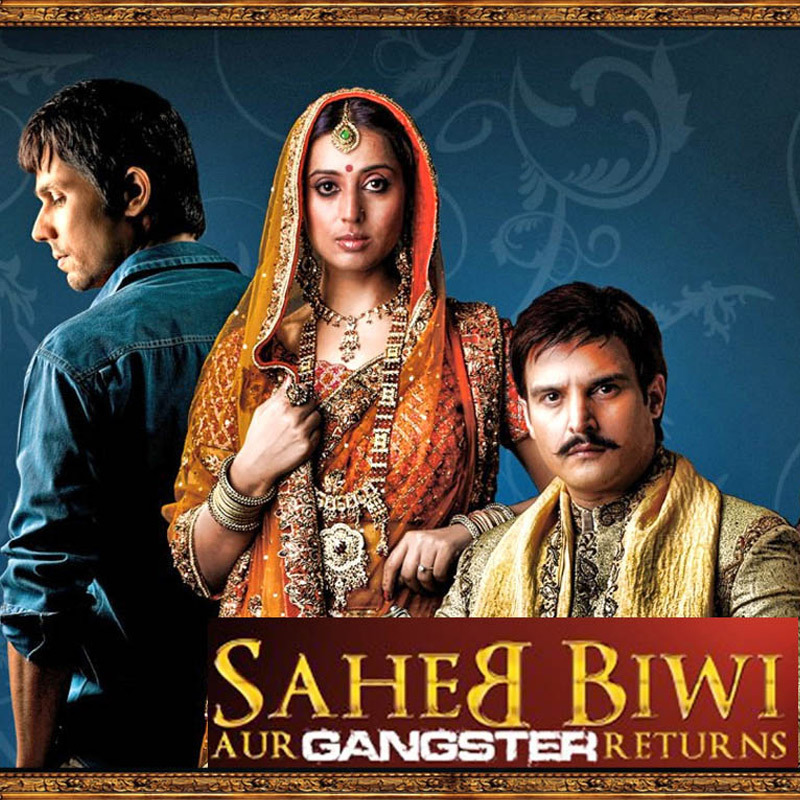
MUMBAI: Saheb Biwi Aur Ganster Returns is a sequel to the 2011 film, Saheb Biwi Aur Gangster. It is, like its predecessor, a film about about warring men but the winner eventually is a woman. Jimmy Shergill, who has taken to illegal ways including running a dacoit gang to maintain his royal lifestyle since losing all the privileges, survived a shootout with his enemy but lost movement in his legs. He is wheelchair bound and had to give up his MLA seat to his wife, Mahie Gill. The sequel takes it from here.
 |
|
Producers: Tigmanshu Dhulia, Nitin Tej Ahuja, Rahul Mittra. |
This one is about four UP royals, now deep into politics. Of these, Shergill and Raj Babbar are the main ones. The four don‘t belong to any party but all are against the ruling party‘s proposal to divide UP into four states. Shergill is in control because he is the one the others turn to when they need muscle. His henchman, Deepraj Rana, is loyal and asks no questions when needed to eliminate his boss‘s enemies.
Unknown to him, Shergill has an enemy, Irrfan Khan, who wants to avenge his grandfather‘s death at the hands of Shergill‘s family. Shergill then goes on to add another enemy to his list in Babbar whose daughter, Soha Ali Khan, has caught his fancy. He knows Babbar would not willingly give away his daughter to a handicapped man. He plots to make Babbar agree but promises he will marry her only when he is able to stand on his feet again. Meanwhile, Gill continues her wayward life, always a drink in hand and in search of a man.

Irrfan is now even more determined to take on Shergill because he and Soha are very much in love. He, along with Babbar, starts plotting against Shergill and adds others with an axe to grind. The first one is the weakest link around Shergill, and that is Mahie. Irrfan can meet for her demands: cash and sex. The background political games are on and Shergill or no Shergill, the group has joined the cause of dividing UP. When it comes to reality, it is Gill who is the MLA and whose vote will count the next day. But Shergill is not the one to take things lying down. He locks up the three MLAs to stop them from voting.
Many such games are played by the four ‘royals‘. But it is finally between Irrfan and Shergill. Irrfan‘s family does not even have residual sign of royalty left as the older brother has taken to teaching for survival while the younger has joined the police. He is that much more bent on restoring his ancestral glory. However, if he has turned Gill against Shergill, he has also unwittingly lost his love, Soha, to Shergill.
Saheb Biwi Aur Gangster Returns goes along smoothly through its lengthier first half but come second half, it loses pace. Too much is happening but not all that is promised in the first half is delivered. Except verbal one-upmanship, there are no bullets flying. Irrfan has promised ‘ghamasan‘ war but nothing of the sort happens. He goes out meekly (maybe to be resurrected in Part 3?). The climax leaves one disappointed.
The direction by Tigmanshu Dhulia is competent as expected. The best part of the creative side is the film‘s dialogue. Music is okay and the item number is funny. Photography is good. While all artistes contribute ably, Irrfan is his usual best. Shergill exudes all the pride and power of an ex-royal very much still in control. Gill is okay. Soha is restrained. Raj Babbar does well. Deepraj Rana is effective.
Saheb Biwi Aur Gangster Returns has not been able to draw the expected opening response but should show some improvement over the weekend. The exams period will also affect the collections.
Saare Jahaan Se Mehnga: A satire that hits the right notes
 |
|
Producer: Ashok Pandey. |
Saare Jahan Se Mehnga is a satire, one of those films that aim to make a point. It is also the kind of film that does not demand big stars but needs more lifelike characters. This helps both, the subject as well as the budget. Besides, like the producer‘s earlier film, Phas Gaye Re Obama, its aim is to entertain.
The film is about a family of four and how it copes with rising costs. Sanjay Mishra works with the animal husbandry department in Haryana. His wife, Pragati Pandey runs a beauty parlour from within the house. His younger brother, Ranjan Chhabra is a good-for-nothing young lad who took three attempts to get through 10th exams and has failed thrice already in 12th. The patriarch of the house is a grumpy old Vishwa Mohan Badola who is upset at having to make compromises in his lifestyle. The village crowd gathers outside Sitaram Panchal‘s cycle repair shop where, while working, he delivers speeches against rising costs and promises people that once the government brings back the black money from Swiss banks, every Indian will get four lakh rupees.
Meanwhile, Mishra learns that the local government is offering a lakh for every 10th-pass youth to start a business, that too with interest waiver for the first three years. He can avail of this loan in the name of his brother but is sceptical at first knowing his brother will only sink the cash. Then an idea strikes him. He can avail of this loan and with that money; stock up enough provisions to last the family for the next three years! The monthly cost on this account can be saved and will be enough to repay the loan at the end of three years. This way, the family can enjoy an inflation free life for the period.
Soon the loan is availed and the provisions stocked up. But there is one condition of the loan they missed: It is to set up business and they have no such venture to show when the loan inspector, Zakir Hussain, visits. The consequences, according to the inspector, could be jail for Chhabra. As a solution, a part of the parlour is converted into grocery shop. The customers come but are sent back. After all, the shop is only a front. The neighbourhood grocer, Pramod Pathak, thinks he has a competition and keeps Hussain in the loop about the situation. Pathak is already unhappy with the family since Chhabra is courting his daughter, Disha.
Following various ways to trick Hussain into believing they are running a genuine shop with the loan amount, the bubble bursts.
The film is a dig at the continuously rising costs and a family‘s struggles to beat it. The script is a bit stagey. The direction is fair. Dialogue is witty and effective. Music is average. Performances by Mishra, Chhabra, Pandey, Pathak are good while Badola makes his mark. Disha is okay. The film has familiar faces in supporting casts, those seen on TV or in films in side roles.
Saare Jahaan Se Mehnga is an okay film but it lacks the face value and promotion to survive at the box office.

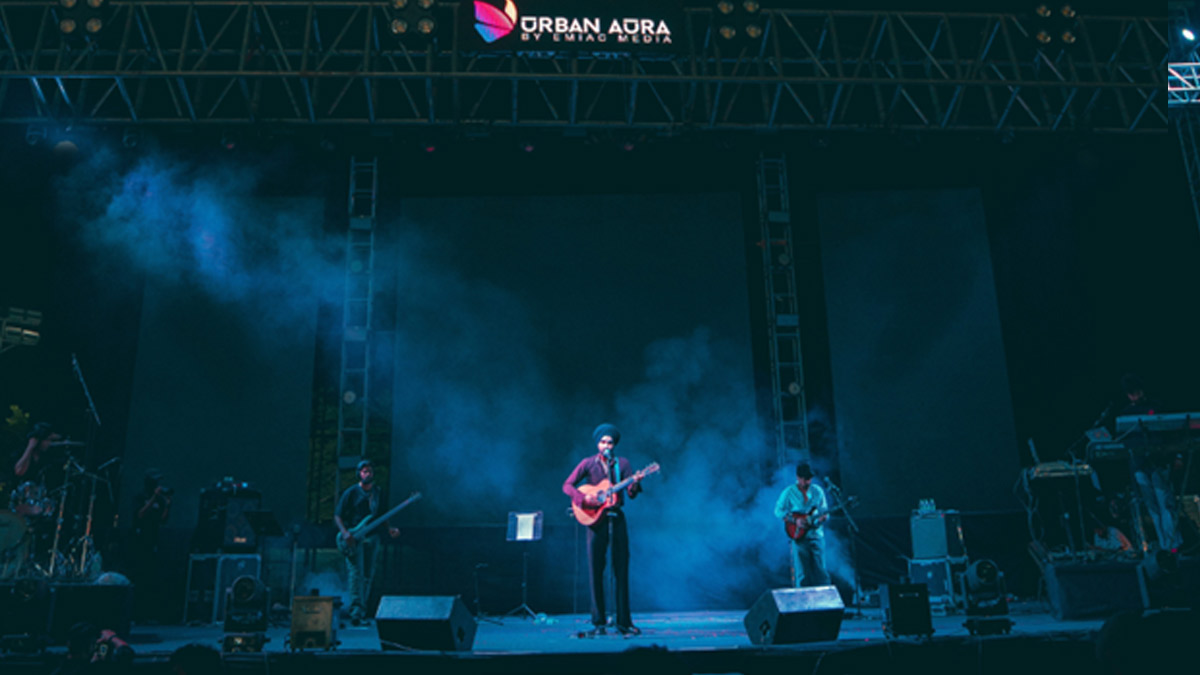
In a music industry that often rewards speed, spectacle, and instant recall, Navjot Ahuja’s journey feels refreshingly different. His story is not built on noise. It is built on patience, discipline, emotional honesty, and a quiet commitment to becoming better with every passing year. After 14 years of struggle, learning, performing, and writing, Navjot stands today as an artist whose success has not changed his centre. If anything, it has only made his purpose clearer.
For Navjot, music has never been about chasing fame alone. It has always been about expression. It is about writing more truthfully, singing more skillfully, understanding himself more deeply, and becoming a kinder human being in the process. That rare clarity is what gives his journey its beauty.
Where It All Began: A Writer Before a Singer
Indian singer and songwriter Navjot Ahuja’s musical journey began in the most familiar of places: school assemblies. But even then, what was growing inside him was not only the desire to sing. It was the need to write.
Long before he saw himself as a performer, he had already discovered the emotional release that writing offered him. For Navjot, words became the first true channel for feeling. Songwriting came before singing because writing was the only way he could let emotions flow through him fully. That inner pull shaped his artistic identity early on.
Like many young musicians, he sharpened his craft by creating renditions of popular songs.
Those experiments became his training ground. But the turning point came in 2012, when he wrote his first original song. That moment did not just mark the beginning of songwriting. It marked the beginning of self-definition.
A Calling He Did Not Chase, But Accepted
What makes the latest Indian singer-songwriter Navjot’s story especially compelling is the way he describes his relationship with music. He does not frame it as a career he aggressively pursued. In his own understanding, music was not something he chose. It was something that chose him.
There was a time when he imagined a very different future for himself. He wanted to become a successful engineer, like many young people shaped by ambition and conventional expectations. But life had a different script waiting for him. During his college years, around 2021, music entered his life professionally and began taking a firmer shape.
That shift was not driven by image-building or industry ambition. It came from acceptance. Navjot embraced the fact that music had claimed him in a way no other path could. That sense of surrender continues to define the artist he is today.
An Artist Guided by Instinct, Not Influence
Unlike many singers who speak openly about idols, icons, and musical role models, Navjot’s creative world is built differently. He does not believe his music comes from imitation or inherited influence. He listens inward.
He has never considered himself shaped by ideals in the traditional sense. In fact, he admits that he does not particularly enjoy listening to songs, especially his own. His decisions as a songwriter and singer come from instinct. He writes what feels right. He trusts what his inner voice tells him. He positions his music according to what he honestly believes in, not what trends demand.
That creative independence gives his work a distinct emotional sincerity. His songs do not feel calculated. They feel alive.
The Long Years of Invisible Struggle
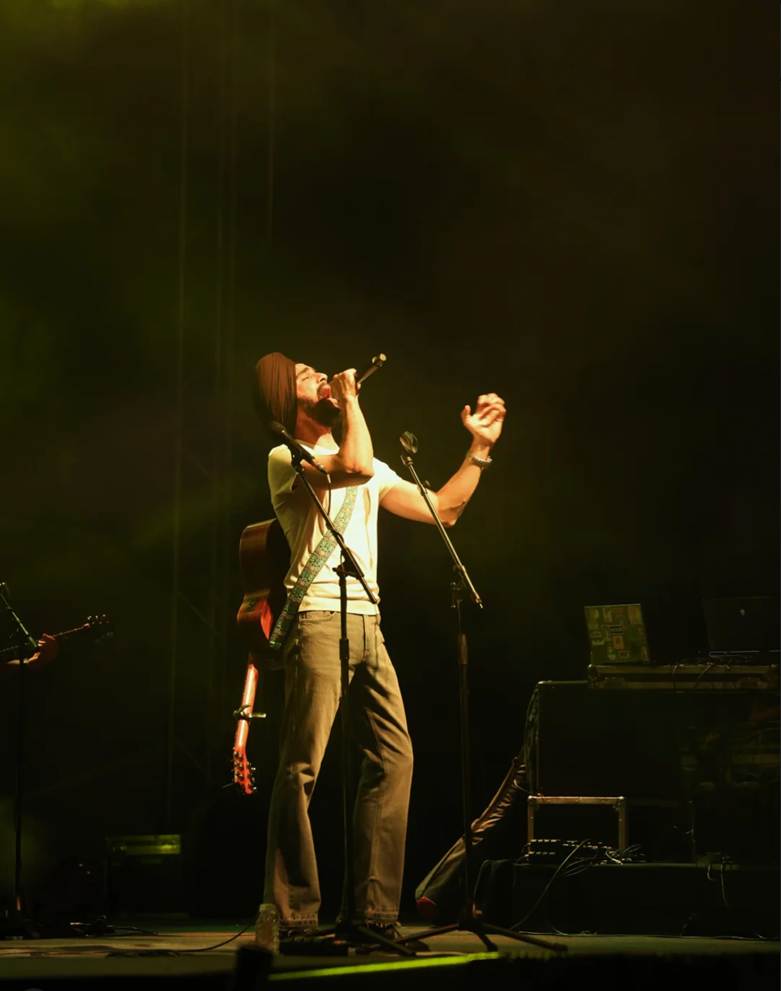
Every artist carries a chapter of struggle, and Navjot’s was long, demanding, and deeply formative. One of the biggest challenges he faced was building continuity as the best new indian singer songwriter in an era where musical collaboration is increasingly fluid.
For emerging singers, especially those trying to build with a band, consistency can be difficult. Instrumentalists today have more opportunities than ever to freelance and perform with multiple artists. While that growth is positive and well deserved, it can make things harder for singers who are still trying to establish a steady team and sound around their work.
For Navjot, one of the most difficult phases came during 2021 and 2022, when he was doing club shows almost every day. It was a period of relentless performance, but not always personal fulfillment. He was largely singing covers because clubs were not open to original songs that audiences did not yet know.
For a new Indian singer and songwriter, that can be a painful compromise. To perform constantly and still not have the freedom to share your own voice requires not just resilience, but restraint.
“Khat” and the Grace of Staying Unchanged
After 14 years of effort, Navjot’s new love song Khat became a defining milestone. Professionally, he acknowledges that the song changed how society viewed him as a musician. It strengthened his place in the public eye and altered his standing in meaningful ways.
Yet personally, he remains unchanged.
That is perhaps the most striking part of his story. Navjot says his routine is still the same. His calm is still the same. His writing process is still the same. He does not want success or failure to interfere with the purity of his art. For him, emotional detachment from public outcomes is essential because the moment an artist becomes too attached to validation, the writing begins to shift.
His joy comes not from numbers, but from the attempt. If he has tried to improve his skill today, if he has written his heart out more honestly than before, then he is at peace.
Growth, Not Glory, Remains the Real Goal
Even now, Navjot is not consumed by labels such as singles artist, performer, or digital success story. His focus remains deeply personal. He wants to sing better. He wants to play instruments better. He wants to understand himself more. And he wants to become a kinder person.
That is what makes Navjot Ahuja’s journey so moving. It is not simply the story of a musician finding recognition. It is the story of an artist who continues to grow inward, even as the world begins to look outward at him. In an age obsessed with applause, Navjot reminds us that the most meaningful success often begins in silence, honesty, and the courage to remain true to oneself.






