News Broadcasting
Sahara TV switching to digital 10 December

MUMBAI: Free-to-air Hindi general entertainment channel Sahara TV is going digital from Tuesday, 10 December. Sahara has also set up its own multiple channel digital uplink earth station at Noida with both playout and uplinking facility.
The digital feed will be available on transponder 10-V of AsiaSat 3S from 10 December from 7 pm onwards.
With the digitalisation as well as uplinking facilities in place, the stage looks to be set for the launch of Sahara’s proposed bouquet of news channels, including one national and 30 city-based news channels, in early 2003. While Sahara officials were not forthcoming on a launch date, it could well be 26 January 2003 – Republic Day. This would also fit in well with the nationalistic image that the Subrata Roy-promoted group is strong on.

Sahara TV head Sumit Roy was quoted in an official release as saying: “The preparation work is already done. We have already commenced our analogue services on transponder 10-V and 1-V of AsiaSat 3S in order to facilitate switchover by our sanchar saathis (cable operators).”
While the channel will be switching to digital on 10 December, the analogue feed will continue on transponder 1-V during the seeding of digital receiver boxes. Sahara plans to continue with the simultaneous telecast of digital and analogue feeds for a month after 10 December.
All playout and uplink for both digital and analogue services of Sahara TV now originates from Noida, with infrastructure comprising high-end digital encoding equipment with statistical multiplexing in MCPC (Multiple Channel Per Carrier) domain,
Digital Feed Technical Specifications
Mode: Free to Air
Satellite : Asia Sat 3S
Orbital Location : 105.5
Downlink Frequency : 4020 Mhz
Polarisation : Vertical
Orbital Location : 105.5
FEC :
Symbol rate : 27.25M-SYM/SEC
Analogue Feed Technical Specifications
Downlink Frequency: 3660Mhz
Polarisation : Vertical
Audio Sub-carrier: 6.3 Mhz
Information about the digital receiver boxes for cable operators is available at the following numbers:
Mumbai : 022-56901310
Delhi : 011-23704100
Kolkata : 033-22827137
Bangalore : 080- 5321640







News Broadcasting
CNN-News18 to host Fury in the Gulf conclave on West Asia crisis
Three-hour summit to unpack geopolitical fallout and impact on India
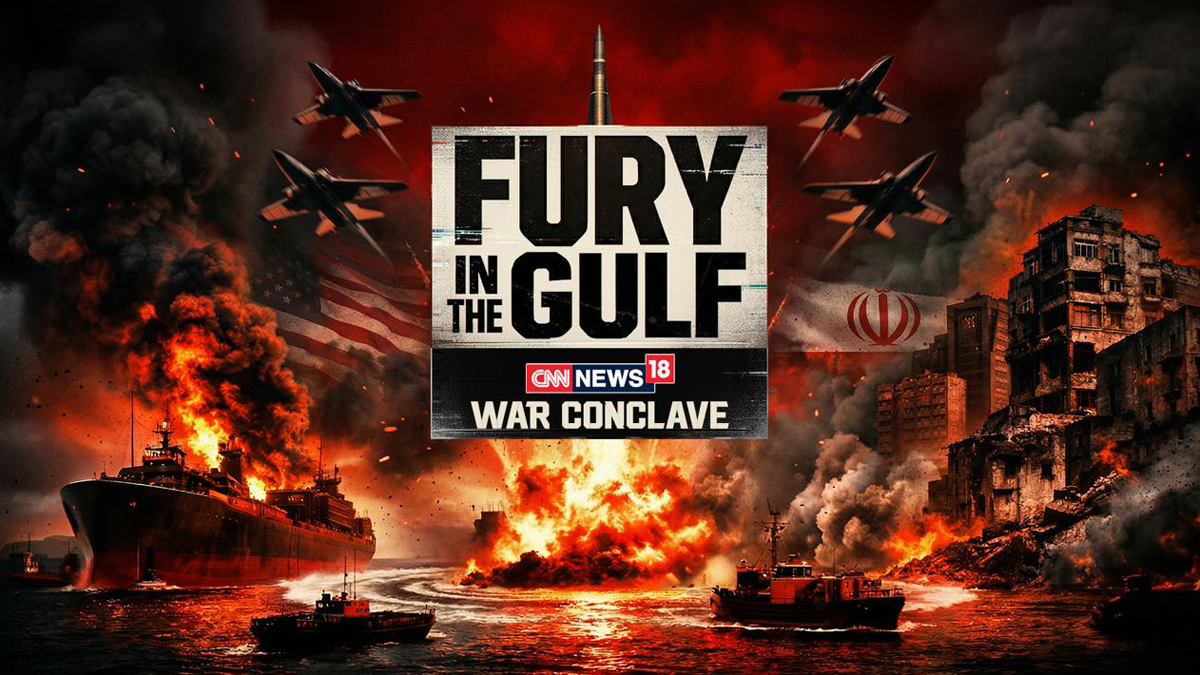
MUMBAI: CNN-News18 is set to host a special three-hour broadcast, Fury in the Gulf – War Conclave, on April 7, aiming to decode the escalating West Asia crisis and its far-reaching implications for India.
Scheduled from 4:00 PM to 7:00 PM, the conclave comes at a time when tensions between Iran and the United States are reshaping global geopolitics and triggering economic uncertainty. With India’s deep energy ties, trade links and large diaspora in the Gulf, the developments carry significant domestic relevance.
Built around the theme ‘Conflict, Consequences, and The Future,’ the programme will feature six curated sessions combining one-on-one interviews and panel discussions. The focus is to cut through the clutter and offer viewers a clearer understanding of the fast-evolving situation.
Key sessions include ‘Diplomacy in Times of War’ featuring Shashi Tharoor, and ‘World After the Iran Conflict’ with voices such as Ram Madhav, Reuven Azar, representatives from the European Union and the Iranian Deputy Envoy. Another session titled ‘Another Dunkirk?’ will bring together K. J. S. Dhillon and Jitin Prasada among others.
CNN-News18 editorial affairs director Rahul Shivshankar said, “In times of war, clarity becomes the most powerful tool. Fury in the Gulf – War Conclave brings together credible voices to address the questions and confusion that arise amid an overwhelming influx of information.”
He added that the initiative is aimed at delivering “facts, perspective, and insight” at a time when misinformation can easily cloud public understanding.
Echoing the sentiment, CNN-News18 CEO– English and business news Smriti Mehra said the conflict marks a defining global moment, with consequences that extend well beyond the region. She noted that the conclave seeks to present the crisis with “depth, nuance and responsibility” so audiences can better grasp its real-world impact.
As geopolitical tensions continue to dominate headlines, the conclave positions itself as an attempt to bring order to the noise, offering viewers a structured, insight-led look at a complex and rapidly shifting global situation.






