GECs
Sahara One asserts 27% viewership rise


MUMBAI: Sahara One Television looks to be perking up. The channel’s viewership increased 27 per cent from 63 to 80 GRPs in the week ending 9 July, even as the general entertainment viewership saw an overall drop of 7 per cent.
Star Plus’ GRPs fell from 630.27 to 567.84; Sony’s from 176.62 to 154.46 and Zee TV’s from 145.78 to 142.29 as per the Tam data for the same week.
According to channel officials, it is the Rajshri show Woh Rehne Waali Mehlon Ki that has consistently been doing well for the channel. The show clocked an average of 2.9 TVRs for the week ending 9 July in female 15+ C&S Hindi speaking markets over last week’s 2.5 TVRs.

Woh Rehne Waali Mehlon Ki, in its sixth week, has been showing a substantial and consistent growth across Monday to Thursday. Says Sahara One Television COO Purnendu Bose, “This is the beginning of a long innings.”
Meanwhile, Sahara One’s latest show Hare Kkaanch Ki Choodiyan will be launching on 25 July in the 3.30 pm afternoon slot.
The big question for the present though, is whether Sahara One can continue the upward trend in its GRPs that it has garnered in the week ending 9 July.







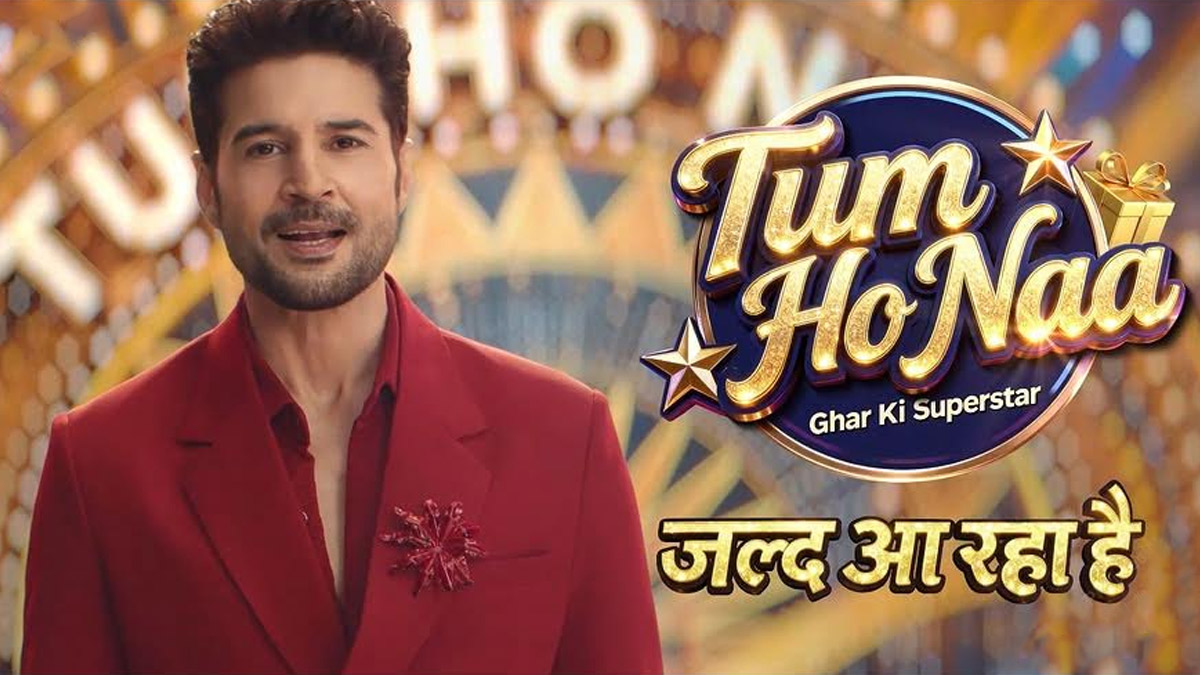
MUMBAI: Lights, camera… connection because this time, the game isn’t just about winning, it’s about who’s with you. Sony Pictures Networks India is gearing up to launch a new reality game show, Tum Ho Naa, expanding its unscripted slate with a format that promises both emotion and engagement.
The show will premiere soon on Sony Entertainment Television and stream on Sony LIV, with Rajeev Khandelwal stepping in as host. Known for his measured screen presence and selective choices, Khandelwal’s return to television adds a layer of familiarity and credibility to the upcoming format.
While specific details of the gameplay remain under wraps, the positioning suggests a reality format that leans as much on emotional resonance as it does on competition, an increasingly popular blend in Indian television, where audiences are gravitating towards content that offers both stakes and storytelling.
Khandelwal, reflecting on his return, noted that his choices have often been guided by instinct rather than convention, describing Tum Ho Naa as a project that feels “close to the heart”. His association also signals Sony’s continued focus on anchoring new formats with recognisable faces who bring both relatability and depth.
The launch comes at a time when broadcasters are doubling down on original non-fiction formats to drive appointment viewing, even as digital platforms expand parallel reach. By placing the show across both linear television and OTT, Sony appears to be aiming for a dual-audience strategy capturing traditional viewers while engaging digital-first consumers.
As the countdown to premiere begins, Tum Ho Naa positions itself not just as another game show, but as a reminder that sometimes, the biggest prize on screen isn’t the jackpot, it’s the journey shared along the way.







